This four-decade-old Taipei apartment may look a bit worn at first glance, but look closer—it has an external elevator stuck to its side.
It’s slowly becoming a familiar sight in the country’s capital, with many streets covered by row after row of low-rise apartment buildings without elevators.
"There have been many benefits. It feels more spacious."
Sixty-eight-year-old Jessica Chen and her husband live on the third floor.
Five years since the elevator was installed, they say it has become an integral part of their lives, and they take good care of it.
It’s not just for convenience, but for their health, too.
"I started having back pain in my thirties and later it got to the point where I couldn’t even walk. There was one time when I simply couldn’t walk at all, the pain in my leg was unbearable. So my husband had no choice but to carry me on his back downstairs to get a taxi since I couldn’t even manage the stairs. It’s probably something like narrowing in my lower spine plus bone spurs and lots of other issues."
Standing for long hours in her decades of working at the hospital has given her chronic pain, and the prolonged battle against it led to depression.
Even a simple chore like carrying groceries could render her immobile for days.
Chen says she’s lucky to have her husband’s help, but what happens when both of them are older?
"Those living close to us have it really hard. In that whole row of houses, many elderly people live upstairs and the seniors living on the top floor can hardly go downstairs at all. So I really hope they all get the chance to install elevators or better yet, for the area to go through urban renewal."
But not everyone is able to benefit from installing an elevator at home.
Architect Rae Wang, who designed the elevator at Chen’s building and checks up on it once in a while, says these projects can cost residents somewhere between 150 and 300 thousand US dollars.
Besides money, limited space and disputes between residents are often the biggest obstacles.
Showing us another of her projects, Wang says it took the residents here 18 years to finalize a deal, including a five-year lawsuit with the first-floor neighbors.
"The main issue was that there were illegal additions on part of the first floor and in order to add an elevator some of those illegal structures needed to be removed so there would be enough legally required open space to build the elevator. If part of the first floor is blocking the way of the elevator, its removal would now actually be prioritized. In the future, when people go through the process of building elevators, it will save them some trouble."
Taipei mayor Chiang Wan-an has announced a plan for clearing shared spaces in apartment buildings for residents seeking an elevator.
It’s a policy that’s becoming more important than ever as these walk-up apartments and their residents both grow old.
Lin Yu-ling, Deputy Chief Engineer of the National Land Management Agency, says, "Going back 30 years ago, it was a time of rapid economic growth for Taiwan. Especially in Taipei and New Taipei, many four- and five-story apartment buildings were built as a result of urbanization, with people concentrated in cities. But regulations didn’t require elevators to be installed. Across Taiwan, there are more than 9.4 million licensed residential buildings and more than five million of them are over 30 years old. That’s more than 50% of all residential buildings."
In Taipei alone, 73 percent of residential buildings were built at least 30 years ago, and 71 percent of people in the city live without elevators.
While official data shows that over half a million elderly people in the country live in walk-up apartments, it’s unclear how many of them live in Taipei and how old their apartments are.
Taipei City Government's Urban Regeneration Office Director, Jan Yu-chi, says, "Our elderly ratio is among the highest of the six major cities in Taiwan. Taipei is one of the most aged cities. And as the population ages, another issue is the aging of buildings. By first improving the building’s functionality so that the building can be livable, the urban renewal process."
Since the early 2000s, the Taipei city government has rolled out urban renewal subsidies for exterior repairs and elevator construction.
Over the years, the application process has been streamlined.
Wang says, "At first, building elevators in Taipei required 100% approval from all building and land rights owners. That was almost impossible because people on the first floor didn’t need it and sometimes even people on the second floor felt they didn’t need it since they only had a few steps to climb."
Later, the rule was relaxed to require only a simple majority.
Now, the central government is introducing a one-year subsidy to help tackle the “double-aging” phenomenon—where old apartments trap elderly residents.
It also checks whether the building needs a complete retrofit or just simple touch-ups before projects can start.
Lin says, "Oftentimes, a rebuild or urban renewal case would take years to get a majority approval and start planning, review and verification before it is finally announced and implemented. But for elderly residents inside, they may have an immediate need for an elevator. Through this short-term program called “old house life extension,” they can achieve this in a short amount of time, maybe within two years. It’ll give them some flexibility with time to discuss a full rebuild."
For people like Chen, it’s a huge investment but with lasting returns.
Not only will their property values go up, elderly residents get to keep their Taipei apartments that they worked all their lives for.
Jan says, "After the urban renewal is complete, your neighbors and the entire social circle will remain the same, but your house will be safer than before. Taipei simply has too many old buildings. It’s impossible to predict what might happen when we’re faced with natural disasters in the future."
As Taiwan ages, people here are acting on plans to make their retirement easier.
So far, officials have received fewer than 200 applications for elevators, but say there’s been a surge in recent years as more people learn about the subsidies.
As word gets around, Taipei residents may see more and more of these retrofitted elevators going up.
 03:03
03:03 03:37
03:37 00:31
00:31 00:36
00:36 01:55
01:55 02:29
02:29 02:40
02:40 00:32
00:32 02:02
02:02 01:54
01:54 02:09
02:09 00:50
00:50 00:50
00:50 01:11
01:11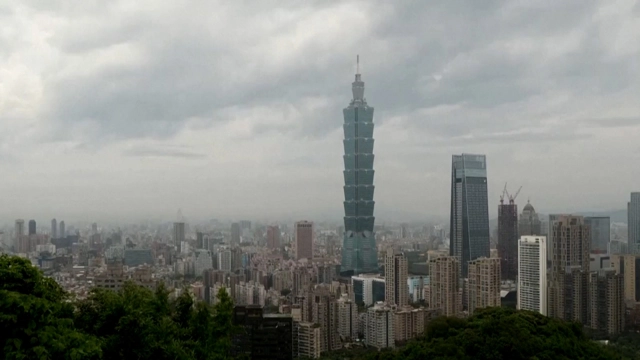 00:40
00:40 00:26
00:26