US Eyes Move Away from Depending on Chinese Tech
REPORTER:
When videographer Luisa Winters heads out on a shoot, one piece of equipment almost always comes with her — a Chinese-made DJI drone.
Luisa Winters (CO-OWNER, MID-ATLANTIC DRONES):
“You tell it, go forward and it goes forward? What a concept. You would think all drones would do that. They don't. You tell it to stop, and oh my god, it stops.
Quite frankly, I have yet to find a drone that was as responsive and safe as a DJI drone."
Winters says the DJI drone is lightweight, easy to transport and costs thousands of US dollars less than competitors. That combination has allowed DJI to dominate the market. As much as 90% of the commercial drones sold globally are made by DJI.
Farmers use them to spray pesticides. Construction companies use them to track a building's progress. Public safety agencies deploy them in emergencies.
But here in Washington, the DJI drone has become caught up in debate about America's dependence on Chinese technology.
Increasingly, US officials are viewing foreign made drones through a national security lens.
Brian Hart (DEPUTY DIRECTOR, CHINA POWER PROJECT, CSIS):
"There's been a concern across the US federal government about identifying which technologies China's influence poses a risk in. Drones are a clear one."
Last year, the US Federal Communications Commission moved to restrict new imports of foreign-made drones, citing security risks. Current users can continue operating their drones. But buying new versions could become more difficult.
Supporters of the restrictions worry that images collected by drones of critical US infrastructure could be accessible to officials in China.
Beijing has repeatedly denied those claims. The Chinese Embassy in Washington told TaiwanPlus that China opposes what it called the US suppression of Chinese companies.
The Chinese Embassy in Washington: “China firmly opposes the U.S. practice of overstretching the concept of national security, creating discriminatory lists, and unreasonably suppressing Chinese companies.”
In a statement, DJI said the Trump administration had not identified any specific security vulnerability presented by its drones. There is no evidence, DJI said, that its drones had ever transmitted data outside of the United States.
But supporters of the restrictions also argue that technologies like drones blur the line between civilian and military applications. By yielding the drone market to the Chinese, the U.S. risks falling behind in a technology that has proven vital on the battlefield in Ukraine and the Mideast.
Another technology drawing scrutiny for its dual-use applications is robotics.
A recent report by the risk advisory firm Kharon examined Unitree, a Chinese company whose low-cost robotic dogs have become internet sensations.
The report noted how a Unitree robot with an automatic rifle strapped to its back was used in a Chinese military promotional video, despite the company's claims that it does not work with the People's Liberation Army.
The concern isn't that robotic dogs are transforming warfare today. It's that China is building a vast ecosystem of low-cost autonomous technologies with both civilian and military uses.
US concerns over reliance on Chinese products and materials like rare earth metals could create opportunities for Taiwan and other allies.
Tairan Wang, co-founder of a robotic start-up in Massachusetts, told TaiwanPlus that his company is developing a new motor that can solve a shortcoming with today's robots — the inability to replicate a human hand's dexterity.
The process doesn’t use Chinese materials, but would instead rely on components from the U.S., Taiwan and other partner nations to build.
Tairan Wang (CO-FOUNDER, SANGTERA):
“The US government definitely needs to put in more resources into the robotic field. This is the future, and whoever dominates robotics will control the world.”
The war in Ukraine has underscored how quickly commercial technologies can transition from recreational use to battlefield applications.
In response, lawmakers in Washington are also calling for restricting sales of Unitree robots.
The Pentagon meanwhile is encouraging companies to build small UAVs through programs like its 1.1 billion US dollars Drone Dominance Program.
This March, a House Homeland Security panel held a hearing on the risks posed by Chinese dual-use technologies.
Vince Fong (US REPRESENTATIVE):
"The People's Republic of China is moving aggressively to dominate the technologies that are reshaping the global economy and security, including artificial intelligence, robotics and autonomous systems."
Defense analysts in the US say lawmakers are right to be concerned.
Kelly Grieco (SENIOR FELLOW, STIMSON CENTER):
"To the extent you're relying on dual-use things, you don't want it to be predominantly Chinese-made or Chinese components, and so there's an attempt to build a more secure, resilient supply chain."
On the other side are users like Winters.
The FCC’s ban has prompted more than 3,000 public comments to the agency, most of which oppose the government’s action.
These critics say the national security concerns are overblown, and Chinese drones like those built by DJI are better and cheaper than alternatives.
Winters says she supports efforts to strengthen domestic manufacturing but believes catching up will take time.
Luisa Winters (CO-OWNER, MID-ATLANTIC DRONES):
"They have perfected the technology in a way that is just incredible. So, kudos to the Chinese. And if we can do the same, kudos to us. It's just that, I don't think so. They have decades in front of us as far as the development of the technology."
For years, Chinese companies won customers on price, performance and reliability.
Now US officials are asking what happens when technologies that power the civilian economy also become essential to national security.
Eric Huang, Nadia Tsao and Jim Snyder for TaiwanPlus.
 00:29
00:29 02:13
02:13 00:54
00:54 01:29
01:29 00:43
00:43 00:53
00:53 00:44
00:44 00:29
00:29 02:09
02:09 00:26
00:26 00:49
00:49 00:27
00:27 00:34
00:34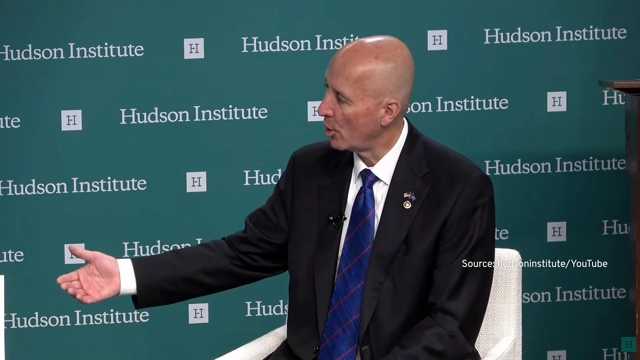 00:35
00:35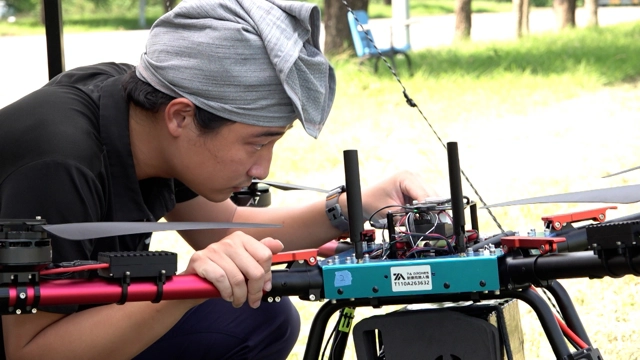 04:10
04:10 00:29
00:29