Taiwan-US Drone Supply Chain
REPORTER:
Drones are reshaping modern warfare, but much of the world's supply chain still depends on China. Taiwan is trying to change that. In the first of a three-part series, we look at Taiwan’s push to become a trusted drone manufacturing hub, and the opportunities – and challenges – that lie ahead.
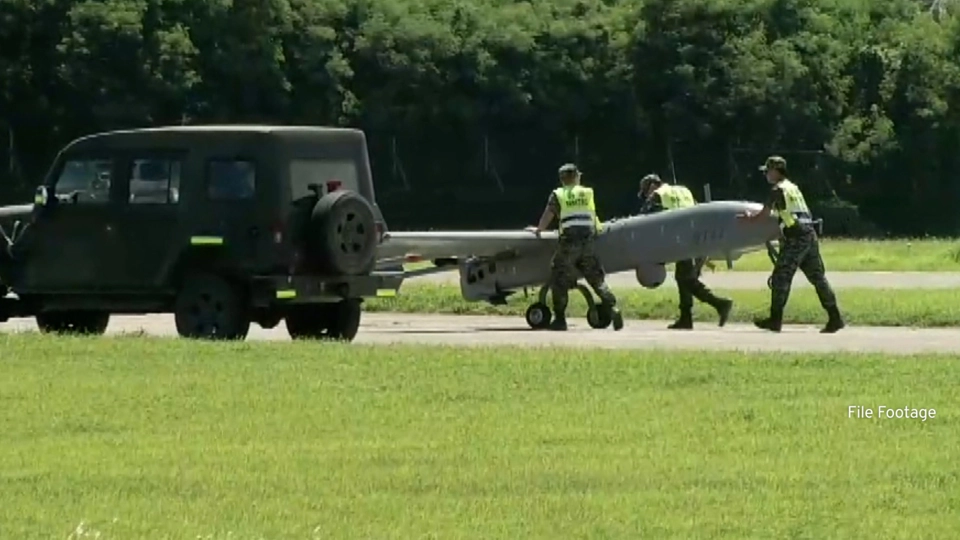
Recent conflicts have highlighted the growing importance of drones on the battlefield. They’ve also exposed a problem for the United States and Taiwan. Much of the global drone supply chain still runs through China, especially the smaller, tactical drones that have proven so effective in Ukraine. Taiwan hopes to change that by positioning itself as part of a trusted, “non-red" alternative that serves both its own military and partners like the United States. American drone companies are already starting to set up shop there — attracted by Taiwan's manufacturing expertise and strategic importance.
Brandon Tseng (CO-FOUNDER, SHIELD AI):
“There is not a more important place in the world to be than Taiwan.” “We are expanding in Taiwan in a pretty material way.”
Taiwan makes many of the semiconductors, electronics and precision components that advanced technologies rely on. Drone makers say that expertise is difficult to replicate elsewhere. Right now, roughly 16% of Shield AI’s components come from Taiwan. The company says it expects that number will rise to 25% in the coming years. Other American firms are pursuing similar relationships. AEVEX Aerospace signed a memorandum of understanding with Taiwan’s Aerospace Industrial Development Corporation in 2024. Now, it is exploring new ways to combine US drone technologies with Taiwanese manufacturing capabilities.
Craig Anders (SENIOR VICE PRESIDENT, AEVEX):
“We're working very hard to partner with Taiwanese companies to help enhance production opportunities, autonomy, all the things that we do, bring our technology to a place where we can partner to help grow it in a way that mutually benefits both Taiwan and the U.S.”
Former Taiwanese lawmaker Jason Hsu says the conflict in Ukraine has underscored the risks of relying on Chinese components.
Jason Hsu (SENIOR FELLOW, HUDSON INSTITUTE):
“Ukraine today still uses Chinese components for their drone assembly, and China is supplying Russian drones to use to fight Ukraine. So you are basically feeding your enemy food. And that’s very dangerous.”
Taiwan has historically struggled to build defense industries because it can not easily export weapons. Drones, however, often have both military and civilian uses, creating a larger potential market – and giving Taiwanese firms an opportunity to become both customers and suppliers.
Rupert Hammond-Chambers (PRESIDENT, US-TAIWAN BUSINESS COUNCIL):
“We are talking about developing a broad array of unmanned systems across the broad, broad gamut of what we might discuss, from subsea all the way into the air, that would both be consumed by Taiwan, but also by the United States and its partners and allies.”
Hammond-Chambers says progress has been uneven. But some Taiwanese firms have begun breaking into the U.S. market. Thunder Tiger Group has qualified for the Pentagon's Blue UAS certification program, which makes it easier for US government agencies to purchase its systems. Taiwan has made no secret of its drone ambitions. It sent its largest-ever overseas delegation to Detroit this year for Xponential, the world's biggest robotics and unmanned systems conference. But building a true alternative to China won’t be easy. China's manufacturing prowess allows it to produce dual-use drones quickly and cheaply. Kelly Grieco, a senior fellow at the Stimson Center in Washington, says China’s advantage is not simply low costs. It is scale.
Kelly Grieco (SENIOR FELLOW, STIMSON CENTER):
“Taiwan doesn’t have a large growing commercial drone sector. This is where China, in particular, really benefits.”
Taiwan’s ambitions also face political hurdles. Taiwan President Lai Ching-te has called for expanding the country’s drone industry. But lawmakers from opposition parties earlier this year stripped funding for domestic drone production from a special defense budget intended to accelerate military procurement. Industry officials like Aevex’s Anders say that that uncertainty could slow investment decisions.
Craig Anders (SENIOR VICE PRESIDENT, AEVEX):
“Until that gets really figured out and they understand what it’s going to look like, it’s going to be hard to get moving.”
Jim Snyder (TAIWANPLUS REPORTER):
Here in Washington, the Pentagon is pouring more money into drones and expanding programs such as Blue UAS. In Congress meanwhile a bipartisan group of lawmakers is pushing legislation to support Taiwan’s drone industry as a key part of the US defense supply chain.
Grieco says that despite the Trump administration’s emphasis on “America First,” officials recognize that building a secure drone supply chain will require help from allies.
Kelly Grieco (SENIOR FELLOW, STIMSON CENTER):
“I think there’s a practical recognition that that’s going to have to include allies and partners, and so there is opportunity there for Taiwan to plug into that in different places.”
There are signs Taiwan's drone industry is beginning to gain traction. In the first quarter of this year, drone exports from Taiwan reached US$115 million. That’s up from the US$93 million shipped all of last year. Some of these drones have ended up in Ukraine, through intermediaries like Poland.
Jim Snyder (TAIWANPLUS REPORTER):
For Taiwan, growing a domestic drone industry is about more than creating jobs or attracting investment. It is about strengthening ties to its most important security partner at a time when Washington is searching for alternatives to China.
 04:02
04:02 00:31
00:31 02:54
02:54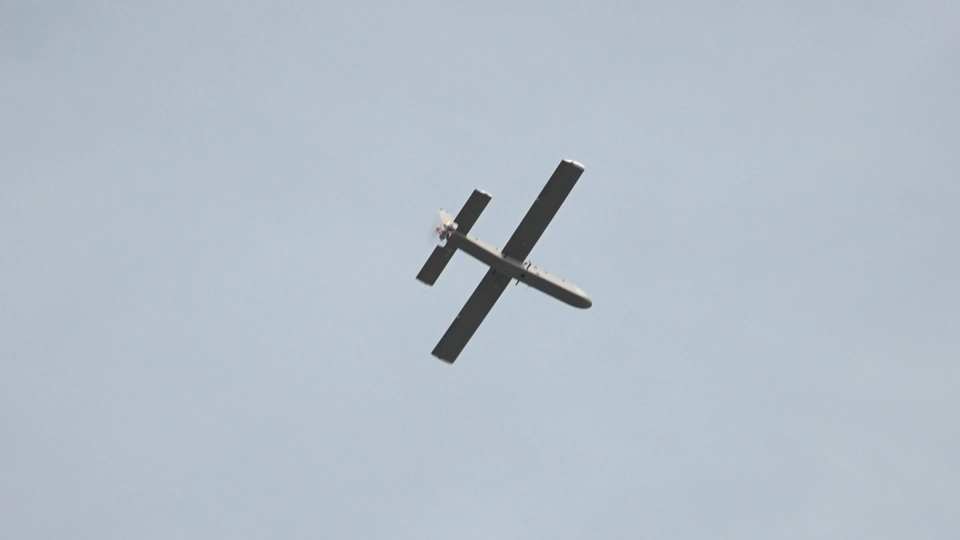 02:33
02:33 04:03
04:03 03:00
03:00 00:26
00:26 00:35
00:35 03:03
03:03 02:56
02:56 00:27
00:27 00:26
00:26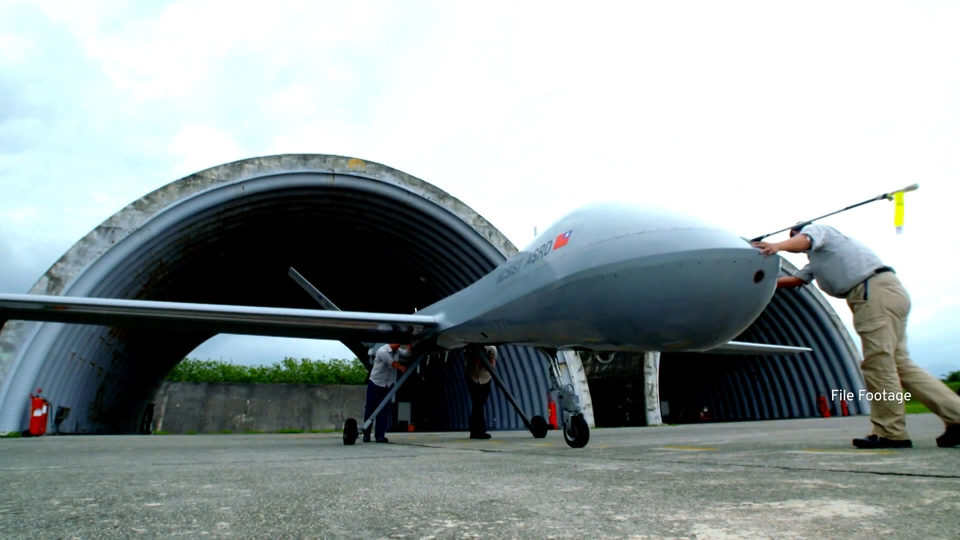 00:33
00:33 03:21
03:21 03:19
03:19 03:23
03:23