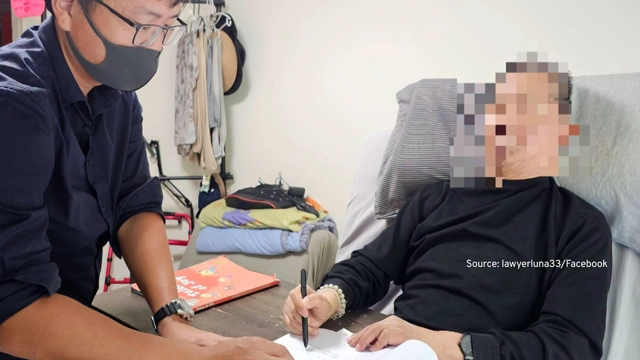
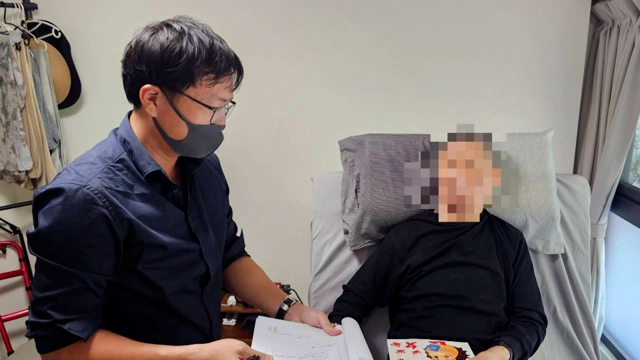
Mr. Chung has become the first person in Taiwan to launch a constitutional challenge aimed at legalizing euthanasia.
Ever since a fall left him almost completely paralyzed with a spinal injury... He's wished to end his suffering through euthanasia... a procedure illegal in Taiwan.
But rulings at the district and supreme court levels have denied his request. Chung has now brought the issue to the constitutional court, with the help of NGO Dying with Dignity.
CHI YUEH-LIANG, DYING WITH DIGNITY, TAIWAN:
"Protecting people's right to die in peace is important. I think it’s a matter of human dignity. The key point of euthanasia is that it requires action to end a person’s life. Right now, Taiwan doesn’t allow such thing."
Medically-assisted suicide, euthanasia or any kind of medical intervention designed to end lives is a criminal offense in Taiwan.
Chung's legal team and lawmakers from across party lines argue that current regulations violate a patient's right to autonomy.
There has been legislative action to change that... most recently, a rejected referendum proposal and two competing draft bills in the works.
CHEN KUAN-TING, LEGISLATOR (DPP):
"We hope the Constitutional Court will make a decision soon. Many citizens are living with unbearable pain and they need a solution. While we continue to push our draft bill [to legalize euthanasia] we hope there will soon be an answer [from the court]."
CHIU HUI-JU, LEGISLATOR (TPP):
"The question is whether people can have the right to choose a dignified end to their lives. The referendum proposal by Taiwan People's Party was voted out by the two other major parties. It was effectively dead before it could move forward. Next, we will push forward our draft bill in the [social welfare] committee."
Lawmakers emphasize that legalization requires more discussion about who should be eligible for the procedure... and who should administer it.
So far, the medical industry has mainly opposed legalization. They say hospice care should come first because it's more ethical.
HSU LI-AN, TAIWAN HOSPICE ORG.:
"If this person is living in pain then we should relieve the pain rather than end his life. Hospice care focuses on pain and symptom management as well as physical care and treatment. It also tries to ease people’s psychological social and spiritual suffering."
Some people in Taipei worry that euthanasia may be abused without careful assessments... or that it could add to the healthcare system's burden.
TAIPEI RESIDENT 1:
"I think as long as it's illegal in Taiwan [everyone] should follow the natural order. When you face difficulties or pain you go to see a doctor. That’s how it should be. Let the doctor make the final call."
TAIPEI RESIDENT 2:
"A doctor's job is to save [patients]. They probably don’t want to get involved too much."
But some say patients' autonomy in actively choosing a way to end their lives should be respected.
TAIPEI RESIDENT 3:
"I think choosing hospice care is often more about what the family wants. I’ve actually thought about it before. If I were the one hospitalized for a long time and knew I wasn’t going to get better and it would just drag on I think I might feel okay for my life to come to an end and that I wouldn’t [need to keep living like that]."
TAIPEI RESIDENT 4:
"I think it's a way to let people make their own decision. If they’re ready to go they can choose to go. Euthanasia is something you can decide for yourself whereas with hospice care you’ve already reached the final stage of your life so you may no longer be able to decide for yourself. You’re simply placed there by someone else."
As society awaits the constitutional court ruling in this landmark case... civic groups and lawmakers on both sides of the debate will continue to press their arguments... trying to strike a balance between human dignity and medical ethics.
 03:47
 00:37
 03:19
 00:42
 04:45
 01:34
 06:12
 00:42
 03:22
 04:27
 01:48
 04:16
 00:43
 00:29
 04:21
 00:46