A journal entry reflects on life before being imprisoned on Taiwan's Green Island in the 1950s. Its author, Ding Yao-tiao, was a mother, a prisoner and a White Terror victim from an early stage of the country's martial law period. Before she was executed on sedition charges in 1956... Ding was an ordinary post office worker... until someone reported the Mandarin Chinese class that Ding's office was attending... claiming they were criticizing the government over unequal pay compared to their new colleagues from China. As a result, she was sent for a year to Green Island -- the notorious offshore prison that housed political dissidents... after that, she hoped to carry on with life with her husband... but authorities decided they weren’t done with her.
HUANG LUNG-HSIN, NATIONAL HUMAN RIGHTS MUSEUM: "The police said, don't worry. She was imprisoned on Green Island for a year over the matter of the Mandarin class. That's all over. But we have some more things to clarify. When Ding was being questioned she and her husband realized something was off. Police continually held that she took part in and organized underground groups. Wu Li-shui was the secretary, Ding Yao-tiao was the convener and Lei Shui-chuan was the publicist. Based on Lei's oral account he said the accusations were false and the story was entirely fabricated."
Based on this evidence, Ding was executed. Back in the 1950s, the Kuomintang government had declared martial law and began a heavy crackdown on suspected communist spies... a period of political persecution known as the White Terror. Informants and officers who handled these cases were granted financial rewards. Historians and witnesses say reports often lacked proper investigation. Some survivors in Ding's case believe that she was framed not just by the police... but by people around her.
CHANG TSANG-HAN, FORMER POLITICAL PRISONER: "Ding Yao-tiao warned Shih Shui-huan that a man was interested in her. Wang Hsi-ching. I knew him too. He was four grades above me at Tainan Second High School. He had a bad moral character. That's why Ding told Shih that because Wang is pursuing Shih, Shih should ignore this guy. So Wang held a grudge against Ding and reported her to the authorities."
Back at Ding's old high school in the southern city of Tainan... One tree, one teacher and an underground student club called Nan-man are remembering her in their own way. One of Ding's fellow inmates revealed that under this tree, he buried a lock of her hair in commemoration... Teacher Lin Hsiu-chen and her students decided to share the tale with a handdrawn picture book written in Ding's mother tongue, Taiwanese Taigi. Giving full credit to her students in the Nan-man club... Lin says these young activists were unafraid to speak up about injustices around them...even when they faced resistance on campus.
LIN HSIU-CHEN, TEACHER, NAT'L TAINAN GIRLS SENIOR HIGH SCHOOL: "To me, Ding Yao-tiao's story represents a rupture and a blank space. The rupture refers to our unfamiliarity with Taiwan’s history. The blank space refers to how Ding’s story is something that few people in schools have ever had the chance to understand or know about. When the Nan-man club recounted history it sought to use a kind of grassroots fieldwork-driven approach to start the initial conversation."
Cheng Shao-yun was one of the last members of the Nan-man club and the historical researcher for the picture book. When Ding's memorial tree was toppled during a typhoon... Cheng started a petition to save it and got the attention of what is now the national human rights museum. She says Ding's story and the process of researching it laid the foundation for her activism in Tainan.
CHENG SHAO-YUN, TAINAN SPROUT: "Back when I was a high school freshman I relied on Google and Wikipedia. You would just repeat whatever you found. Later on, I began meeting with survivors and learned what oral history interviews are. After high school, I became a history major. That’s when I began to understand how to conduct research properly. I’m filming a documentary on White Terror myself. I feel that focusing on the history of the victims’ suffering serves to help us understand and give meaning to their experiences. It allows us to better appreciate the depth of human resilience."
Ten years after graduating from high school... former Nan-man member Pan Mei now lives in Taipei but is still involved in democracy activism. She says although Ding Yao-tiao's story is less discussed these days... The social momentum continues to inspire younger generations.
PAN MEI, TAIWAN YOUTH ASSOCIATION FOR TRANSITIONAL JUSTICE AND KIONG-SENG: "Recently, we've come into contact with quite a few people who are similar to me and the students who came before me. Namely, people in our age group, around 30 who might have had their awakening to social movements in high school then engaged with social issues during university. Many of them have gone to work in education or other related jobs. They would come and ask us if they were to teach their students the stories of anti-government uprising, called the 228 Incident or the history of White Terror how they should go about it."
Seven decades later, and with most direct witnesses now deceased... it's becoming even more difficult to piece together what exactly happened to Ding Yao-tiao... But her story has planted a seed in a new generation of activists... sprouting across the country. Ding’s lone memorial tree in Tainan now joined by them... to strengthen the roots of Taiwan's democracy.
 03:19
03:19 00:42
00:42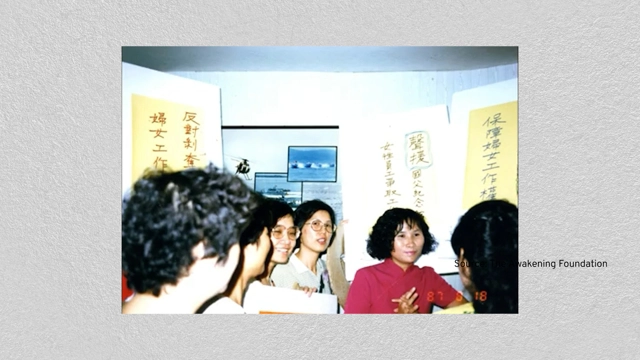 04:45
04:45 01:34
01:34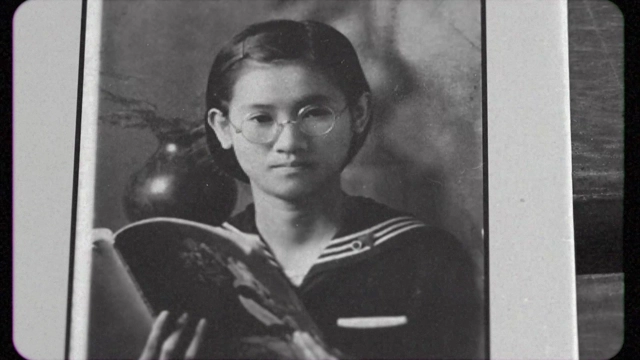 06:12
06:12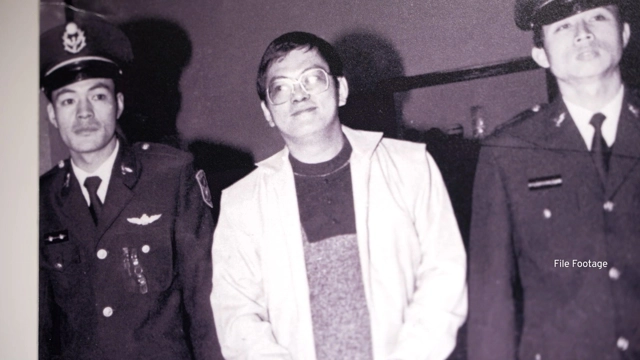 00:42
00:42 03:22
03:22 04:27
04:27 01:48
01:48 04:16
04:16 00:43
00:43 00:29
00:29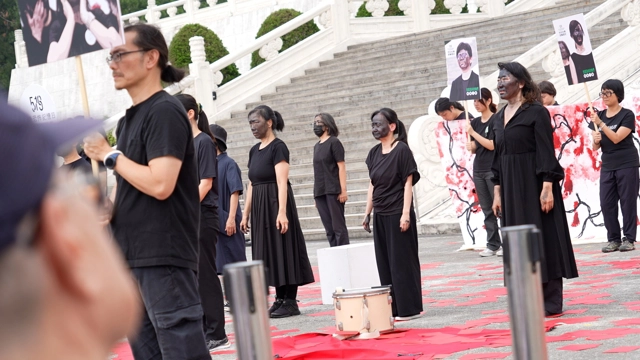 04:21
04:21 00:46
00:46 01:19
01:19 04:52
04:52