A snapshot taken at the June 4th Tiananmen Crackdown in Beijing... 37 years later, the shoe’s owner and the source of the blood remain unknown, as does the death toll, which some scholars put in the thousands. This was just one of many photos left over after the 1989 crackdown.
On its anniversary, they’re on display at this photography exhibition in Taipei. The curator, Silver Wong, is the first Hong Konger to dedicate such exhibition to the Tiananmen Square crackdown and its impact on the region.
Wong said, "I like to select these photos by focusing on the spirit in people’s eyes and faces. I believe these facial expressions are honest. These emotions — like anger towards authoritarian power in the moments of people standing up to it — are the best."
Wong only had a month to put together the exhibition and said the hardest part was securing photographers’ permission to display their work. Some were afraid of Beijing’s surveillance, while others feared showing the photos could put their subjects in danger. As a senior in university and an activist, Wong has faced opposition both from his own family back in Hong Kong and on his campus in Taiwan.
He said, "Our school has laid out booths for social movements before. Some students would walk over and tell us that what we’re doing is wrong. Some Chinese students would also say these things do not help the country."
Chinese historian Wu Renhua is also fighting to keep these memories alive. Wu was in Beijing when the crackdown happened and witnessed it firsthand. He’s been working to record the incident ever since. He was 33 at the time and a professor sent by his university to Tiananmen Square to maintain order, while several of their students went on a hunger strike. Little did he know that tanks were heading their way.
Wu recounted, "What left the deepest impression on me was when students were forced out of the square at dawn on June 4th. When they reached Liubukou on West Chang'an Avenue, three tanks from the martial law forces came up behind the column of retreating students, killing 11 at the scene."
Wu says the crackdown impacted both those who experienced it and those who hoped to influence China’s communist government.
"At the time of the June 4th massacre, China and the UK were negotiating the 1997 handover of Hong Kong. Therefore, Hong Kongers were paying close attention to the 1989 pro-democracy movement in Beijing. They hoped that China would undergo positive changes which would benefit Hong Kong’s future. But the crackdown came as a shock. It completely shattered their hopes. That’s why Hong Kongers have a personal connection to the June 4th events."
Wu says anniversary events held outside of China and Hong Kong carry great significance, especially for Taiwan, which is under imminent threat from Beijing. According to investigations by Taiwan’s mainland affairs council -- the government body in charge of ties with Beijing -- there have been at least 120 cases of cross-border political persecution by China against Taiwanese nationals.
Deputy Minister of the Mainland Affairs Council, Shen Yu-chung, said, "[China] is trying to force Taiwan to accept their “one China” narrative and the framework of the so-called “1992 Consensus” defined by them. I believe if Taiwan accepts their version of peaceful unification, the next vigil we hold here may be one mourning the loss of Taiwan’s freedom and democracy."
On the anniversary in Taipei’s Liberty Square, rain drenches a replica of Hong Kong’s Pillar of Shame sculpture—an iconic work memorializing the victims of the 1989 crackdown. Braving the weather, officials said it was as though the heavens were weeping for the tragedy, but that a single wild lily representing Taiwan’s democracy endured.
 03:19
03:19 00:42
00:42 04:45
04:45 01:34
01:34 06:12
06:12 00:42
00:42 03:22
03:22 04:27
04:27 01:48
01:48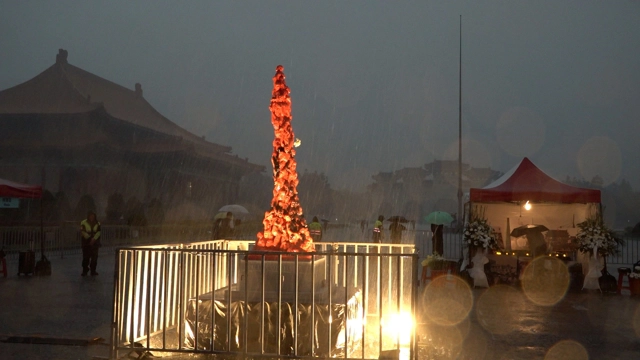 04:16
04:16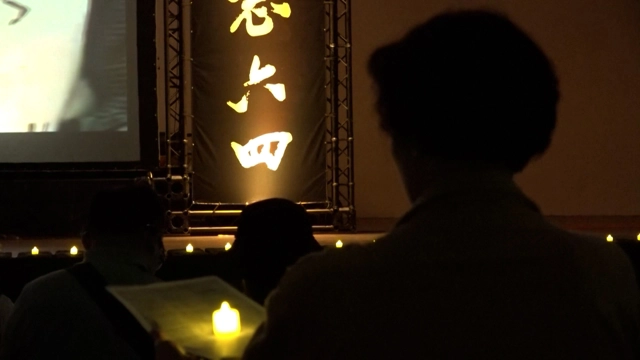 00:43
00:43 00:29
00:29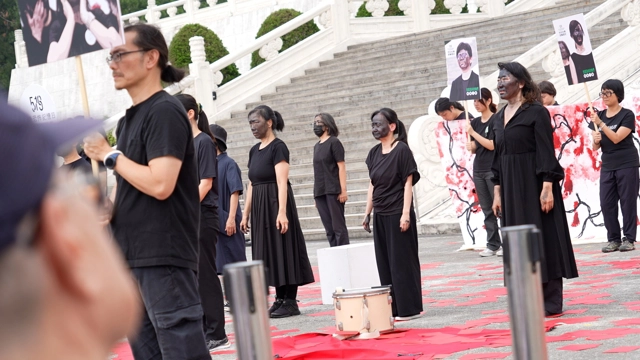 04:21
04:21 00:46
00:46 01:19
01:19 04:52
04:52