Charred stubs and an odd bit of wall are all that’s left of this village. Like many parts of Indonesia, this area of Sumatra has been in flames amid an unprecedented El Nino that’s made this dry fire season worse than usual. People here say they saw the fire coming as early as Saturday, and tried to put it out themselves.
ERNAWATI, NEIGHBORHOOD CHIEF:
"We’re a long way from town, so it took firefighters about two hours to get here."
And while the flames did go out, they didn’t stay out for long. This is peatland, and it soon reignited. Around a thousand people fled. Many lost whatever they couldn’t carry. Wildfires are not unusual around here...but it seems no one expected the ferocity of this blaze. 300 houses went up quickly and burned to the ground.
GUNADI, RESIDENT:
"Fires happen often here, but they used to be put out quickly because there was still water. But this year, everything is gone. Completely."
And this is just one fire among many sweeping Indonesia. In parts of Borneo, for instance, smoke is so thick the water bombers trying to put out fires have had to be grounded. The situation has gotten so bad that the government has mobilized 60,000 personnel.
The fires’ impact has spread far beyond Indonesia. A thick, choking haze has drifted across to Singapore and Malaysia. By the calculations of Swiss air quality monitoring firm IQAir, Singapore’s poor air quality makes it—for now—the second most-polluted major city in the world.
Some Indonesian environmentalists blame agriculture on peatland for the blaze. They say these wetlands become flammable when drained for crops.
BELGIS HABIBA, GREENPEACE FOREST CAMPAIGNER:
"In its natural state, peat does not burn. It stores carbon. When it is cleared, licensed for development, exploited and drained, it already releases very large amounts of carbon. When it burns, it releases very large amounts of carbon again."
While that may be one issue, there is also the use of slash-and-burn farming to clear land in much of Indonesia—turning a naturally fire-resistant landscape into a potential tinderbox. And, once again, there is the wider impact of climate—the El Nino-induced drought giving the flames extra strength. After a summer in which much of the world saw destructive wildfires, Indonesia continues struggling to contain blazes that rage across the land, upturning lives as they go.
Dolphine Chen and John Van Trieste for TaiwanPlus.
 03:28
03:28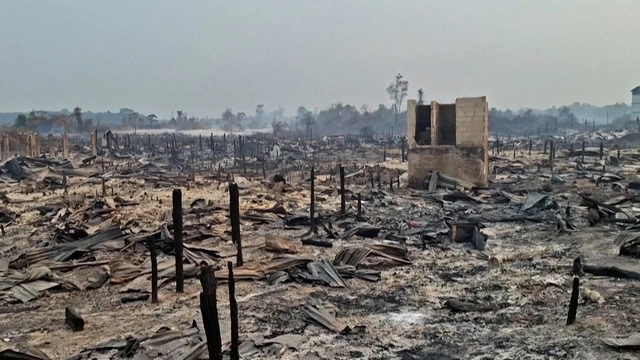 02:51
02:51 02:34
02:34 00:26
00:26 01:54
01:54 00:22
00:22 00:35
00:35 00:51
00:51 02:54
02:54 00:37
00:37 02:09
02:09 02:53
02:53 03:19
03:19 00:36
00:36 02:31
02:31 02:33
02:33