In a trendy Tokyo gelato shop, it’s the purple flavor of the year that’s all the rage. It’s ube -- a nutty, purple tuber that’s been a Filipino staple for millennia... And it’s taken over the world’s foodie capitals overnight.... becoming “ube-quitous”...
It’s not just ice cream either—ube-flavored candy, baked goods, coffee and more have taken off worldwide. Even here in Japan, home of that other dessert flavor craze, matcha, ube is in hot demand. For importers, it’s a sudden bonanza.
JP MERCADO, UBE IMPORTER:
"I think social media has been hugely impactful. I think it is a primary driving force for what people have been calling the ube boom. It has a natural, vibrant color that obviously attracts instant attention. It's a natural flavor."
The sudden love of all things ube is a source of deep pride for Filipinos. But it’s also a problem. And ube farmer and exporter Al Bonifacio is among those concerned.
Here at his farm in Batangas, around 90 kilometers south of Manila, he shows off some of his crop with satisfaction. The trouble isn’t the quality: it’s the scale of the demand and the Philippines’ seeming inability to meet it. With ube taking a whole nine months to grow, there's a great temptation to grow other staples that take less time to mature. With recent typhoons, yields are down.
And there's real anxiety around bio-piracy, the idea that some other country—maybe a Southeast Asian neighbor--could smuggle in ube to cultivate and topple the Philippines’ lead in terms of market share. Manila has even banned the export of raw ube outright. Farmer Al Bonifacio explains his feelings.
AL BONIFACIO, UBE FARMER AND EXPORTER:
"We are stewards of the ube industry. We are stakeholders. We want this to grow, to improve and we are out here doing our studies. Even if some harvest die, I'm okay with that. We learn from that and we share it with the community. I want to be able to have a stronger Philippine ube industry -- from farming, supply chain, processing -- and we ask the government to help us achieve that by protecting ube for the Filipinos."
But protecting the ube for the Philippines isn’t just about export controls: there’s a government push to increase productivity and, perhaps through crop improvements, to cut down on the key factor for production: time.
JOSE ZALDE SAMSON, BUREAU OF PLANT INDUSTRY:
"The production aspect of ube is still the biggest gap to be bridged by the government and other stakeholders because for you to have a tuber, you need to wait, at most, ten months or at least ten months, because ube is not a cash crop like banana or vegetables."
And as the trendy crop’s stock continues to enjoy a purple patch around the world, this agronomic work is already happening—with one target being to shorten the growing season to six months. All to satisfy the sudden international hunger for this crop, while keeping its deep-rooted ties to Filipino identity intact.
Scott Huang and John Van Trieste for TaiwanPlus.
 00:37
00:37 02:09
02:09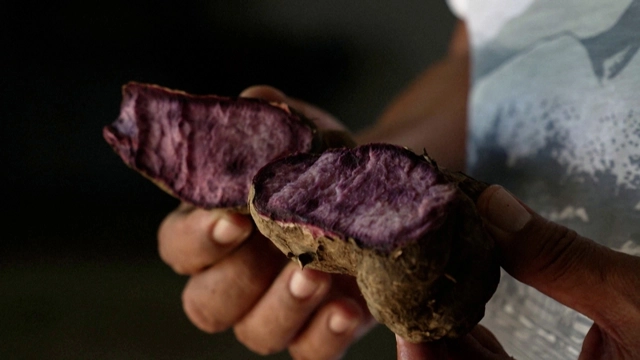 02:53
02:53 03:19
03:19 00:36
00:36 02:31
02:31 02:33
02:33 00:55
00:55 00:37
00:37 00:29
00:29 00:29
00:29 00:31
00:31 02:49
02:49 00:33
00:33 01:56
01:56 03:05
03:05