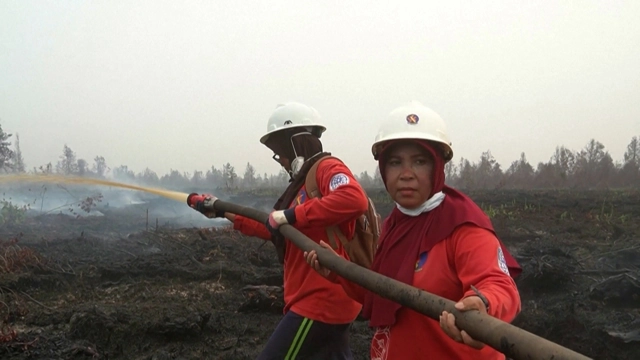
Indonesia’s wilderness is burning. Authorities have deployed more than 50,000 firefighters and dozens of aircraft in response. But some firefighters here are determined unlike others – they are local mothers.
These women in West Kalimantan are riding out to meet the flames. They call themselves the "Power of Mama." They patrol, track hotspots and fight fires using little more than diesel-powered water pumps strapped to motorbikes.
For them, the fight is personal.
ELLY MARLINA, MEMBER, POWER OF MAMA:
"These forest and land fires have a major impact on women and children. I experienced these impacts firsthand when my own child suffered an acute respiratory infection in 2019 during the forest fires in our area."
The group has more than 140 members: farmers and stay-at-home mothers from 10 villages in the area. Some say they take the loss of the forest personally.
MITA ANGGRAINI, SUPERVISOR, POWER OF MAMA:
"When they go out on patrol, they walk through the forest thinking, "I need to protect this." Some of the mothers have told me… when they find that the forest is gone and all that remains are the sounds of chainsaws, it makes them sad."
The biggest factors fueling the blazes in Borneo are fires set to clear land for oil palm plantations, along with drought.
Much of the region is peatland, where fires can burn underground for long periods releasing a thick haze of smoke.
Preventing fires in the area requires constant monitoring.
MUTIA MULANSARI, MEMBER, POWER OF MAMA:
"The fire risk here is high, we monitor dry lands or lands prone to fire. For example, in the Mensubuk area, where the fire still has not been extinguished due to the peatland characteristics."
But the women face more than fires and haze.
Many are homemakers, and some say their husbands believe household duties should come first.
MUTIA MULANSARI, MEMBER, POWER OF MAMA:
"Some say we just ride motorbikes back and forth, back and forth. They do not know what we really do."
RAMILAH, MEMBER, POWER OF MAMA:
"There has been a lot of prejudice. So we have explained that our intention is good, to help monitor fire spots for the community's safety and [praise be to god], the community has begun to accept it."
It’s a region where women are often expected to handle childcare, cooking and cleaning, while firefighting is largely left to men.
The mothers patrol all morning into the afternoon before returning home to see to their other responsibilities.
With each fire spotted and tracked, the women continue riding out, as their communities slowly come around to their mission.
Klein Wang, Jonathan Kaplan and Ted Chen for TaiwanPlus
 02:49
02:49 00:33
00:33 01:56
01:56 03:05
03:05 01:47
01:47 00:24
00:24 00:36
00:36 00:30
00:30 02:44
02:44 04:01
04:01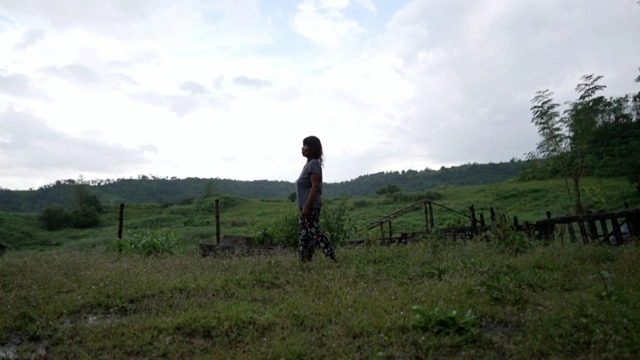 02:58
02:58 02:34
02:34 03:37
03:37 02:31
02:31 02:04
02:04 00:28
00:28