Grueling Heat Wave Exposes Wealth Gap in Seoul, Kills Lions in Tokyo
By Eason Chen/John Van Trieste
Parts of East Asia continue to labor under an extreme summer heat wave, highlighting the wealth gap in Seoul and causing the deaths of three lions from heatstroke at a zoo in Tokyo.
Extreme Heat Highlights Inequality in East Asia
REPORTER:
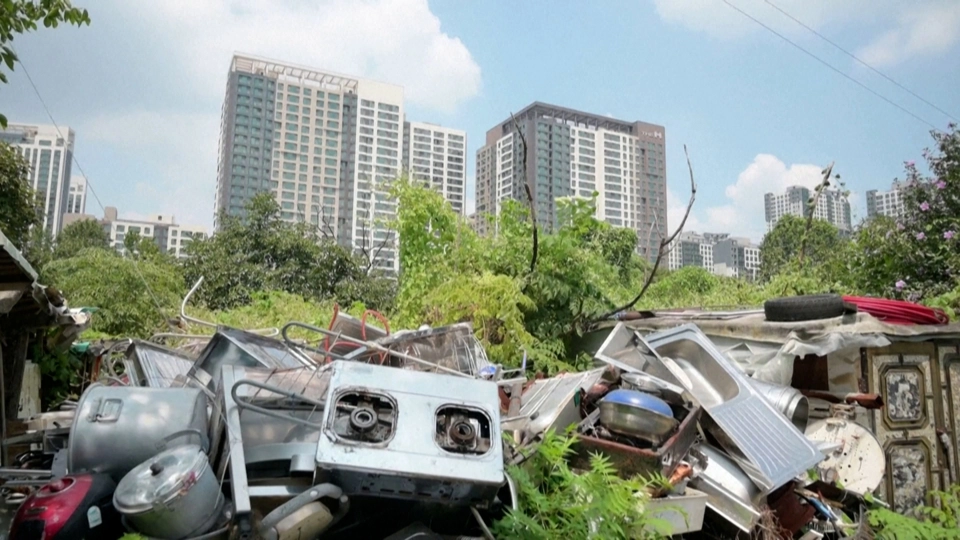
From the Seoul shantytown of Guryong village, South Korea’s wealth gap has long been plain to see. Piles of abandoned junk and makeshift shelters are in the foreground, and the multi-million dollar luxury apartments of swanky Gangnam in the distance.
REPORTER:
But this summer, there’s a new class divide that’s making itself felt sharply—access to air conditioning.
REPORTER:
South Korea’s weather service has much of the country under some kind of heat alert as of Wednesday, and this severe heat wave looks far from over.
REPORTER:
For those without air conditioning at home in this poor community, the weather’s gotten unbearable.
Baek Su-hyun (GURYONG VILLAGE RESIDENT):
Usually, the temperature here is around 35, 36, or 37 degrees [Celsius] during the day. Then inside here, it goes over 40 degrees. It always gets above 40. Then, it’s impossible to sleep.
REPORTER:
A heat shelter is in place in the village to help prevent heatstroke.
REPORTER:
And yet, for some, scavenging for fans among the junk piles here has become a way of survival.
Ko Jae-ok (GURYONG VILLAGE RESIDENT):
I am just barely surviving. It goes without saying. I have picked up fans here and there, and now I have three or four of them going around.
REPORTER:
Meanwhile, Japan is also laboring under another oppressively hot day, with heatstroke alerts over much of the country on Wednesday. And it’s not just humans who are being affected.
REPORTER:
In Tokyo’s Tama Zoological Park, ten of the lions have fallen ill. The zoo says lions are adapted to the dry heat of the African savanna, not to the mix of intense heat and humidity found in the Far East.
Nakamura Masato (EDUCATION AND PR MANAGER):
Around mid-July, several of our lions began to show signs of poor health. Specifically, some of them stopped eating and became extremely lethargic to the point that they could no longer move.
REPORTER:
Three of those lions are now dead: a vet at the zoo says heatstroke led to dehydration and multiple organ failure.
REPORTER:
The safari buses that move through the lion enclosure have stopped until further notice as some of the other lions continue treatment. The zoo says it’s working to protect its animals, with water sprinkling, better ventilation and putting in spot air conditioners. And, unlike in some parts of Japan, where temperatures have broken 40 degrees Celsius, the mercury in Tokyo is set to hover around 30 for the coming days. But this summer, and the chance of further extreme heat, isn’t over yet.