Japan PM Pledges Help to Earthquake-Hit Area During Inspection
By TaiwanPlus
Japanese Prime Minister Takaichi Sanae has pledged financial help and set recovery targets for infrastructure during an inspection tour of earthquake-hit Kumamoto Prefecture.
Japan PM Inspects Earthquake Zone
REPORTER:
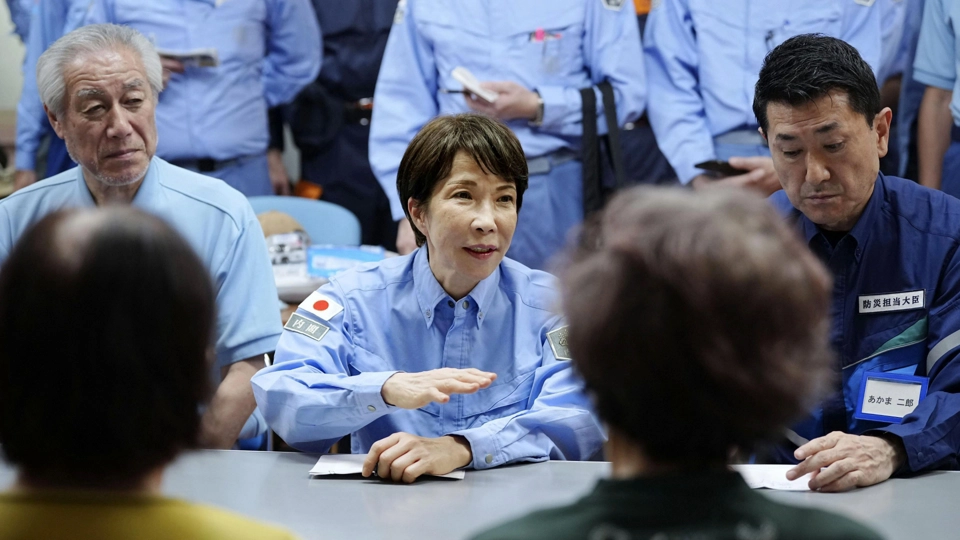
Japanese Prime Minister Takaichi Sanae has toured earthquake-hit areas in Kumamoto Prefecture. She’s promised help is on the way for survivors, many of whom have been enduring intense heat without water or power.
Takaichi Sanae (JAPANESE PRIME MINISTER):
Although electricity has now been restored, we will continue to work swiftly and thoroughly to restore services including the equipment repairs in individual households. Regarding the water supply, we are ensuring a continuous supply to evacuation centers, welfare and medical facilities, and we plan to provide an estimate on the restoration of supply by the end of this week.
REPORTER:
Takaichi says the Cabinet will move to approve funding of around $120 million US dollars to aid in recovery.
At least 38 people died as a result of last week’s 7.1 magnitude earthquake. Around 8,000 people are still in evacuation shelters, with others staying in cars or in donated hotel rooms.
Takaichi’s inspection included a helicopter view of the destruction from above and a visit to a shelter.
Following the prime minister’s tour, Taiwanese chipmaker TSMC said its local fab is fully back online, ending worries about disruptions to production.
---
Japan PM Offers Condolences, Outlines Recovery Plans
REPORTER:
Japan’s Prime Minister visited quake-hit Kumamoto prefecture in the country’s south on Monday (August 3), six days after a magnitude-7.1 tremor killed 38 people and left tens of thousands without water.
Takaichi Sanae (JAPANESE PRIME MINISTER):
I would like to offer my deepest sympathies to those who lost their lives in the Reiwa 8 (2026) Kumamoto earthquake, and I offer my sincere condolences to their bereaved families. I also extend my heartfelt sympathies to all those affected by the disaster.
Takaichi Sanae (JAPANESE PRIME MINISTER):
In order to speed up and further strengthen disaster recovery efforts, including emergency repair works, the Cabinet will secure the necessary funding by approving tomorrow the release of more than 20 billion yen from contingency funds.
Takaichi Sanae (JAPANESE PRIME MINISTER):
Although the electricity supply has now been restored, we will continue to work swiftly and thoroughly to restore services including the repair of equipment in individual households. With regard to the water supply, we are ensuring a continuous supply to evacuation centers, welfare and medical facilities, and we plan to provide an estimate on the restoration of supply by the end of this week.
Takaichi Sanae (JAPANESE PRIME MINISTER):
The government will work together with local authorities to ensure that housing is provided promptly to give peace of mind to those affected by the disaster.
REPORTER:
Takaichi said the government was working to maintain water supplies to medical and care facilities, and aimed to soon provide an update on when services would be restored more widely.
Kumamoto was previously hit by a major earthquake in 2016. While the death toll from last month’s quake has been far lower than the more than 260 that died in 2016, nearly half of the deaths occurred in commercial facilities.
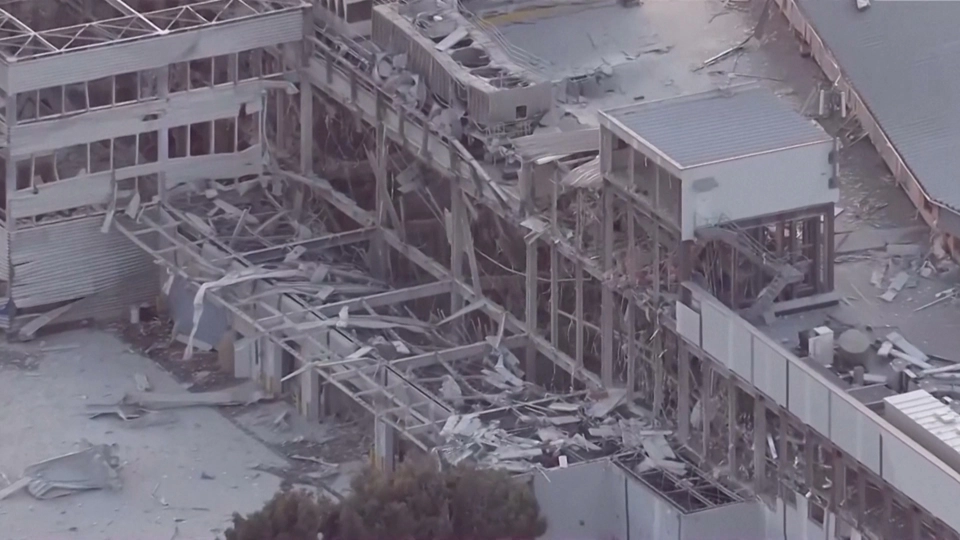
Nine people were killed at Nippon Paper Industries' paper mill near the epicentre, which suffered major structural damage that saw its smokestack topple over.
A further seven died at Aeon's shopping mall, the biggest in the prefecture, where a possible gas explosion occurred more than an hour after the initial quake.
---
Life in Kumamoto: Debris, Heat, and Ongoing Recovery
REPORTER:
Japanese Prime Minister Sanae Takaichi briefly visited the country's quake-hit southwestern prefecture of Kumamoto on Monday for the first time since a magnitude 7.1 quake hit the area last week.
Thirty-eight people died during the quake, including one who died of apparent heat stroke while taking shelter in a car in hot weather and one other whose cause of death is still being investigated, prefectural officials said Monday.
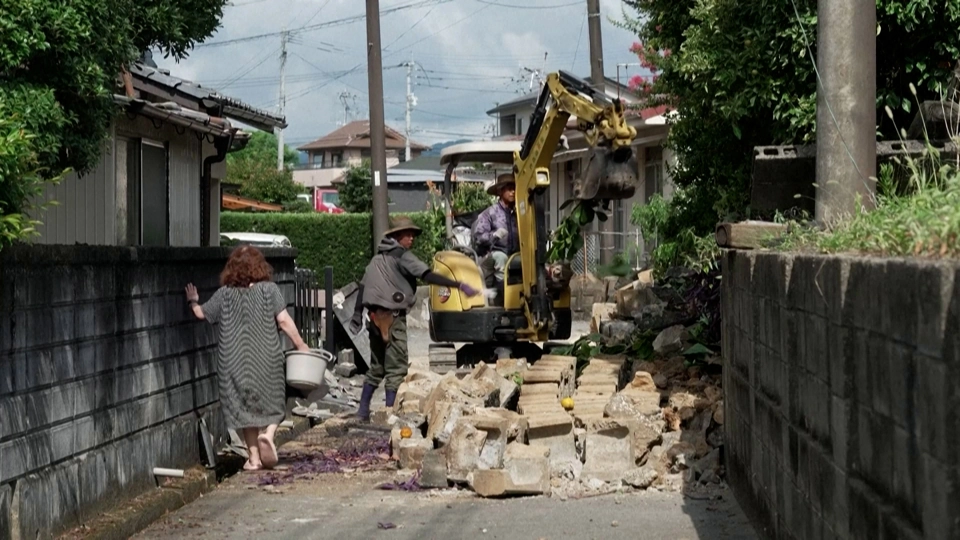
Residents put out heaps of debris, broken furniture and damaged appliances for collection, while in the towns of Uki and Hikawa, construction of temporary housing began.
Some hotels and inns are offering their rooms for evacuees.
More than 46,000 households remained without water and many also faced fuel shortages as the region suffers sweltering heat, stoking fears of heat-related illness.
Japan Meteorological Agency predicted that temperatures would rise close to 40 C (104 F) Monday.
More than 8,500 people remain at crowded emergency shelters, such as converted community centers, school gyms and classrooms, many of which lack air-conditioning.
Others are sleeping in cars at town hall parking lots and parks, or outside of their homes.
Experts have long warned that inadequate shelter provision leads to crowded conditions and a lack of sanitation and privacy for people forced to leave their homes following disasters.
Takaichi on Monday flew over the affected areas from an army helicopter and visited one of the area's best-equipped shelters, with cardboard beds, partitions and air-conditioning, triggering criticisms on social media that her visit distorted reality.
Kumamoto Gov. Takashi Kimura, in his meeting with Takaichi, stressed the “abnormal heat" has been pounding on the already difficult lives of the residents.
He sought further government support to improve the living conditions at evacuation centers, saying many of them lack clean water and medical care.
Takaichi Sanae (JAPANESE PRIME MINISTER):
Taking into account the findings from this inspection, the government will further strengthen and accelerate its efforts regarding push-type supplies support, assistance for rescue operations carried out by prefectural governments, and disaster recovery efforts including emergency restoration.
REPORTER:
The earthquake has left 114 people injured across Kumamoto, authorities said.
Some 700 homes were destroyed, and more than 11,300 buildings were damaged, according to Kumamoto prefecture.
Evacuees in Japan’s southwestern region of Kumamoto Prefecture continue to live in shelters and clear debris in extreme heat, six days after the magnitude 7.1 earthquake hit last Tuesday.
According to the Japan Meteorological Agency, the prefecture is expecting temperatures of up to 40 degrees Celsius on Monday, adding to the plight of people in the southwestern Japan prefecture hit by a powerful earthquake.
As more than 8,500 people are staying in evacuation shelters following the earthquake, which registered up to 7, the highest level on Japan's seismic intensity scale, the prefectural government has started procedures for them to move to hotels and other lodging facilities in the cities of Uto, Uki and Yatsushiro and the town of Hikawa for secondary evacuation.
According to the prefectural government, all affected people are eligible to relocate to such secondary evacuation facilities. Related leaflets were distributed at current evacuation centers Monday. Relocation is expected to start Tuesday at the earliest.
In addition, 50 makeshift housing units will be built in Uki and 20 in Hikawa. They will become available in September or later. Damage was especially heavy in the two municipalities, where the earthquake measured the maximum seismic intensity of 7.
As of Monday morning, the death toll from the quake stood at 38, including cases under investigation for possible links with the disaster, according to the prefecture's disaster response headquarters.
Of the victims, a woman in her 70s, who is believed to have died of heatstroke, may be recognized as the first casualty related to the latest disaster.
The number of damaged houses has reached 4,622 while water supply has been disrupted at 46,700 households.
The prefecture’s main challenge is the lack of fresh water still affecting nearly 47,000 homes, and fuel shortages as Japan suffers sweltering heat, stoking fears of heat-related illness.