Indonesia Struggles Against Large Peat Blaze Amid Tough Weather Conditions
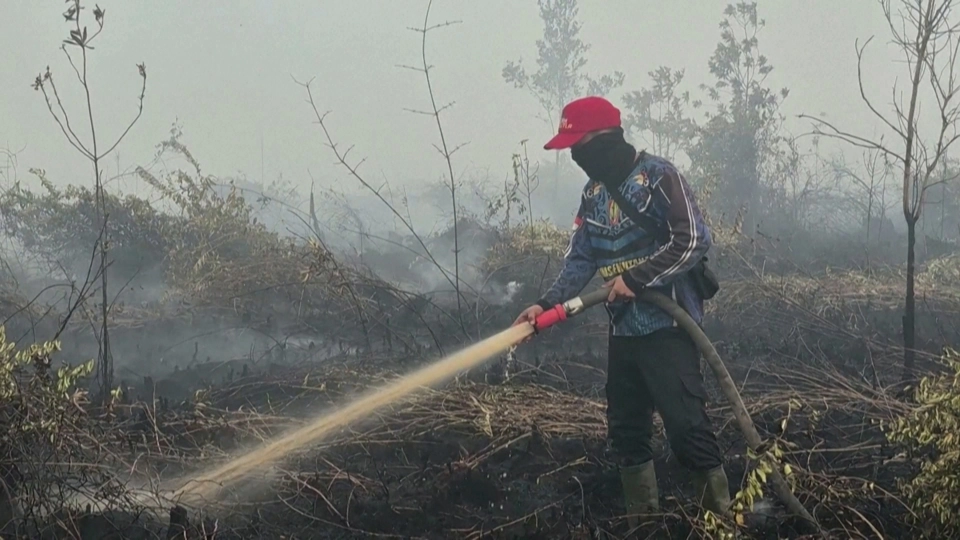
Indonesian firefighters are struggling to get a large wildfire in peatland under control as weather conditions and the nature of peat create a double challenge. The fire in Kalimantan on the island of Borneo is being exacerbated by a long dry season intensified by the El Niño phenomenon.
Indonesia Wildfires
REPORTER:
Indonesian firefighters are battling a blaze covering more than 100 hectares of peatland in Central Kalimantan province. The trouble comes both from weather conditions and the fact that peat embers can keep burning deep underground—restarting fires that looked like they were put out.
Herman Wibowo (REGIONAL DISASTER MANAGEMENT CHIEF):
The fire was once extinguished but due to the wind, hot weather and the peat, which, as we can see today varies in depth from 4 to 8 meters with some spots even deeper [the fire restarted].
REPORTER:
Conditions may get worse: Indonesian officials expect the peak of the dry season is still ahead later in the month, and the El Niño climate phenomenon could make weather even more intense.
More than 100 hectares of peatland in Indonesia's Central Kalimantan province have been affected by wildfires as the country experiences a prolonged dry season. Firefighters are struggling to extinguish the blaze due to strong winds, high temperatures, and the unique characteristics of peatland, where embers can continue burning beneath the surface. Indonesia's Meteorology, Climatology, and Geophysics Agency has predicted that the peak of this year's dry season will occur in August. However, the ongoing El Nino phenomenon is expected to intensify weather conditions.
Herman Wibowo (REGIONAL DISASTER MANAGEMENT CHIEF):
Indeed, the fires in the Tumbang Nusa area are a significant challenge for me today. Since the first fire on July 2, 2026, we have been conducting firefighting efforts, involving the Indonesian National Armed Forces (TNI), the Indonesian National Police, wildfires fighter Manggala Agni, the provincial Regional Disaster Management Agency, and volunteers.
Herman Wibowo (REGIONAL DISASTER MANAGEMENT CHIEF):
The fire was once extinguished, but due to the wind, hot weather, and the peat, which, as we can see today, varies in depth, from 4 meters to 8 meters, with some spots even deeper.
Herman Wibowo (REGIONAL DISASTER MANAGEMENT CHIEF):
As for the fire area, from helicopter photos, today it is around 104 hectares.
Herman Wibowo (REGIONAL DISASTER MANAGEMENT CHIEF):
So, to speak of cycles, there are actually rainy and dry seasons that normally occur. However, things will be different if the dry season is accompanied by an El Nino event. This means that the hot dry season will be even hotter.