Kumamoto Earthquake Death Toll Rises Amid Risk of Aftershocks
The death toll from Tuesday's earthquake in Kumamoto, Japan is rising as search and rescue efforts continue. But the risk isn't over, with the threat of powerful aftershocks. Japanese prime minister Takaichi Sanae has deployed thousands of Self-Defense Force troops to the area to assist in the clean-up.
Japan Earthquake: The Aftermath in Kumamoto
REPORTER:
As dawn breaks, rescue workers search for trapped survivors at a partly collapsed shopping mall in southern Japan.
REPORTER:
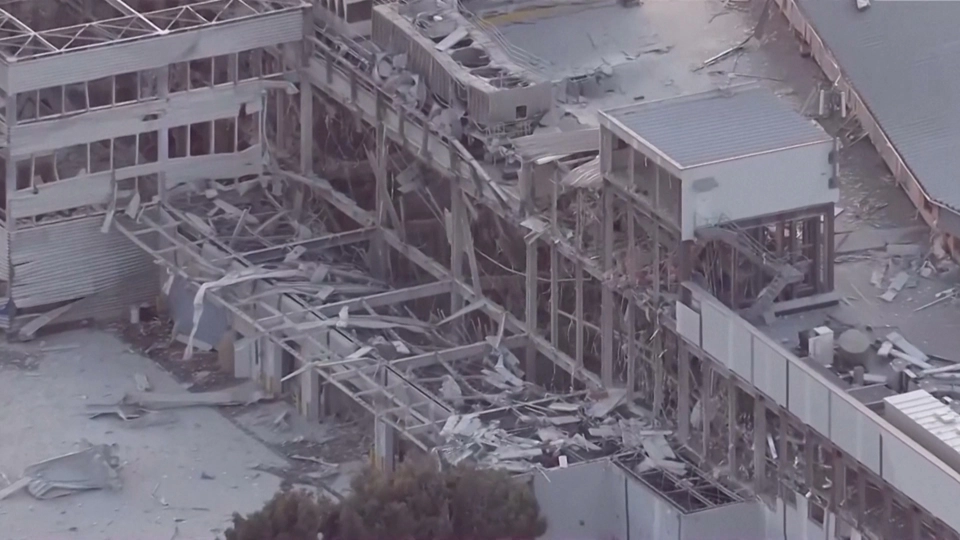
Officials are investigating whether a magnitude 7.1 earthquake that hit the area Tuesday caused a gas leak—and a deadly explosion. Here and at a paper plant, where a chimney collapsed, hopes of finding survivors continue.
REPORTER:
All around the Kumamoto area, the earthquake has left its mark. Buckled roads and collapsed bridges.
REPORTER:
Toppled buildings.
REPORTER:
Overturned trains.
REPORTER:
Even a collapsed moat wall at Kumamoto’s famous castle, a sight that stunned those who saw it happen.
No name given (WITNESS):
It was really something. It didn’t fall down piece by piece, it came crashing down all at once. It really shocked me.
REPORTER:
Prime Minister Takaichi Sanae says help is on the way.
Takaichi Sanae (JAPANESE PRIME MINISTER):
Today, a task force for emergency disaster response, headed by me, has been established. Following a request from the governor of Kumamoto Prefecture for disaster relief assistance, the Self-Defense Forces have begun operations in the affected areas with about 3,600 personnel.
REPORTER:
Japan is one of the world’s most seismically active regions and is used to earthquake cleanups. Kumamoto itself had its last major earthquake only a decade ago. But Takaichi says the damage is extensive. In Kumamoto City alone, power and water are out for tens of thousands of households, and over 2,000 people are in evacuation shelters. Daily life for many here remains disrupted.
REPORTER:
The local Taiwanese community—boosted by TSMC’s plant in the area—is reportedly unharmed. The chipmaker said Tuesday evening it was gradually restarting work at the plant after making sure staff and facilities were safe.
REPORTER:
Taiwan’s President Lai Ching-te has extended his concern and promised aid if needed in a Japanese language social media post.
REPORTER:
But Kumamoto is not yet in the clear. There have been aftershocks, and the government in Tokyo warns more intense ones could be around the corner.
Kihara Minoru (JAPANESE CHIEF CABINET SECJapan Earthquake: The Aftermath in Kumamoto
REPORTER:
As dawn breaks, rescue workers search for trapped survivors at a partly collapsed shopping mall in southern Japan.
REPORTER:
Officials are investigating whether a magnitude 7.1 earthquake that hit the area Tuesday caused a gas leak—and a deadly explosion. Here and at a paper plant, where a chimney collapsed, hopes of finding survivors continue.
REPORTER:
All around the Kumamoto area, the earthquake has left its mark. Buckled roads and collapsed bridges.
REPORTER:
Toppled buildings.
REPORTER:
Overturned trains.
REPORTER:
Even a collapsed moat wall at Kumamoto’s famous castle, a sight that stunned those who saw it happen.
No name given (WITNESS):
It was really something. It didn’t fall down piece by piece, it came crashing down all at once. It really shocked me.
REPORTER:
Prime Minister Takaichi Sanae says help is on the way.
Takaichi Sanae (JAPANESE PRIME MINISTER):
Today, a task force for emergency disaster response, headed by me, has been established. Following a request from the governor of Kumamoto Prefecture for disaster relief assistance, the Self-Defense Forces have begun operations in the affected areas with about 3,600 personnel.
REPORTER:
Japan is one of the world’s most seismically active regions and is used to earthquake cleanups. Kumamoto itself had its last major earthquake only a decade ago. But Takaichi says the damage is extensive. In Kumamoto City alone, power and water are out for tens of thousands of households, and over 2,000 people are in evacuation shelters. Daily life for many here remains disrupted.
REPORTER:
The local Taiwanese community—boosted by TSMC’s plant in the area—is reportedly unharmed. The chipmaker said Tuesday evening it was gradually restarting work at the plant after making sure staff and facilities were safe.
REPORTER:
Taiwan’s President Lai Ching-te has extended his concern and promised aid if needed in a Japanese language social media post.
REPORTER:
But Kumamoto is not yet in the clear. There have been aftershocks, and the government in Tokyo warns more intense ones could be around the corner.
Kihara Minoru (JAPANESE CHIEF CABINET SECRETARY):
We ask everyone to remain alert for the possibility of further earthquakes of up to magnitude 7. In particular, residents in areas that experienced the strongest shaking are urged to remain calm, closely follow evacuation information issued by local authorities through radio, television, the internet, and other official channels, and act accordingly.
REPORTER:
With the clean-up far from over, efforts remain on rebuilding and recovering.RETARY):
We ask everyone to remain alert for the possibility of further earthquakes of up to magnitude 7. In particular, residents in areas that experienced the strongest shaking are urged to remain calm, closely follow evacuation information issued by local authorities through radio, television, the internet, and other official channels, and act accordingly.
REPORTER:
With the clean-up far from over, efforts remain on rebuilding and recovering.