REPORTER:
Trump and Takaichi will be meeting for the first time on Tuesday. What challenges do you think tech will face in balancing the US-Japan relationship alongside regional concerns?
Tsai Hsi-hsun (PROFESSOR, TAMKANG UNIVERSITY):
Although [Takaichi Sanae] is scheduled
to meet Trump [on Tuesday]
the Japanese side has already been doing
plenty of homework in advance.
There’s also preparation on the policy front.
In [Takaichi’s] Oct. 24 policy speech
she mentioned that Japan’s defense spending
originally planned to reach 2% of GDP by 2027
but would be brought forward
and achieved by this year instead.
In other words, even before Trump said anything
the Japanese side had already taken a proactive step.
REPORTER:
We've heard about Takagi stance on Taiwan, and we've heard reports that Trump may bring up Taiwan in conversations with China at APEC this week. But what role do you think Taiwan will play in discussions between the two leaders?
Tsai Hsi-hsun (PROFESSOR, TAMKANG UNIVERSITY):
Since Japan sees the current landscape
mainly as a US–China rivalry
it’s been moving to work more closely with Taiwan.
For Takaichi
Japan’s close security cooperation with Taiwan
means they effectively view Taiwan
as a like-minded partner nation.
Although Japan and Taiwan
do not have formal diplomatic relations
they're in this together.
Japan has its own role through its Self-Defense Forces
and Taiwan fulfills its own responsibilities as well.
So Taiwan’s role would be very similar to Japan’s
and this similarity is likely something
the United States would welcome.
As long as Trump continues
to say that “we respect Taiwan” and does not
make major concessions
this remains one of Trump’s strongest cards.
 02:15
02:15 03:07
03:07 03:25
03:25 03:01
03:01 00:42
00:42 00:30
00:30 02:42
02:42 02:54
02:54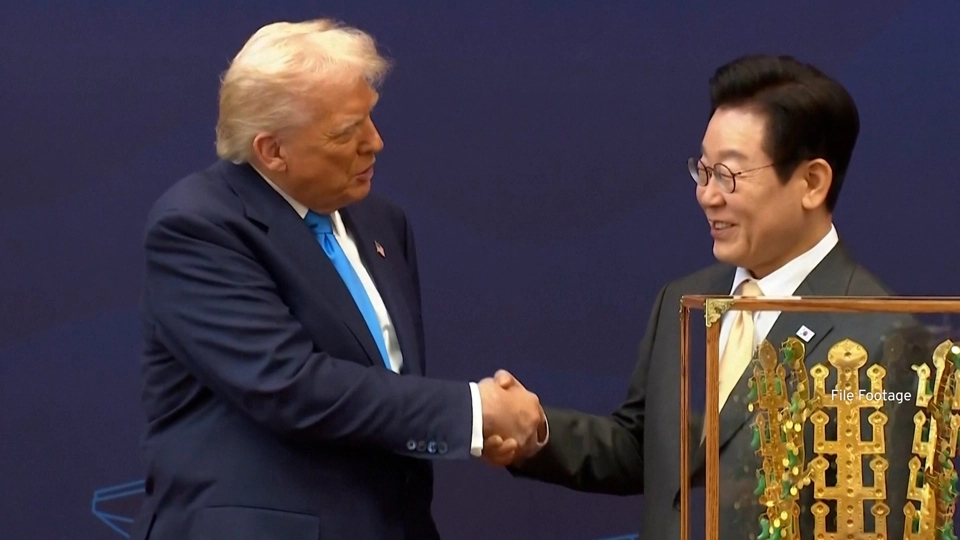 03:24
03:24 02:06
02:06 00:32
00:32 00:29
00:29 00:30
00:30 03:50
03:50 03:09
03:09 04:36
04:36