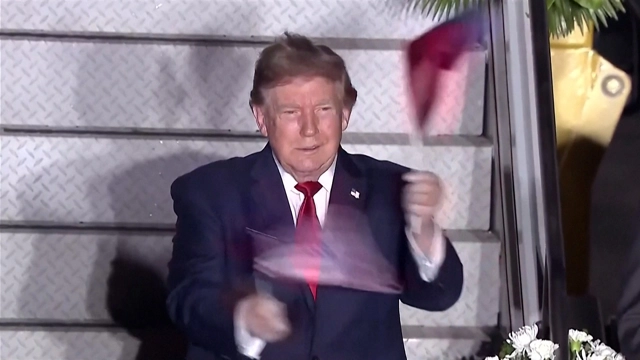
It’s touchdown in Manila—US President Donald Trump has arrived in Asia. It’s the start of what could be a consequential trip.
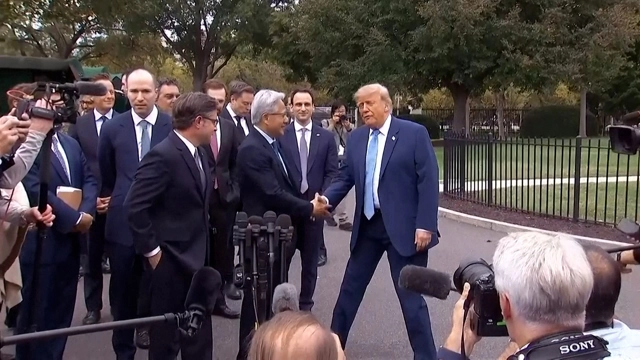
He’s in the Philippines for a US-ASEAN “special summit”. But the first order of business is a meeting with the leaders of three key US partners who are also in town.
The heads of the “Quad”-- a bloc made up of the US, Japan, Australia and India -- last met two years ago.
Now Trump is announcing joint progress in the fields of AI...and deals on the procurement of rare earth minerals—a resource rival China dominates.
DONALD TRUMP, US PRESIDENT:
"These will make our countries much stronger and at the same time, guarantee safety, much safety actually, and we're working very closely on minerals, rare earths, and everything else, and we have a lot of things happening over the next 12 months that will very much surprise people, we were talking inside."
Australian Prime Minister Anthony Albanese says cooperation on this area is essential.
ANTHONY ALBANESE, AUSTRALIAN PRIME MINISTER:
"A major part of that is the discussions we'll have today, also on our economic futures, which includes the development of critical minerals and rare earths, the AI revolution and the potential for growth and productivity that it represents as well and how we can shape that rolling out. Maritime security in this region is particularly important as well."
Maritime security is a topic important to several countries in the region including the host of this meeting, the Philippines. China's sweeping and contested claims in the South China Sea overlap with those of the Philippines, while a long-discussed code of conduct between China and Southeast Asian nations remains unfinished.
Improving US ties with the members of the Southeast Asian bloc ASEAN is another major goal of Trump’s visit. Among the achievements so far is a tariff deal between the US and Thailand—the next step after a preliminary trade framework announced last year.
ANUTIN CHARNVIRAKUL, THAI PRIME MINISTER:
"I'm pleased that we have reached a substantial conclusion in our negotiations on the agreement on reciprocal trade between the United States and Thailand. And I believe the agreement will bring greater dynamics to our trade relations and open new opportunities for all stakeholders."
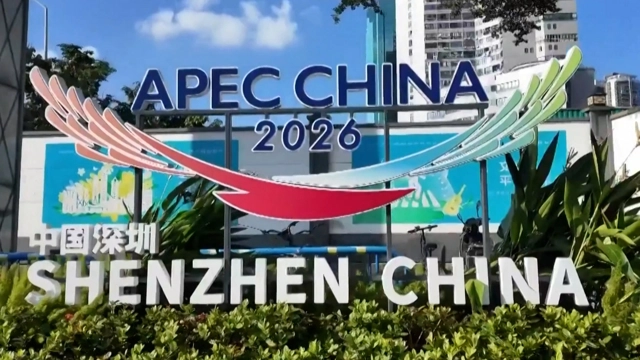
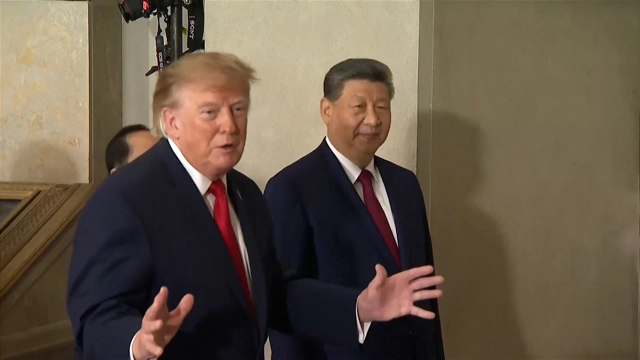
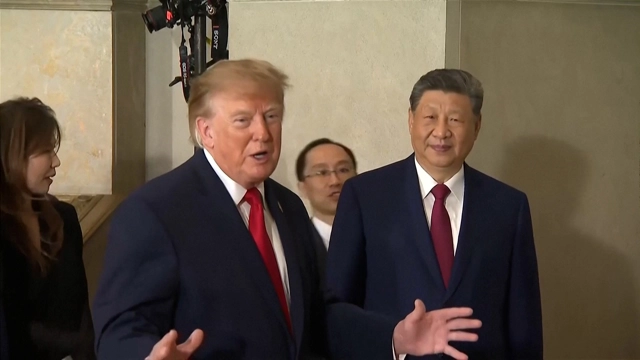
But attention is already turning to Trump’s trip to Shenzhen in China on Wednesday. Already, Russian President Vladimir Putin has arrived, and soon Trump will join him and Chinese President Xi Jinping for a three-way meeting amid a swirl of geopolitics.
There is both Russia’s war in Ukraine, and the US war with Iran—a conflict that’s driven up prices worldwide.
There are longstanding issues in US-China ties, including Taiwan.
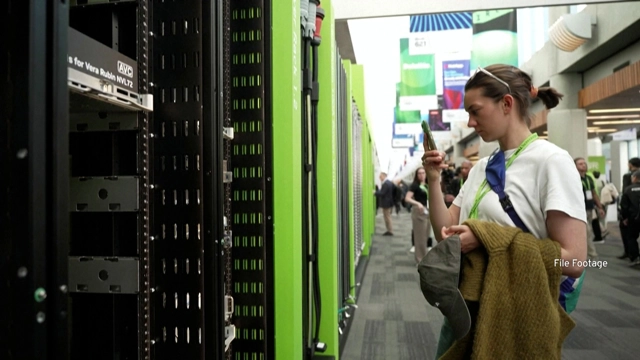
And now, there’s another potential stumbling block in US-China relations: Nvidia founder Jensen Huang’s resignation as CEO following reports of an alleged affair with a suspected Chinese spy.
Huang is expected to face questions from Congress in December over national security concerns. But for now, the US is tightening export controls on advanced chips to China... drawing criticism from Beijing.
GUO JIAKUN, CHINESE FOREIGN MINISTRY SPOKESPERSON:
"The US side has continuously generalized the concept of national security abused export control measures and even arbitrarily interfered with China's normal trade and technology cooperation with other countries unreasonably suppressing China's development of high-tech industries."
With Trump set to attend a gathering with two more of the world’s most powerful men, the next leg of his Asia trip may bring even more significant outcomes.
Howard Chang and John Van Trieste for TaiwanPlus.
 03:44
 00:43
 00:43
 04:11
 00:35
 00:35
 04:09
 00:32
 00:24
 02:22
 03:33
 00:35
 00:50
 02:11
 02:54
 03:19