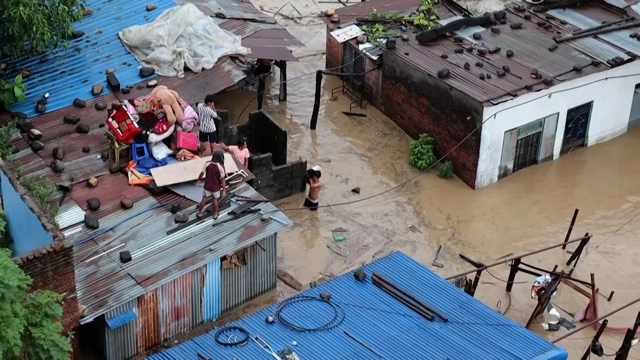
There seems to be no end to the muck here in Nepal's Nuwakot District...after a flood buried many towns along the border with China.
The rivers have calmed after the glacier collapse sent them surging on August 26...but no amount of digging and shoveling can undo the damage...or restore the names to the dead: despite DNA tests, only around 100 of the victims have been identified.
About 1,500 bodies have been recovered in Nepal, but close to 6,000 more people are still missing.
And yet, life is starting to reemerge, as survivors try to make a living.
SOBITA RIJAL, SHOP OWNER:
"The other shop owners have already gone back and resumed their businesses. If they are willing to take the risk and trust the situation, then we can do the same. There's really no other option at the moment."
We are slowly trying to restart the business, but it will take a lot of time to recover. It will take a long time to rebuild everything. All the property we had — everything involved in our dealings and transactions — is gone. We don't have any documents or papers left with us. Everything was swept away. What can we do?
ASHOK KUMAR, VEGETABLE SELLER:
"We are slowly trying to restart the business, but it will take a lot of time to recover. It will take a long time to rebuild everything. All the property we had — everything involved in our dealings and transactions — is gone. We don't have any documents or papers left with us. Everything was swept away. What can we do?"
Scientists have linked the disaster to climate change and Nepal's clean energy sector is suffering the results. Nepal has invested heavily in hydropower, getting more than 90% of its grid from hydro projects and the sector creating important jobs for the economy.
But many of these projects were swept away with the plant workers—knocking out 10% of Nepal’s electricity in one blow. With climate hazards set to grow, it’s not about rebuilding so much as relocating infrastructure from flood zones and building evacuation plans for workers.
SUSIL GYAWALI, ADVISOR NEPALI MINISTRY OF INFRASTRUCTURE DEVELOPMENT:
"Our hydropower are along the basin of the river. And then on the edge of the river. And then the scale of the disaster, the flood that came, I think it was huge. And we have seen that our dam, our intake, our tunnel, all the powerhouses are all in the risk."
As those plans get worked out, Nepal is left with 80,000 survivors, many in shelters. It’s left with areas still cut off a month on. And it says it faces a reconstruction bill approaching 5 billion US dollars, far above the few million a handful of countries have pledged in support. Many in Nepal now say this is not rightfully their bill to foot.
BASANTA RAJ ADHIKARI, DIRECTOR, CENTER FOR DISASTER STUDIES TRIBHUVAN UNIVERSITY:
"Some of the countries have already emitted carbon, so because of that, the countries like Nepal is experiencing devastating effects. So we don't want only the climate finance, we want climate justice. That is our top priority, because we are in the existential threat."
As the climate threat grows in the Himalayas, that call is already going up...but it is hard to say if that call can grow loud enough to sway the world’s biggest emitters, with agendas of their own.
Leon Lien and John Van Trieste for TaiwanPlus.
 00:24
00:24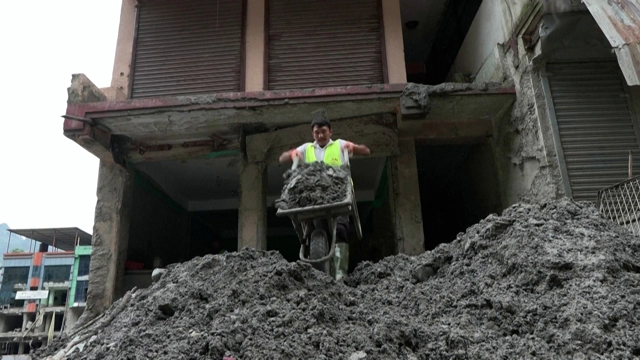 03:09
03:09 00:33
00:33 02:11
02:11 02:47
02:47 02:54
02:54 03:19
03:19 03:12
03:12 03:49
03:49 03:31
03:31 02:44
02:44 01:16
01:16 04:01
04:01 03:41
03:41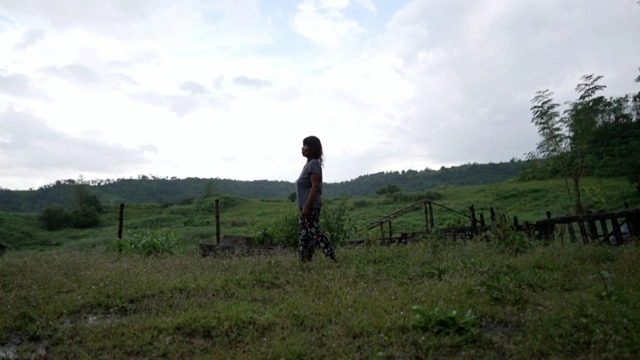 02:58
02:58 03:37
03:37