As world leaders gather at the United Nations in New York, US President Donald Trump has a busy schedule.
On Tuesday, he met with Japanese Prime Minister Takaichi Sanae—a leader guiding her country through a tricky regional security situation.
Trump’s overtures to North Korea, his cut-back on drills with South Korea this summer and questions over whether he’ll use arms sales to Taiwan as a bargaining chip with China have added to uncertainty.
But there was no hint of anything other than a solid partnership during this meeting, with Takaichi thanking Trump for his commitment to Japan.
TAKAICHI SANAE, JAPANESE PRIME MINISTER:
"I would like to start off by reiterating my gratitude for Donald's very, very powerful commitment to the Japan-U.S. alliance. Against a backdrop of increasingly severe security environment, including Asian security environment in recent years, I would like to seize this opportunity to demonstrate to the world how robust our alliance is through holding another round of meetings with Donald today here at this venue UN headquarters."
Trump’s been reassuring allies and patching up one relationship under particular strain. He agreed to a deal with Denmark over its autonomous Arctic territory of Greenland that ends calls for outright US annexation while allowing a bigger US troop presence amid Arctic security concerns.
It’s an update to a defense agreement from the 1950s that all sides seem satisfied with, including Greenland’s own prime minister—and it could put an end to a major point of division within NATO.
JENS-FREDERIK NIELSEN, GREENLAND PRIME MINISTER:
"Our commitment to this alliance and to the security we build together is not in question. We are, have been, and will remain a steadfast friend of the United States and a part of the Western Alliance. Your security is our security, and our security is your security."
And Trump also met with Ukraine’s President Volodymyr Zelenskyy. Though he wouldn’t comment on Ukraine’s retaking of territory that Russia has occupied over years of war, he said he and Zelenskyy are trying to work out a solution to the deadly conflict.
VOLODYMYR ZELENSKYY, UKRAINIAN PRESIDENT:
"I hope that we will end this war, and President Trump will help us to end this war. And I think that we need to do it as quick as possible before winter."
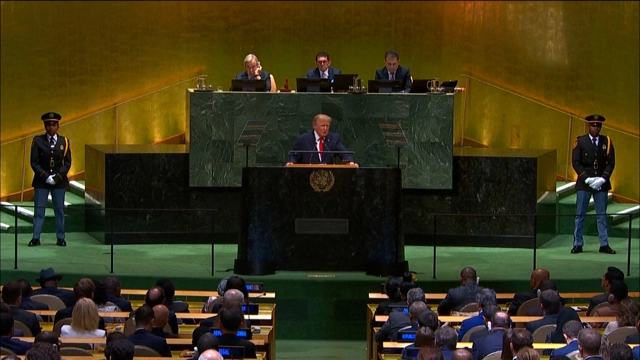
But Trump has not been completely conciliatory. During his UN speech, he called Cuba a failed state and predicted its government will fall. The Cuban delegation walked out.
There was no sign of deescalation with Iran, either, over half a year since the war began. Trump said it was his decision whether to make a deal that lets the country rebuild or—quote-- "annihilate the Islamic Republic”.
And Trump also said the US won’t be backing down on its quest to stay on top in AI—which he wants to rename “SI” or “Super Intelligence”. Trump has dismissed concerns from industry insiders that the technology could destroy humanity within years.
DONALD TRUMP, US PRESIDENT:
"Whoever wins AI, you have to remember this. And now I say whoever wins SI, whoever wins super intelligence wins; that's the group that wins and we're leading now over China by a lot and everyone else. And we're going to keep it that way."
This last contest is likely to be on Trump’s mind in the coming days as he welcomes China’s President Xi Jinping for talks in Washington, DC, a finale to a dayslong burst of diplomacy that the world will be watching closely.
Hank Hsu and John Van Trieste for TaiwanPlus.
ENDS
 03:37
03:37 00:37
00:37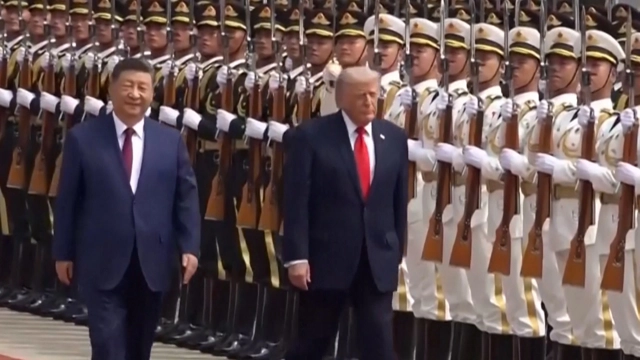 02:22
02:22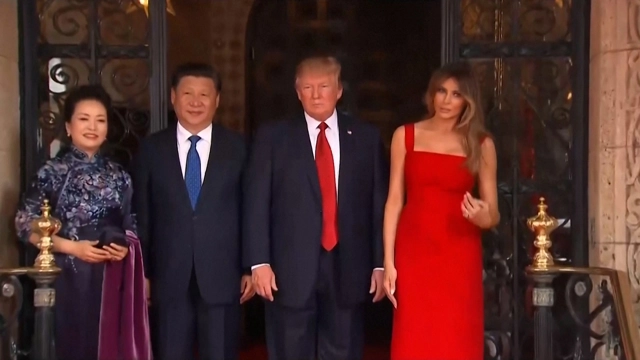 02:31
02:31 00:58
00:58 00:28
00:28 00:39
00:39 01:51
01:51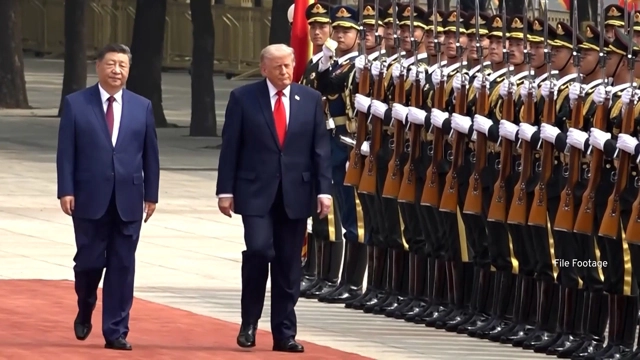 04:23
04:23 03:04
03:04 00:28
00:28 03:29
03:29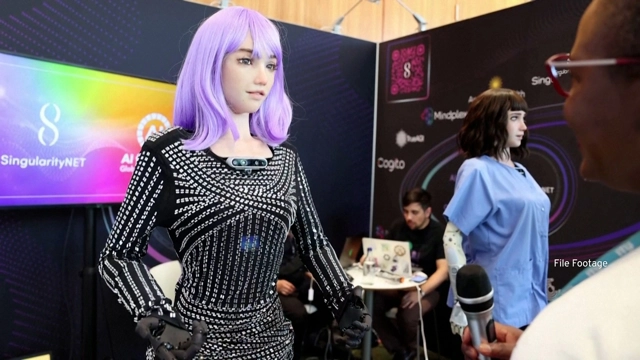 02:48
02:48 05:35
05:35 02:54
02:54 00:41
00:41