Middle East Crisis: Pakistan Mediates as Global Energy Markets Respond
REPORTER:
Pakistan’s foreign minister meets with the US charge d’affaires, hoping for a breakthrough. Pakistan is trying to mediate an end to a war between a US-Israeli alliance and Iran, which otherwise looks set to enter its third month. The foreign minister suggests both sides extend a ceasefire. The Trump administration, it turns out, is onboard with that idea.
REPORTER:
Trump may have announced the pause in fighting will keep up until Tehran puts out a proposal and Washington meets again to ink a deal. But the conflict isn’t completely frozen. US Navy ships are still blockading Iranian ports and even chasing down vessels giving Iran support, far away from the waters of the Persian Gulf.
REPORTER:
US forces board one sanctioned tanker in the Indian Ocean. The Pentagon said Tuesday it carried out the operation “overnight.” Iran says the US’s actions are unacceptable.
Esmaeil Baghaei (IRAN FOREIGN MINISTRY SPOKESPERSON):
First of all, aggression towards maritime shipping and trading is a dangerous violation. Because if this becomes common, basically maritime freedom will be in danger. Both things America has done are examples of piracy and state terrorism.
REPORTER:
Iran’s foreign minister went much further, calling the blockade an act of war and a ceasefire violation.
REPORTER:
And though the violence is paused, the whole world still feels this war’s impact, especially with the critical oil and gas conduit to Iran’s south, the Strait of Hormuz, largely shut.
REPORTER:
That’s driven prices up along another critical waterway half the world away — the Panama Canal. One vessel carrying gas paid $4 million US dollars to skip the line — so urgent is the need for energy.
REPORTER:
Uncertainty over US vice president J.D. Vance attending further peace talks helped drive down US stocks on Tuesday.
Carol Schleif (CHIEF MARKET STRATEGIST, BMO WEALTH MANAGEMENT):
I saw news recently that perhaps JD Vance is not going to Islamabad to negotiate, so you've had markets trying to figure out, should they worry about the war, should they move on beyond conflict in the Middle East?
REPORTER:
And countries not involved in the conflict are bracing for fuel shortages. EU countries, for instance, are preparing for a tough summer ahead, regardless of the war — as it will take time to get back to “normal” even once the Strait of Hormuz reopens.
Dan Jørgensen (EU ENERGY COMMISSIONER):
If this goes on for many months or even years, we're looking at a totally new world order and probably very, very severe economic consequences that goes far beyond only the energy sector.
REPORTER:
The missiles and bombs may have stopped for now, but it will take more talks and more time to see how the Middle East crisis ends.
 02:15
02:15 03:07
03:07 03:23
03:23 03:25
03:25 03:23
03:23 02:42
02:42 02:54
02:54 02:56
02:56 03:24
03:24 02:33
02:33 00:27
00:27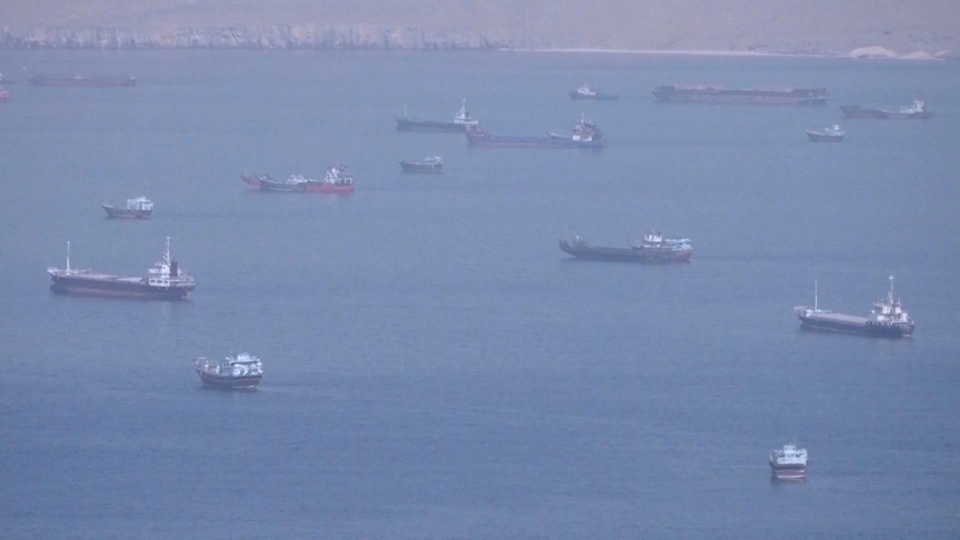 00:30
00:30 02:36
02:36 00:33
00:33 02:50
02:50 03:09
03:09