Title: US-Iran Tensions Rise over Strait of Hormuz Blockade
==
REPORTER:
A DoorDash delivery arrives at the White House — a McDonald’s meal for US President Donald Trump. Today’s order, a way to showcase Trump’s policy of not taxing tips for workers like this delivery person.
==
REPORTER:
But reporters here are focused on other topics. They want to know about Trump’s recent war of words with the Pope over the US-Israeli war with Iran.
==
REPORTER:
But mostly, they’re after details on an issue that’s gripped the world for weeks — closure of the critical Strait of Hormuz. Iran has stopped most traffic through the waterway since early March, even after a ceasefire. Oil and gas prices have soared — while food and fertilizer supplies have dwindled.
REPORTER:
After peace talks failed over the weekend, Trump announced his own blockade on all of Iran’s Persian Gulf and Gulf of Oman ports. One reporter asks “why?”
==
Donald Trump (US PRESIDENT):
Maybe everything. Both of those things, certainly, and more. We can't let a country blackmail or extort the world.
==
REPORTER:
On Fox News Special Report with Bret Baier, US Vice President JD Vance – who took part in the peace talks -- said some progress was made. But he says the strait was a major sticking point.
==
J.D. Vance (US VICE PRESIDENT):
We need to see the Strait of Hormuz fully open. And this is, frankly, one of the things where the Iranians tried to move the goalposts during the negotiation. We made very clear that that's unacceptable. We came to negotiations saying the United States, what we've given here is a ceasefire. We stopped bombing the country. What we expect the Iranians to give up is a full reopening of the Strait of Hormuz.
==
REPORTER:
Analysts say that while blockades can push opponents toward better terms, they need time to have an impact.
==
Sidharth Kaushal (SEA POWER FELLOW, ROYAL UNITED SERVICES INST.):
A lot depends on the early days of the blockade, how many vessels the Americans can seize, how much they can convince vessels attempting to slip through a cordon that they’re likely to be seized. But in all likelihood, I'd say it will prove difficult for the US to enforce.
==
REPORTER:
While Iran says it’s still open to talks, the mood in the capital Tehran is defiant, with thousands rallying against the US. And though sources like rights group HRANA say over 3,000 people have died in Iran since the war began, there’s a sense that Trump’s threats are wearing thin.
==
Zahra (PROTESTER):
He said he would strike many of our power plants and our infrastructure. He said many strange things. He said he would come and take one of our islands, but none of his promises were fulfilled. This is just another promise like the others. All of them are empty.
==
REPORTER:
And billboards like this one — showing the strait and the words “forever in Iran’s hands” — suggest that even if talks resume, the outlet for a fifth of the world’s fuel will remain an obstacle to a lasting peace.
 02:15
02:15 03:07
03:07 03:23
03:23 03:25
03:25 03:23
03:23 02:42
02:42 02:54
02:54 02:56
02:56 03:24
03:24 02:33
02:33 00:27
00:27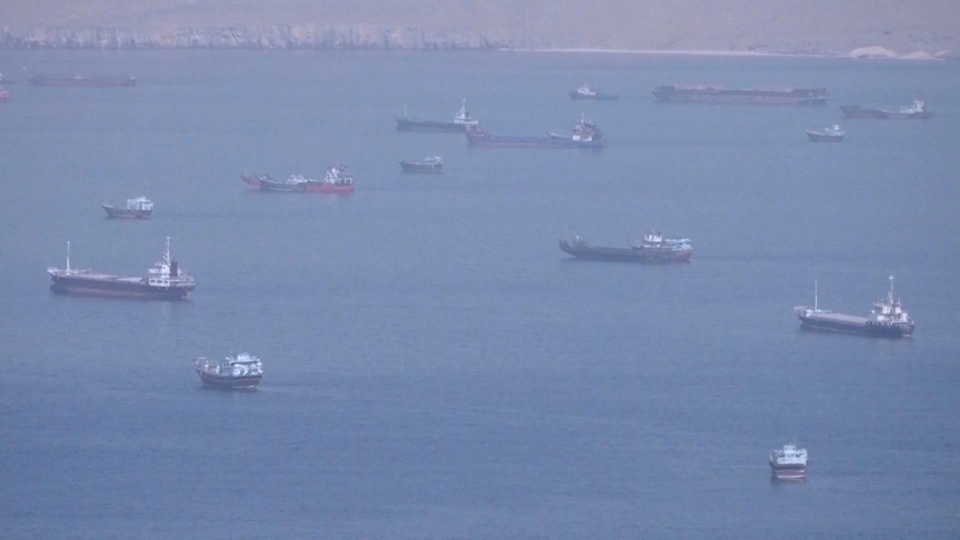 00:30
00:30 02:36
02:36 00:33
00:33 02:50
02:50 03:09
03:09