On Indonesia's Sumba Island, Slavery Remains Quietly Tolerated
The Indonesian island of Sumba is home to an unknown number of hereditary slaves, an underclass called "ata"--despite a ban on slavery in Indonesia going back more than 160 years.
Traditional Slavery Persists on Indonesia’s Sumba Island
REPORTER:
Umbu Ana Rara rides his motorcycle along the road home, with Kanisius Kanyali Hambarita on the back. To anyone who might see them, the pair could be friends, maybe relatives. But one of these men, the driver, owns the other, his passenger, part of an old custom here on the Indonesian island of Sumba.
REPORTER:
Slavery has been banned in what’s now Indonesia for over 160 years. But in corners of the country like this, a traditional form of bondage is quietly tolerated. Society on this island is split in three classes: those who aren’t nobles or middling sorts are called “ata.”
REPORTER:
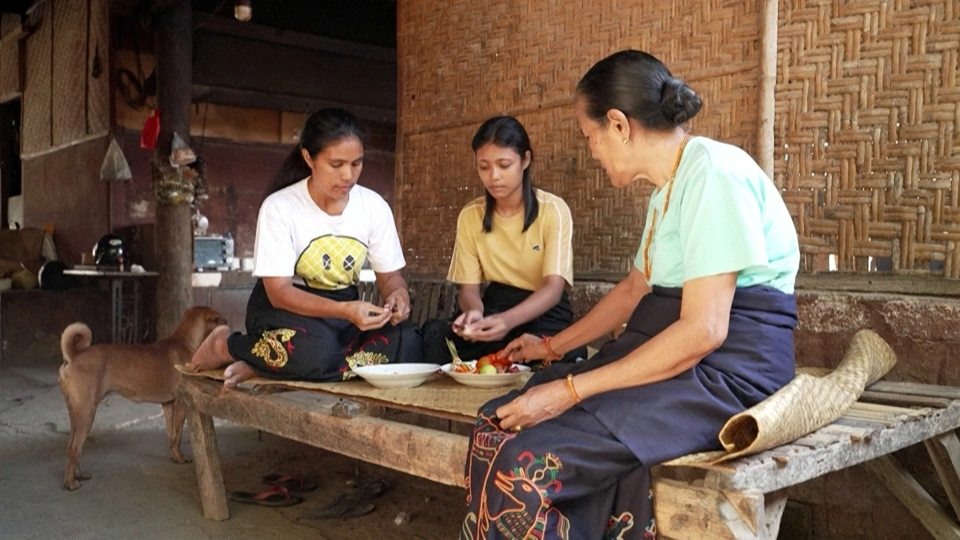
This particular master-slave pair says that they live much the same way. They share a house and do everyday things like make coffee together. Owner Umbu Ana says his ata is family—but he still has a say over his life, where his child can go to school or work, for instance. For his part, ata Kanisius Kanyali Hambarita is resigned to his hereditary status as someone else’s property.
Kanisius Kanyali Hambarita (ATA):
I don't object to it, that's how it is. It is not the same. It's not a weight on our shoulders, it does not weigh on our heads. It's only the symbol of a tradition inherited from our ancestors.
REPORTER:
This seemingly less rigid relationship does exist elsewhere sometimes. In her home, Norlina Rambu Jola Kalunga introduces her ata, explaining how she sends them to school. But this kind of treatment isn’t always the norm, though. Ata can still be forced to work all day without pay. They are still passed on as property in marriage.
REPORTER:
And, as a local pastor explains, it can, and does, get much worse.
Marlin Lomi (PASTOR):
Slaves who experience violence do not only experience physical violence but also sexual violence, where the master can, in quotation marks, if we may say it, “use” his maid servant and that is not questioned.
REPORTER:
She says the local Protestant synod, a big deal on an island where four out of five people are Christian, does help in cases of violence against women and children but they must speak up first. Few do.
REPORTER:
In fact, no one can even say for sure how many ata there are on this island of more than 300,000 people. Estimates vary, from around 1,700 according to one social worker, who asked not be named, to several thousand.
REPORTER:
Groups like Human Rights Watch have urged Jakarta, 2,000 kilometers away, to put its ban on slavery into force—and enforce anti-discrimination conventions. This is how one human rights official responds.
Yusril Ihza Mahendra (COORDINATING MINISTER, LAW, HUMAN RIGHTS, IMMIGRATION, CORRECTION AFFAIRS):
Indonesia has some ethnic groups that are more advanced, while others are still lagging behind. We have to acknowledge this: the government does not wish to impose change suddenly -- rather it follows the social development of each community step by step. We are convinced that education will change everything.
REPORTER:
And so, an institution of enslavement and abuse goes on—with even those who break away still tied economically to their old masters, and slow justice, with investigations sometimes stretching over years, for those few who do speak out.