US-China Tensions and Regional Security at the ASEAN Meeting
REPORTER:
US and Chinese delegations sit across the table from one another in Manila, US Secretary of State Marco Rubio and Chinese Foreign Minister Wang Yi in the center. This meeting on the sidelines of the ASEAN Foreign Ministers’ Meeting comes at a time when both sides have much business to discuss. Chinese President Xi Jinping is heading to Washington in September. There’s planning to do. And there are also big differences to work around.
REPORTER:
China’s clashed once again with the event’s host, the Philippines, in the disputed South China Sea. China and the Philippines are among the countries with overlapping claims in the sea—and China has ignored an international ruling siding with the Philippines. The Philippines is a US ally: Rubio says the US will honor its treaty obligations.
REPORTER:
Then there is the ever-tense relationship between China and Taiwan. China regularly sends coast guard ships into Taiwanese waters to test Taiwan’s resolve and challenge its sovereignty. Rubio says this is a constant issue, something the US is opposed to—with the US saying the Taiwan Strait should be open to all.
Marco Rubio (US SECRETARY OF STATE):
It always comes up in every one of our meetings, because we obviously disagree with those actions and we actually think that they run contrary to the spirit of what we're trying to work out with them with regards to strategic stability.
REPORTER:
And there’s a pending $14 billion US dollar arms sale from the US to Taiwan. China strongly objects to sales like this. While on hold for now, Rubio says they’re just under review as the US takes stock of how much hardware it can spare.
REPORTER:
But it’s not just the US taking a stance towards China on the sidelines of this meeting in Manila. For Australia, a recent Chinese missile launch, and especially the South China Sea, are points of concern. It’s giving the Philippine coast guard extra funding.
Penny Wong (AUSTRALIAN FOREIGN MINISTER):
More broadly, on the South China Sea, I also have made public comments about the incident involving the members of the Philippines Navy and the Chinese personnel. We have said,we have real concerns about behavior that is destabilizing and risky.
REPORTER:
China is not pleased, but doesn’t name any specific countries when discussing the foreign response to recent tensions in the South China Sea.
Lin Jian (SPOKESPERSON, CHINESE FOREIGN MINISTRY):
The countries concerned
are not parties to the South China Sea issue
and have no right to interfere in maritime matters
between the countries directly involved.
REPORTER:
And then there are Japan and South Korea. In a meeting with US Secretary of State Rubio, the foreign ministers of both countries expressed concern about the same missile launch that’s made Australia uneasy. They also agreed on the importance of peace across the Taiwan Strait.
REPORTER:
As the gathering of foreign ministers in Manila nears its close, China, and how to deal with it, is one of the issues some members face. As Rubio tells reporters, the goal is to manage differences because a conflict, economic or otherwise, would shake the world.
 02:28
02:28 02:46
02:46 03:14
03:14 02:24
02:24 00:33
00:33 03:22
03:22 02:37
02:37 03:50
03:50 02:52
02:52 01:39
01:39 00:43
00:43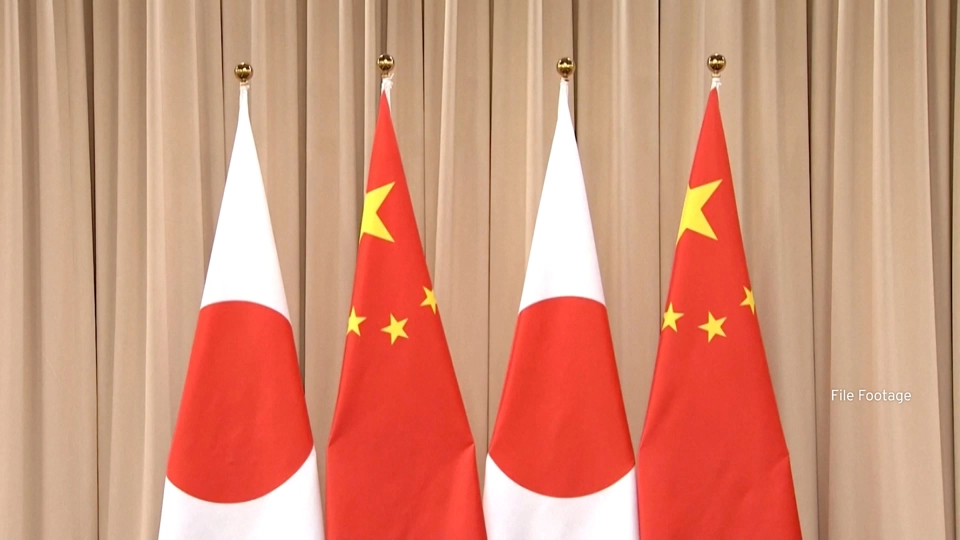 03:39
03:39 02:15
02:15 03:07
03:07 03:25
03:25 03:01
03:01