* This AI-generated summary is based on reporting by TaiwanPlus and verified by newsroom fact checkers. Learn more about our policy here.
The Looming Crisis of Peru's Pota Squid Industry: How Chinese Fishing Fleets Are Threatening Local Livelihoods
Lima, Peru – The salty air of Chorrillos Port, a bustling fish market in the capital city of Lima, fills with the familiar hum of daily commerce. Yolanda, a vendor who has been selling fish for over fifty years, stands behind her stall, once overflowing with the prized jumbo squid known as pota, a staple of Peru’s rich maritime heritage. Today, however, there is little of the delicacy to be found.
"Before, the pota cost [$0.13 USD] per kilo. Then it went up to [$0.27 USD]. Then to [$0.40 USD] and now it's more than [$0.53]," Yolanda says, shaking her head. "And when the Chinese fleets arrived, they wiped out practically all the squid. They took it all."
Yolanda’s frustration reflects a growing crisis in Peru’s fishing industry. The once-abundant supply of jumbo squid that supported local fishers, vendors, and families has been decimated by the encroachment of foreign fishing fleets, particularly from China. As these fleets trawl the waters off the Peruvian coast, pota has become a rare commodity, causing severe economic strain for those who depend on it for survival.
The Rise of China's Fishing Fleets
The dramatic depletion of squid in Peruvian waters is part of a much larger pattern. For over two decades, foreign fishing fleets, particularly from China, have been migrating southward to exploit the rich marine life off the coasts of South American nations. The migratory pota, a jumbo squid prized by local fishermen, has become the target of these massive industrial vessels.
China, which boasts the largest overseas fishing fleet in the world, has significantly intensified its operations in the region. In 2024 alone, an estimated 700 Chinese fishing ships were spotted off the coast of Peru, operating just outside of the country’s exclusive economic zone. These ships use powerful lights to attract squid at night, hauling in an estimated 500,000 tons annually.
For the artisanal fishers of Peru, who use small boats to fish in traditional ways, this is an existential threat. "They don’t distinguish between the sizes of squid. They take everything – small, medium, large – so there’s nothing left to reproduce," says an unnamed local fisherman. Unlike their Chinese counterparts, who are driven by profit, these artisanal fishers have long understood the importance of sustainable fishing practices, sometimes letting squid populations rest to ensure they thrive in future seasons.
The environmental consequences are profound. Without the ability to replenish squid stocks, Peru's fishing industry is facing a critical shortage. This year's pota catch is expected to be less than half of previous years' yields, a devastating blow not only to the market but also to the livelihoods of thousands of local fishers and vendors like Yolanda.
The human cost of China’s massive fishing operations is also staggering. Beyond illegal and unsustainable fishing practices, there are growing concerns over the treatment of workers on these vessels. Reports of abuse, including confiscated passports, debt-trapping contracts, poor living conditions, and even physical violence, have surfaced. According to Ian Urbina of the Outlaw Ocean Project, the conditions on these ships are nothing short of harrowing. "The vessels are dark places, the sort of thousand-mile stare, the indicators of extended stays and solitary confinements" Urbina states. "Also their demeanor shows they are crushed."
To address the issue, Peru’s government has requested that foreign fleets use tracking systems to stay within legal fishing zones, but according to local NGOs, Chinese ships often flout these regulations, with vessels mysteriously disappearing from radar before reappearing on the border of Peru’s exclusive waters. "What is really curious is we will see a ship fishing just on the 201 line, just on the border limit. The ship will be fishing and then disappear for twenty hours. And then it will reappear over here in a line like this," says Eloy Aroni, a local monitor of illegal fishing.
Yet, despite these efforts, the damage continues. Peru’s fishing communities are concerned that without stricter international regulations and enforcement, pota – a vital part of their economy and culture – could vanish from their waters forever.
 03:23
03:23 00:42
00:42 00:48
00:48 00:40
00:40 02:56
02:56 03:24
03:24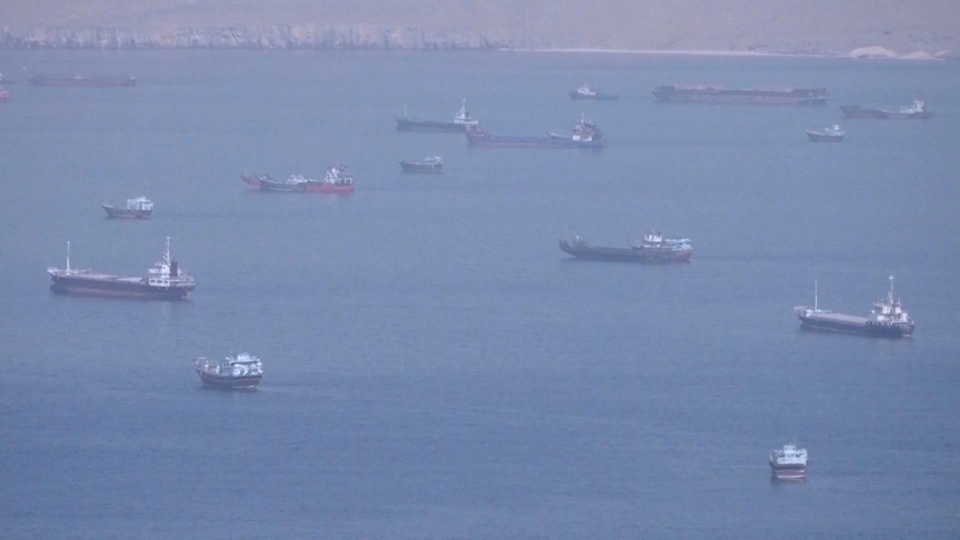 00:30
00:30 02:36
02:36 00:23
00:23 00:33
00:33 03:09
03:09 04:06
04:06 00:39
00:39 00:36
00:36 00:25
00:25 00:22
00:22