*This AI-generated summary is based on reporting by TaiwanPlus and verified by newsroom fact checkers. Learn more about our policy here.
Robots, Mirrors and Badminton: Taiwan’s Smaller Ventures Showcase AI at CES
The Consumer Electronics Show (CES), the world’s largest tech trade fair, is underway in Las Vegas, highlighting groundbreaking innovations from global industry leaders.
Taiwan, renowned for its semiconductor prowess, has long been a cornerstone of the AI boom. While Taiwanese giants like TSMC provide the essential hardware for AI applications, emerging firms from the country are demonstrating how the technology can enhance daily living.
One such exhibitor is FaceHeart, a medical AI company debuting its smart mirror. Equipped with a hidden camera and proprietary AI software, the device scans a user’s face to measure cardiac vital signs. The mirror can even detect life-threatening conditions like atrial fibrillation (AFib) and heart failure with over 90% accuracy. Lucy Chiu, a spokesperson for the company, emphasized the potential for such technology to lower health care costs. “This is actually pretty exciting because when people are thinking of hypertension, they are thinking of diabetes. They have to buy a lot of expensive medical devices,” she said. “But what if it can be all done by your smartphones? It can all be done by your TV?”
Another Taiwanese innovation is the autonomous lawnmower robot system from URSRobot. Designed for commercial landscaping, the system employs cameras, sensors and AI to navigate and cut grass efficiently. Matt Chen, a representative from URS Robot, highlighted its user-friendly features. “This product is designed for commercial properties like schools, golf courses or parks,” he explained. He adds that it allows users to focus on more valuable tasks, like trimming bushes or making flower beds. The system also prioritizes safety, automatically stopping the motor if it detects smaller objects, such as rocks or hands, in its path.
For sports enthusiasts, Taiwan’s Industrial Technology Research Institute (ITRI) is unveiling its AI-powered badminton trainer. Using miniaturized cameras and a specialized chip package, the device analyzes players’ movements to provide detailed performance data. U.S. Olympic badminton player Howard Shu expressed enthusiasm for the technology’s potential. “There's just a lot of things that, to the naked eye, as a human, you can't really get exact details for,” Shu said. “This technology allows me to identify the best combination of strings, racket and tension that might perhaps generate the fastest smash for me.”
These innovations exemplify Taiwan’s commitment to practical AI applications, extending from health care to home maintenance and sports. With such developments on display at CES, the country’s smaller companies are proving their ability to compete on the global stage.
 00:52
00:52 00:35
00:35 01:50
01:50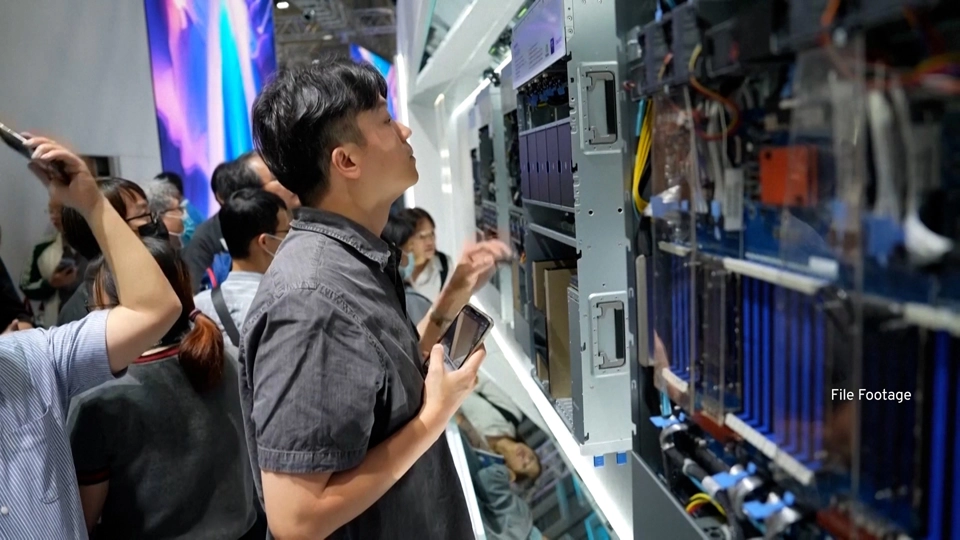 00:33
00:33 01:03
01:03 01:02
01:02 02:16
02:16 02:53
02:53 04:46
04:46 01:56
01:56 03:16
03:16 02:09
02:09 00:47
00:47 48:00
48:00 03:38
03:38 00:36
00:36