This AI-generated summary is based on reporting by TaiwanPlus and verified by newsroom fact checkers. Learn more about our policy here.
Taipei’s Forgotten Air Raid: 80 Years Since U.S. Bombers Killed Thousands
TAIPEI — On May 31, 1945, U.S. bombers rained destruction on Taipei in what would be the deadliest air raid on Taiwan during World War II. Around 3,000 people were killed in a single day. Yet eight decades later, the attack is largely forgotten.
“I was 15 or 16 at the time,” recalled Jiang Jin-zao, who survived the attack. “We heard that maybe they were planes from the Americans... The rumbling sounds... the loud noises could break our eardrums. Simply the sound of it crushed our souls.”
Taipei in 1945 was the administrative center of Japanese colonial rule in Taiwan. That day’s bombing left the city in flames. The Presidential Office Building, then the seat of the colonial government, burned for days. Critical infrastructure like the Taipei Railway Station was hit, and cultural landmarks such as Longshan Temple were badly damaged or destroyed.
Local legend says the temple was being used to store arms and that only its statue of Guanyin, the bodhisattva of compassion, survived the blaze. Whether true or not, the story has endured — unlike broader public memory of the bombing itself.
“The bombing of Taipei and other areas is, of course, horrific... but it’s just several thousand,” said Barak Kushner, professor in East Asian history at the University of Cambridge, saying the number pales in comparison to the around 150,000 who died in March 1945 in the firebombing of Tokyo.
Taiwan’s strategic value had diminished by 1945 and the island played only a limited role in Allied and Japanese war planning. “It was not a primary part of either the Allied or the Japanese strategy,” says historian Rana Mitter of Harvard University. “Clearly it was geographically well-located... but most of the land-based warfare became more concentrated elsewhere.”
Taiwan’s postwar political narrative also played a role in suppressing memory of the raid. As Taiwan was then part of the Japanese Empire, many Taiwanese were technically Japanese subjects — seen by some in the postwar Republic of China as collaborators rather than victims.
“How could the Taiwanese have been bombed by the Americans? They're supposed to be Chinese allies,” said Kushner. “It doesn't fit the KMT [Nationalist Chinese] narrative... so pretty much all of that wartime history is put into the dustbin of history.”
Jiang says her life only got harder after the war. “It was bad during the Japanese period. But at least they would still ration rice for us,” he said. “After the war, there was nothing... even if you had money, there was nowhere to get rice.”
The May 31 raid remains the second deadliest day in Taipei’s history, behind only the 1947 February 28 Incident. But unlike that anti-government crackdown, there are no public memorials to the bombing — and few outside Taiwan know it happened.
As tensions rise once more in the Taiwan Strait, the forgotten air raid serves as a somber reminder of how easily the past can be erased — and how quickly peace can vanish.
 05:35
05:35 17:33
17:33 04:11
04:11 02:44
02:44 03:16
03:16 08:37
08:37 02:21
02:21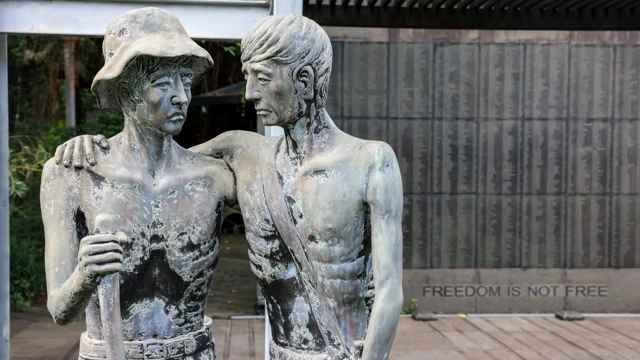 06:27
06:27 02:21
02:21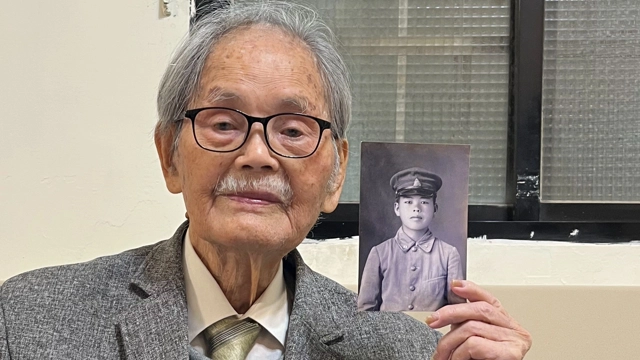 04:23
04:23 04:49
04:49 04:29
04:29 05:10
05:10 06:12
06:12 08:59
08:59 04:50
04:50