*This AI-generated summary is based on reporting by TaiwanPlus and verified by newsroom fact checkers. Learn more about our policy here.
Eighty Years After Trinity, Nuclear Threat Still Hangs Over Taiwan and the World
Wednesday marks 80 years since the Trinity test — the world’s first detonation of a nuclear bomb — and its reverberations are still being felt today.
On July 16, 1945, a brilliant flash lit up the skies over New Mexico, signaling the success of the top-secret Manhattan Project and ushering in the nuclear age. Less than a month later, the U.S. dropped atomic bombs on Hiroshima and Nagasaki, killing more than 200,000 people in total and accelerating the end of World War II.
Eighty years on, Taiwan is conducting nationwide air raid drills as part of its annual Han Kuang military exercises. Civilians are instructed to seek shelter — but against modern nuclear weapons, even the most reinforced bunkers may offer little protection.
A detonation of a Trinity-sized bomb over Taipei would kill nearly 200,000 people. A Chinese Dong Feng-4 missile could claim over 3 million lives, while Russia’s Tsar Bomba — the largest nuclear weapon ever detonated — could kill up to 6 million.
Today, eight countries officially possess nuclear weapons: the U.S., Russia, the U.K., France, China, India, Pakistan and North Korea. Israel is widely believed to have nuclear arms but has not confirmed this. China tested its first nuclear device in 1964. In the 1970s, Taiwan also began a secret nuclear weapons program, which was eventually shut down under international pressure.
Despite decades of arms control agreements, recent developments suggest that the threat of nuclear conflict is growing.
“North Korea best not make any more threats to the United States,” said U.S. President Donald Trump in his first term. “They will be met with fire and fury, like the world has never seen.”
More recently, Russian President Vladimir Putin announced new conditions under which Moscow would consider using nuclear weapons, including in response to attacks from non-nuclear states backed by nuclear powers.
“Aggression against Russia by any non-nuclear-weapon state, but with the participation or support of a nuclear-weapon state, should be regarded as a joint attack on the Russian Federation,” Putin said.
So far this year, multiple conflicts have involved nuclear states or their allies: fighting between India and Pakistan, Russia’s invasion of Ukraine, U.S. airstrikes in the Middle East, and Israel’s war in Gaza. Meanwhile, Chinese President Xi Jinping has reiterated plans to take Taiwan — by force if necessary — by 2027.
As tensions rise and the world reflects on eight decades of nuclear history, Taiwan and its allies remain on alert — aware that the danger first unleashed in the New Mexico desert has yet to be defused.
 00:34
00:34 00:35
00:35 04:10
04:10 00:29
00:29 00:30
00:30 02:00
02:00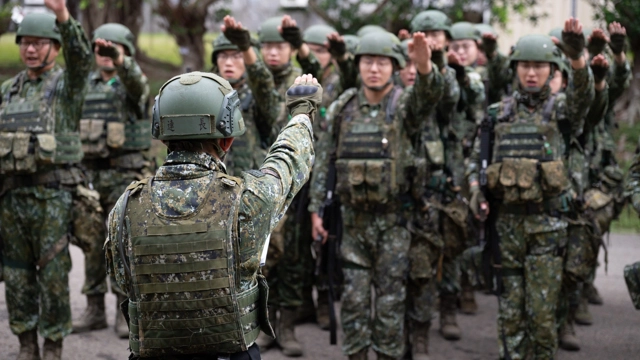 03:18
03:18 01:03
01:03 01:34
01:34 00:51
00:51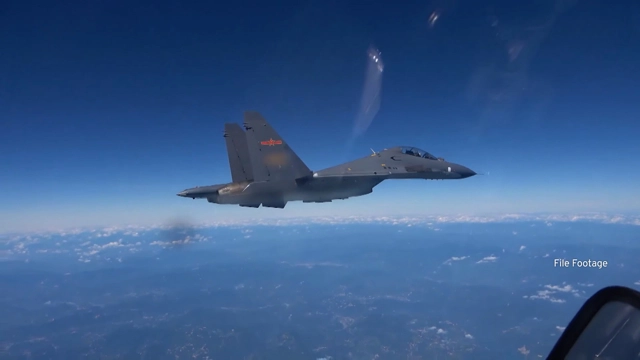 00:29
00:29 00:39
00:39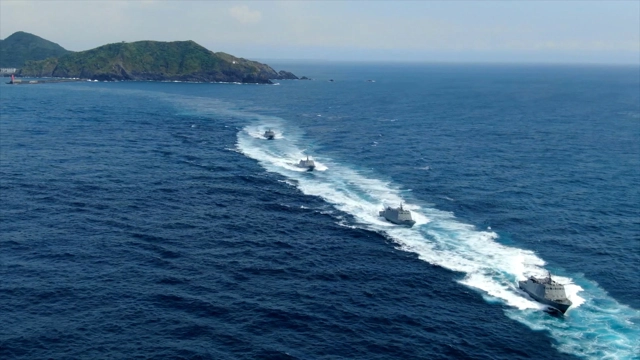 02:47
02:47 00:30
00:30 01:18
01:18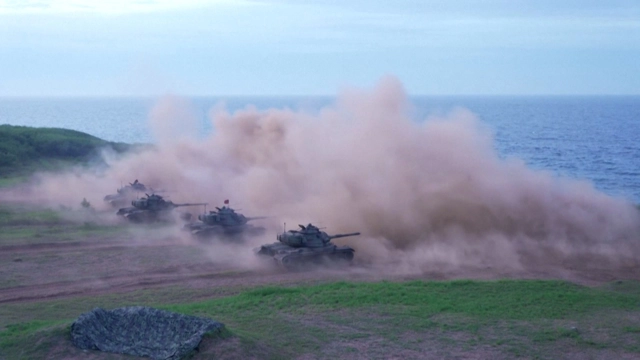 03:49
03:49