This AI-generated summary is based on reporting by TaiwanPlus and verified by newsroom fact checkers. Learn more about our policy here.
Eighty Years On, the Taiwanese Who Died on Okinawa Remain Uncounted
The last battle of World War II was the first for many young Taiwanese troops. Eighty years later, their stories—and their numbers—remain largely unknown.
The Battle of Okinawa ended on June 22, 1945, after nearly three months of relentless combat. It was the deadliest battle of the Pacific theater and a crucial stepping stone for a planned invasion of Japan’s main islands.
“It’s just a classic example of a kind of a violent climax to... this catastrophic event that had swept through Asia and the Pacific,” said John C. McManus, a military historian at Missouri University of Science and Technology. “Okinawa was an absolutely vital objective.”
The fight cost the U.S. nearly 13,000 lives. Japan lost more than 110,000 troops—roughly 92% of its defending force. Among those killed were an unknown number of Taiwanese soldiers, conscripted by the Japanese Empire in the final months of the war.
“The Battle of Okinawa was the most tragic battle of the Pacific War,” said Chu Chia-huang of the Taiwanese Veterans Association. “It was called the ‘Typhoon of Steel’ because the U.S. military used a large number of artillery shells to almost flatten the entire island.”
Taiwanese men were formally drafted starting in January 1945. Historians estimate about 200,000 Taiwanese served Japan during the war in various roles. Of those, around 80,000 were in direct military service, according to Harvard historian Rana Mitter.
Yet today, a memorial in Okinawa lists only 34 Taiwanese names. That number is widely seen as an undercount.
“Based on records from Professor Matayoshi Morikiyo at Okinawa University, the number of Taiwanese who died in Okinawa should be at least over a thousand,” said Chu. “But further investigation is needed because Taiwan and Okinawa were essentially cut off from each other after the war.”
Most wartime records remain in Japan, where they have stayed untouched unless formally requested. Taiwan’s government has not encouraged efforts to recover or acknowledge this chapter of history.
“The most complete records are in Japan,” said Chu. “If there is no official institution in Taiwan to request them, we have to rely on oral histories or family accounts. And even then, very little documentation exists.”
The battle’s brutal conditions made recovery of remains nearly impossible. Civilians and soldiers alike died in caves, often buried alive or killed by fire as the U.S. military used flamethrowers to root out Japanese forces.
“I’m amazed they found much of anybody,” said McManus. “It was absolutely such a mess in 1945... an environmental mess.”
Despite annual discovery of remains and ongoing DNA efforts, about 1,400 bodies from the battle remain unidentified.
Chu says Taiwan must act now. “If the next generation doesn’t understand this history, it will be completely removed from our memory... That’s why we take groups to Okinawa each year—to see what more we can do, and to pass down the stories of those who sacrificed.”
As time passes, so does the chance to uncover the truth. Without a full accounting, Taiwan’s role in one of the defining events of the 20th century may fade into silence.
 05:35
05:35 17:33
17:33 04:11
04:11 02:44
02:44 03:16
03:16 08:37
08:37 02:21
02:21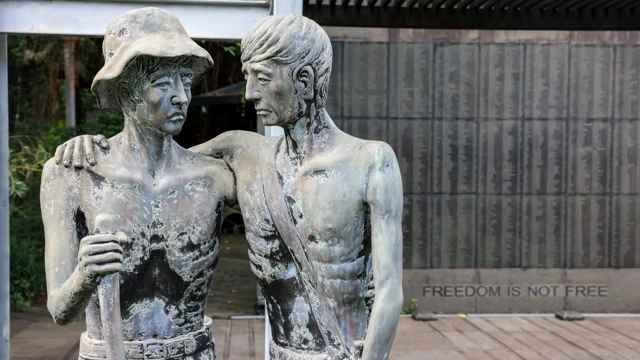 06:27
06:27 02:21
02:21 04:23
04:23 04:49
04:49 04:29
04:29 05:10
05:10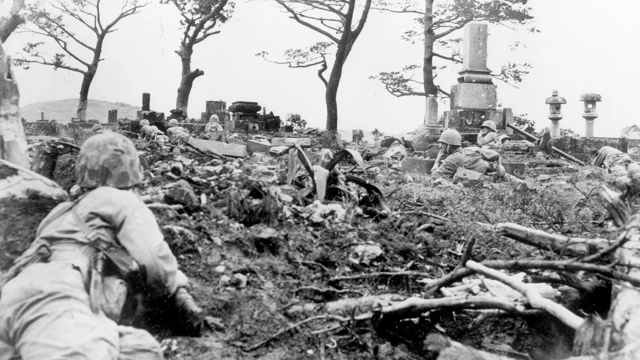 06:12
06:12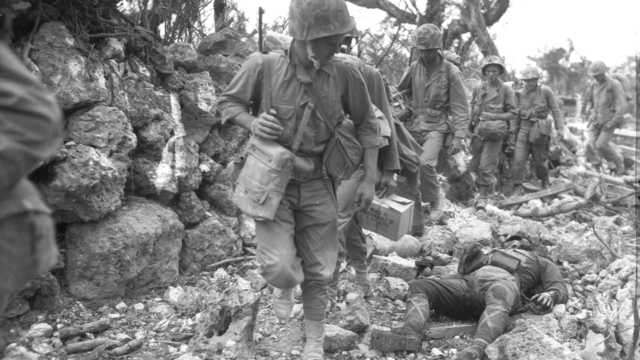 08:59
08:59 04:50
04:50