Last year, Taiwan was the number three in the world for new offshore wind capacity. Uh, and it saw massive investment from abroad. How does it look for solar power and for onshore wind?
WEI-WEI TSENG, CHAIR, WPD TAIWAN:
"Till today, you can see more like a big, uh, like infrastructure fund or bigger like a utility company from abroad, uh, foreign companies investing for offshore wind. But However, if we look at the solar and onshore wind, for example, for onshore wind, I think we are the biggest investment investor coming from private sector, while the other one is already our state owned utility type power and other domestic players. Yeah. And for solar, I think the biggest players are also domestic ones. So if you are talking about where the investment or money are coming from, I think, uh, and regarding solar and onshore. I think it's more from a domestic funding."
Taiwan's tech companies and semiconductor producers are very hungry for energy and Taipower, the state utility, has been discussing a bigger role for private investment in electricity. What does that mean for independent power producers like yourself?
WEI-WEI TSENG, CHAIR, WPD TAIWAN:
"The market is encouraging more, uh, private investment, but actually it already happened in the past two decades. And when it comes to the market price, uh, in the past, Tsai power have a feed in tariff, which means that they offer like a 20, 20 years fixed rate to purchase renewable energy. But here today, we are talking about more about a corporate power purchase Agreement and what the buyers or purchasers, offtakers need to know is that actually the development cost is rising. Yeah. So we need to pay, for example, the green upgrade cost, which also requested by Thai power. And we also have to we will have more spending on like local stakeholder engagement. We also have to face no shorter permitting process, which means we need time and money. Yeah. So I think, uh, the, uh, market price with, uh, the CPPA prices need to reflect the reality as well."
Are you expecting greater investment or better power purchasing deals?
WEI-WEI TSENG, CHAIR, WPD TAIWAN:
"I think so. Yeah. Because, uh, because the Electricity Act was amended in 2019 and from Lai Taiwan, every, uh, developed project has been shifted from feed in tariffs to KPA. So only during this new period, if there's any new project coming up, they may have a new like a green energy to purchase. Yeah. So till today, I think there's a kind of insufficient green energy already."
What do independent power producers and others in the renewables and wind energy sector need from the government right now in Taiwan?
WEI-WEI TSENG, CHAIR, WPD TAIWAN:
"Local governments and the central government need to share the responsibility of meeting the goal. Yeah, because now it's more like a central government setting up the national target of meeting certain renewable energy goal while local government, uh, don't kind of own the target. Yeah. So it's, it's more like a central government responsibility to fulfill that. Yeah. But actually, local government knows the best about their territory and the, where it's the most place to develop a different kinds of energy, maybe not only limited to renewable energy. So only the, um, connection and the, uh, the partnership between central and local government can help facilitate more development of energy."
 00:48
00:48 03:32
03:32 01:03
01:03 00:59
00:59 03:40
03:40 02:47
02:47 01:41
01:41 02:02
02:02 01:01
01:01 01:23
01:23 00:34
00:34 02:08
02:08 00:40
00:40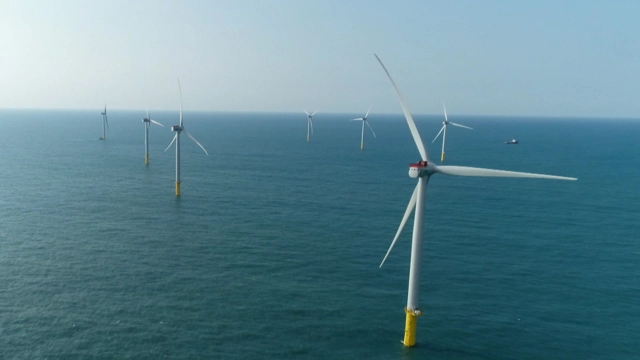 00:47
00:47 01:25
01:25 01:55
01:55