Strengthening National Defense
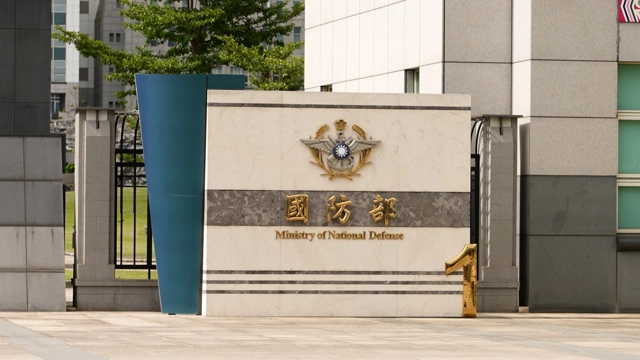
The defense ministry's latest report to lawmakers makes clear that it's doubling down on its ability to deter Chinese aggression.
REPORTER:
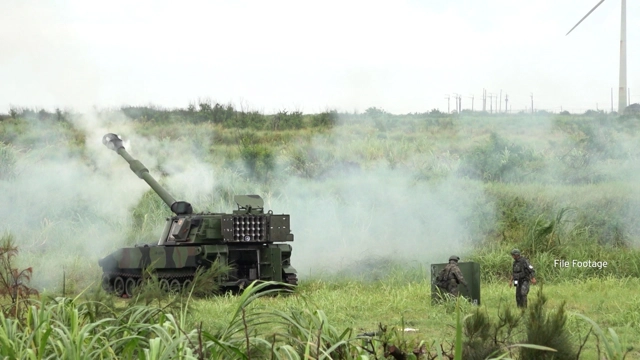
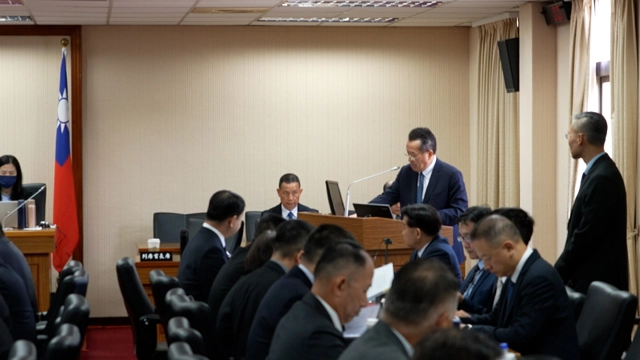
That means advancing technological capabilities, expanding weapons production at home, and buying critical supplies from the US. Speaking to lawmakers, Defense Minister Wellington Koo highlighted the military’s approach to standing up to Chinese aggression.
Wellington Koo (DEFENSE MINISTER):
In the face of China’s military threats
gray-zone pressure
and the rapid transformation of warfare
driven by technology
the military is adopting a multi-domain
uncrewed, distributed and intelligent approach
as the core of its joint force transformation.
REPORTER:
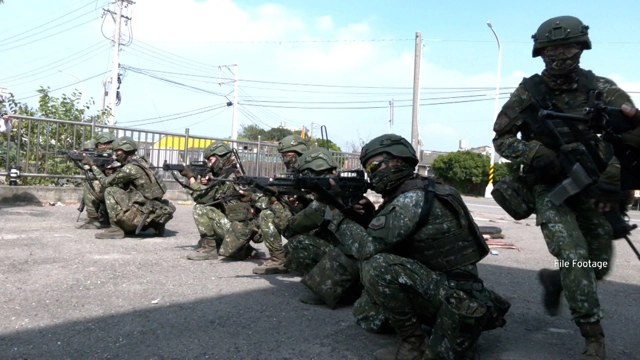
China claims Taiwan as its territory and has not ruled out the use of force to take it. Taiwan’s military says it must be prepared. The defense ministry plans to expand production of weapons ranging from armored vehicles to missiles. It wants to invest more than $7 billion US dollars in defense manufacturing, while deepening cooperation with industry and academia on next-generation systems.
REPORTER:
All this comes as Taiwan also faces infiltration and subversion from across the Taiwan Strait. Koo says the military’s vetting process is being strengthened to combat Chinese espionage.
Wellington Koo (DEFENSE MINISTER):
Our current security vetting process is not based on rank.
Instead, the level of scrutiny depends on
the degree of access an individual has
to classified information.
The higher the classification level
they can access
the more rigorous our vetting becomes.
REPORTER:
In October, the National Security Bureau said 73 individuals had been indicted in espionage cases so far this year, up from 6 in 2020.
REPORTER:
For years now, outside analysts, including American officials, have pointed to 2027 being a critical year in China's military development. The latest from Taiwan's defense ministry shows it’s doing its best to maintain as effective deterrence as possible in all domains.
Devin Tsai and Lery Hiciano, for TaiwanPlus.
 01:45
 00:29
 02:51
 00:41
 03:46
 00:29
 00:44
 00:29
 03:48
 02:40
 00:41
 02:25
 00:47
 03:16
 00:37
 00:29