REPORTER:
President Lai Ching-te goes for a night ride in an armored vehicle, before arriving at a secure bunker. It’s a simulation of what might happen if Taipei came under attack, and offers a rare look at the president participating in the annual Han Kuang exercise.
Now in its second day, Han Kuang has already kicked into high gear, with thousands of troops and reservists taking part across Taiwan. Thursday's drills will culminate with New Taipei's Danjiang Bridge being sealed off, to prevent simulated enemy forces from entering the capital region.
These drills come after a series of military exercises earlier this summer, which focused on mobilization speed, troop movements, increasing familiarity with local conditions, and the chain of command.
A major feature of these drills is how public they are.
Shen Ming-shi, DEFENSE ANALYST, INDSR:
They're being carried out simultaneously in every city and county, allowing more people to see the drills firsthand.
By making the exercises open and visible to the public, they can improve whole-of-society defense and help people understand what a wartime situation could look like.
Publicly visible drills also allow for public critique and discussion to make improvements.
REPORTER:
Motorists all around the country are sharing roads with military convoys and navigating detours as troops deploy defensive barriers. Reservists are reporting to schools, temples, community centers and other rallying points, with some exercises taking place in full view of the public.
Urban air raid drills next week will be even more noticeable, with authorities for the first time simulating mobile network disruptions as part of the exercises.
While these drills may disrupt daily lives, people on the streets of Taipei say they are necessary.
CIVILIAN:
We live in a region where the possibility of war is very real.
In circumstances like these it's all the more important to carry out more drills and prepare.
Personally, I think that's extremely important.
CIVILIAN:
The goal is to strengthen the public’s awareness of self-defense.
There are external threats and that doesn't just mean it could be other countries as well.
So I think this is necessary.
But it goes beyond just visibility. On Wednesday, the military simulated requisitioning civilian vehicles, contracting companies to bring vehicles to staging points at designated times. The BBC's mandarin service reported that the military would also simulate converting civilian factories to produce armaments.
Analysts say these highly visible exercises are designed not only to integrate civilian and military responses, but also to send a message to China.
Shen Ming-shi, DEFENSE ANALYST, INDSR:
It is clearly important for the military to integrate with society and conduct drills that target potential war scenarios.
[Publicly carrying out drills] lets know [Taiwan's] current national defense capabilities.
It lets them know that if they were to launch an invasion one day [Taiwan] would be prepared.
REPORTER:
The Han Kuang exercises have expanded beyond troops firing missiles at targets and defending beach landings to include a society-wide response. That broader preparation could prove crucial in the event of a real attack.
 00:29
00:29 02:09
02:09 00:26
00:26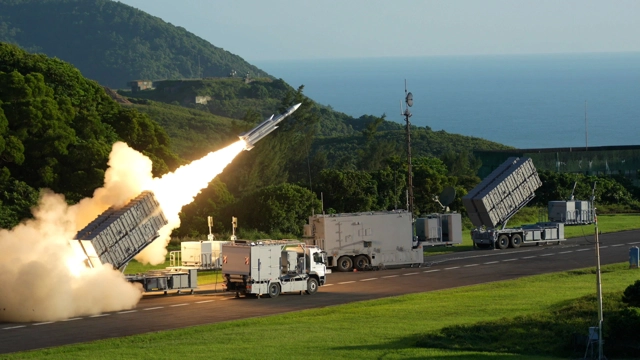 00:49
00:49 00:27
00:27 00:34
00:34 00:35
00:35 04:10
04:10 00:29
00:29 00:30
00:30 02:00
02:00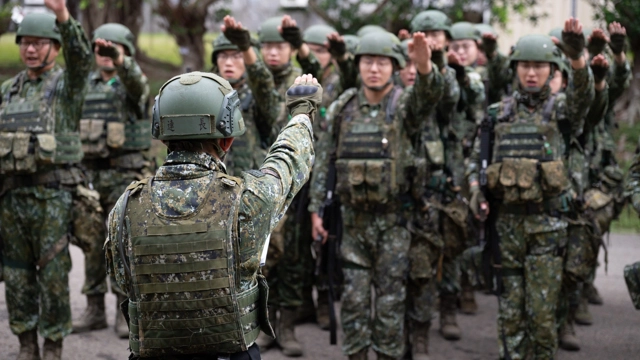 03:18
03:18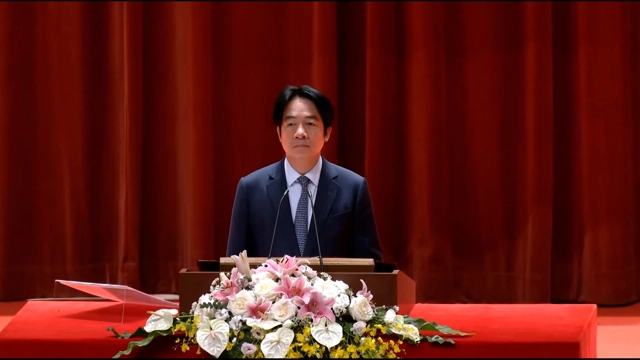 01:03
01:03 01:34
01:34 00:51
00:51 00:29
00:29