Special Defense Budget Sparks Debate
REPORTER:
Protesters in Taiwan’s legislature slam the final version of a special defense funding bill passed last week. The 25 billion US dollar budget is a compromise, far lower than the 40 billion dollar proposal put forward by President Lai Ching-te last November.
REPORTER:
That version included funding for US arms deals, and also set aside money for a multi-layered missile defense system called the T-Dome, a drone procurement plan, and an integrated air defense system. None of those were included in the final version. Instead, domestic weapons programs will be covered by the regular annual defense budget.
Analysts say that might not be enough.
Shen Ming-shih (DEFENSE ANALYST, INDSR):
We can’t rely only on US Patriot [missile] systems. We also have Taiwan’s Tien Kung [missile] system and the Chiang Kung [anti-missile interceptor] system. The most important thing is integrating [these systems]. We know that Taiwan has acquired a US-made [Integrated Air and Missile Defense Battle Command System] as well as [advanced surface-to-air missile systems]. [Integrating] these with Taiwan’s existing air defense systems is extremely important.
REPORTER:
The new budget is already causing tensions. The Cabinet says it might put forward another proposal for domestic procurement and other items that were cut. But that would require further legislation and lawmakers’ approval. And the opposition has already signaled it would likely not be on board.
Lai Shyh-bao (LEGISLATOR, KMT):
As for the other parts [of the budget] related to commercial procurement and sales as well as contract manufacturing, those can be moved to the regular annual budget. That would be a more practical approach. If the government wants to propose another special defense budget, I think the chances of opposition parties supporting it are not very high.
REPORTER:
Drones, especially ones not made with Chinese-made components, are already a priority for Taiwan’s defense ministry. The country has moved to deepen cooperation in this area with friendly countries, but the future of Taiwanese drone production is now up in the air.
Chen Kuan-ting (LEGISLATOR, DPP):
The drone production chain, which is of the most interest to the public, may not be able to fully develop. The counter-drone production chain was also excluded. Either additional budget allocations or another special budget bill specifically focused on commercial procurement and manufacturing would be feasible options.
REPORTER:
The new budget has raised eyebrows in Washington as well. An unnamed senior US official told Reuters his government was disappointed with the outlay. This comes as US President Donald Trump is set to meet with Chinese President Xi Jinping in Beijing later this week. Taiwan and arms sales reportedly may be on the agenda, though one US official says no change in Washington’s stance on Taiwan is expected.
REPORTER:
After nearly seven months of deadlock, the new budget may seem at first like a breakthrough. But as debate over Taiwan’s defense rages on, the story of the country’s military buildup may be far from over.
 00:34
00:34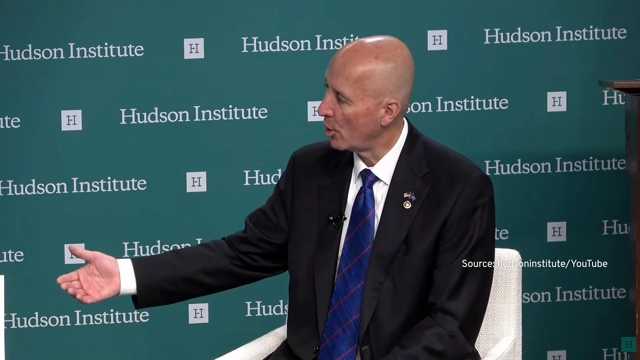 00:35
00:35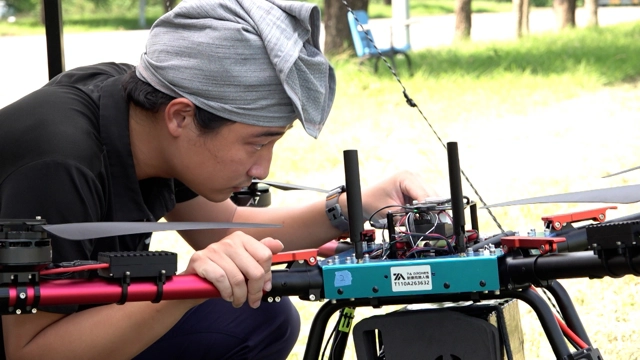 04:10
04:10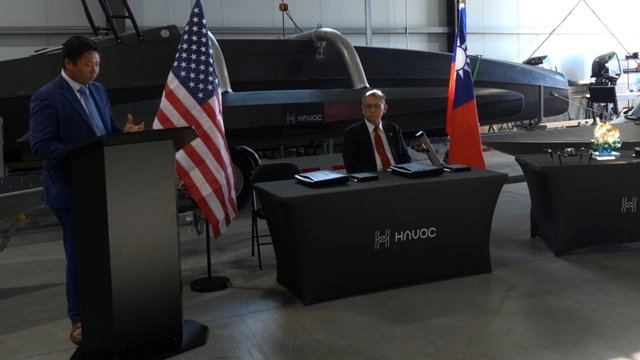 00:29
00:29 00:30
00:30 02:00
02:00 03:18
03:18 01:03
01:03 01:34
01:34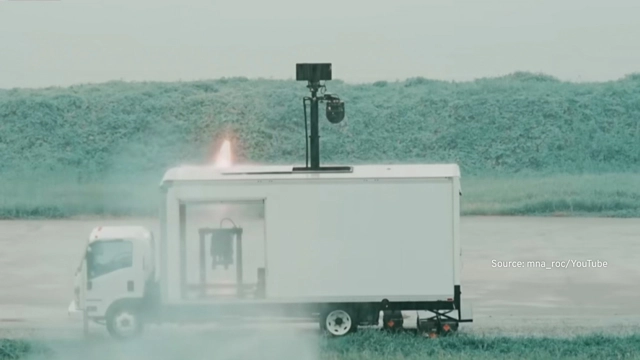 00:51
00:51 00:29
00:29 00:39
00:39 02:47
02:47 00:30
00:30 01:18
01:18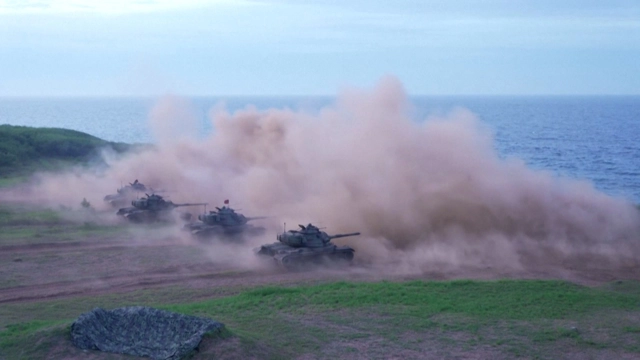 03:49
03:49