Taiwan Remembers Democracy Activist Cheng Nan-jung on Freedom of Speech Day
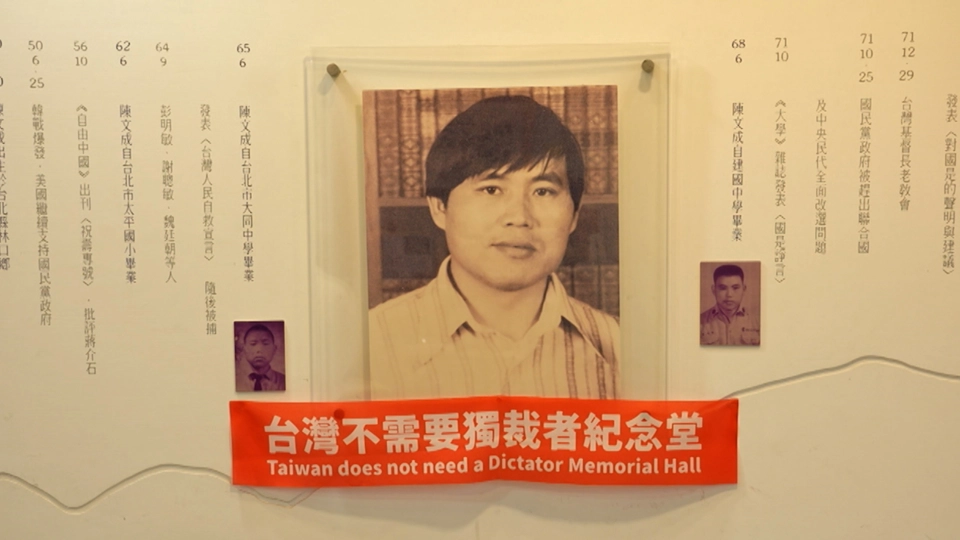
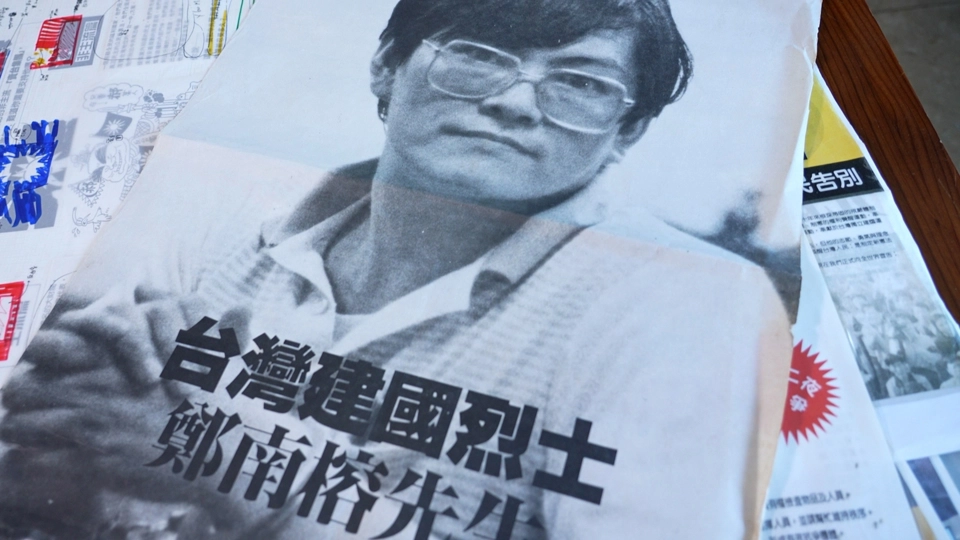
Free-speech activist Cheng Nan-jung, founder of Freedom Era Weekly magazine, self-immolated right before police could arrest him for sedition on April 7, 1989. His death sparked nationwide protests against political persecution. Thirty-seven years later, the country honors his death and legacy with Freedom of Speech Day.
REPORTER:
In sharp contrast to the upbeat music that filled this spring morning, thick black smoke billows from the third floor of this Taipei building. The blazing window looks right into the office of the magazine Freedom Era Weekly, whose editor-in-chief, Cheng Nan-jung, died in an act of self-immolation when police came to arrest him for sedition.
The day was April 7, 1989. Chiu Wan-hsing's pager rang that morning. He was the first photographer to document the event that would change the face of Taiwan, and the memories still haunt him to this day.
Chiu Wan-hsing:
The Democratic Progressive Party office told me
“Something bad has happened
to Freedom Era Weekly.”
They said, “You must go take photos now.”
Riot police had sealed off both ends of the alley
where the magazine office was.
I saw a lot of SWAT team members.
About a dozen of them.
Then there was a charred corpse.
I just broke down crying as I took those photos.
It was heartbreaking.
REPORTER:
Cheng Nan-jung, who also went by the name Nylon Cheng, was wanted for publishing texts supporting Taiwan independence, challenging the then-ruling Kuomintang government, which had continued to follow its party mission to reclaim China and criminalized opposition to its one-party rule even in 1987, after it had ended more than three decades of martial law.
Cheng registered over 20 publishing licenses to get around government bans on his magazine and took full responsibility for what he published. Before the fateful day of his death, he had locked himself in his office for 71 days to avoid surveillance.
Bite:
Cheng Nan-jung began his self-imprisonment
after he received the subpoena
from the Taiwan High Prosecutor’s Office
accusing him of sedition.
He had already made it clear, saying
the “Kuomintang will never take me alive.
If they truly want to arrest me
they will only take my dead body.”
REPORTER:
For over two months, Cheng continued to work and live his day-to-day life inside this room, taking his own life right before police could break down the door and capture him.
REPORTER:
Over there on the floor is where police found Cheng Nan-jung’s charred body, and this room has been kept exactly as it was that day, with what remains of the furniture still in place.
REPORTER:
In the years since his death, there have been various views about Cheng Nan-jung and his legacy. Many hail him as a martyr for free speech, though some disapprove of the extreme manner he chose to take his own life.
His youngest brother, Cheng Tsing-hua, remembers him as a headstrong workaholic who refused to give up on his self-lockdown, even on a holiday.
Cheng Tsing-hua (YOUNGEST BROTHER):
On Lunar New Year’s Eve
[my third brother] told me
“Bring the video camera and tripod.
We’re going to take a family portrait.”
I said, “Huh? We’re having our New Year’s Eve family dinner
at the magazine’s office?”
I didn’t really have an idea, I just thought
sure, it’s just taking a picture.
But that photo turned out to be
our last portrait of the whole family together.
REPORTER:
Cheng Tsing-hua said not even his parents could sway his brother’s determination. Still, they supported him all the way, even though it could mean losing him forever.
Cheng Tsing-hua (YOUNGEST BROTHER):
After the fire
[a local TV station] interviewed my parents.
I didn’t cry for Nan-jung
but I lost it when I saw my parents on TV.
(How so?)
They were talking about their own son’s [death].
That’s what I found hardest to bear.
REPORTER:
Cheng's death sent shockwaves through the country. Tens of thousands of mourners took to the streets of Taipei on the day of his funeral. People saw that freedom didn’t automatically come with the end of martial law. Authoritarian rules were still in place, and surveillance hadn’t stopped.
Bite:
What people truly feared were the treason laws
and the anti‑communist espionage act.
These laws offered the legal basis for prosecuting
political criminals.
Political persecution continued
for years after [the end of martial law]
because these laws were still in effect.
This shows that the government had no intention
of fully giving democracy to Taiwan.
REPORTER:
But demonstrations erupted all over, culminating in the end of persecuting dissent and the release of all remaining political prisoners in 1992.
Bite:
Taiwan’s democracy movement did not
emerge in isolation.
Cases may have been individually prosecuted
but when we look back at the social context of that time
when one side was in trouble
help came from all directions.
It's said that a single spark can set a whole field ablaze.
Even if one movement were suppressed today
its spark would continue to influence others.
REPORTER:
Today, the street where Cheng’s former office stands has adopted the name Liberty Lane, and the Freedom Era Weekly office is now a museum. These spaces serve to remind people of Taiwan’s hard-won fight for democracy and to ensure that history never repeats itself.