Dapi’s Pickled Mustard Brine: Pollution Turns to Promise for Clam Farmers
All over Dapi Township in rural central Taiwan, the sharp smell of brine and fermentation wafts through the air.
People here still pickle mustard greens the old-fashioned way. While they have some mechanical help, it’s still mostly gloved hands and pitchforks and deep fermenting pits. It’s a living tradition, a bit of Taiwan’s history in the present. But it’s also an environmental menace that’s begun to take a toll on this community.
Liu Kung-ming (HEAD, DAPI PICKLED GREENS SPECIALTY AREA):
Pickled mustard green brine has a high salt concentration. It leeches into our soil. It causes serious harm to the soil here in Dapi Township.
For a farming town that prides itself on its fertile lands, that’s terrible news. Worse yet, the brine is ruining water quality. Farmers have to drill deeper and deeper to hit fresh water as the upper layers of the water table turn salty. The result? The ground is caving in.
What to do with leftover brine is a tough question. It’s now classified as waste, so can’t be dumped. But a brine holding tank facility built in 2002 is almost full. And proper disposal is expensive, at around $100 US dollars per ton. That adds up fast, given how much brine they produce here.
But ecological disaster looks like it’s been averted. That’s thanks to one budding scientist at National Taiwan University. Ho Sheng-wei is a PhD candidate focused on aquaculture. Through lab work, he discovered that while brine is bad for soil, in the right place, it can work wonders.
Ho Sheng-wei (PHD CANDIDATE, NTU):
Algae from different bodies of water naturally grow in this pickle brine. What kinds of algae grow the most in the brine? And could that algae be helpful to clams?
The word from clam farmers—a resounding yes. Many are still using fish-based fertilizer to create the algae the clams eat in their pools. But fish meal has to be fermented first. Pickle brine is already fermented and ready to use. It also costs half as much as fish meal.
Plus, the brine seems to make clams more resilient to climate-related stress while jumpstarting their growth.
Lin Po-chun (CLAM FARMER):
With traditional methods, clams take 10-12 months to reach harvestable size. But if you use brine to raise them, that gets shortened so you can harvest them in six to eight months. There’s a big difference in weight, too. Whether it’s the smoothness of the shell or the plumpness of the meat, it's all far superior to the original fish-meal method.
The fact that brine is still legally classified as waste is a hurdle to wider adoption beyond this early experimental phase.
But Dapi Township may now have a way to keep making its pickled greens, while putting its brine to good use.
 01:23
01:23 01:30
01:30 00:45
00:45 02:28
02:28 01:39
01:39 02:51
02:51 03:07
03:07 01:38
01:38 01:36
01:36 04:22
04:22 01:44
01:44 03:33
03:33 01:32
01:32 01:05
01:05 01:49
01:49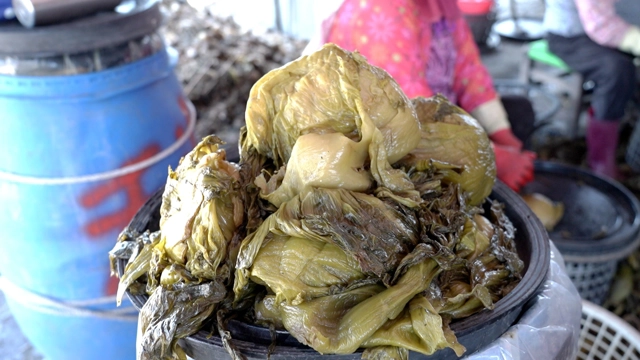 02:55
02:55