Analysis: Nvidia's US$750B Deals Spark AI Circular Financing Fears
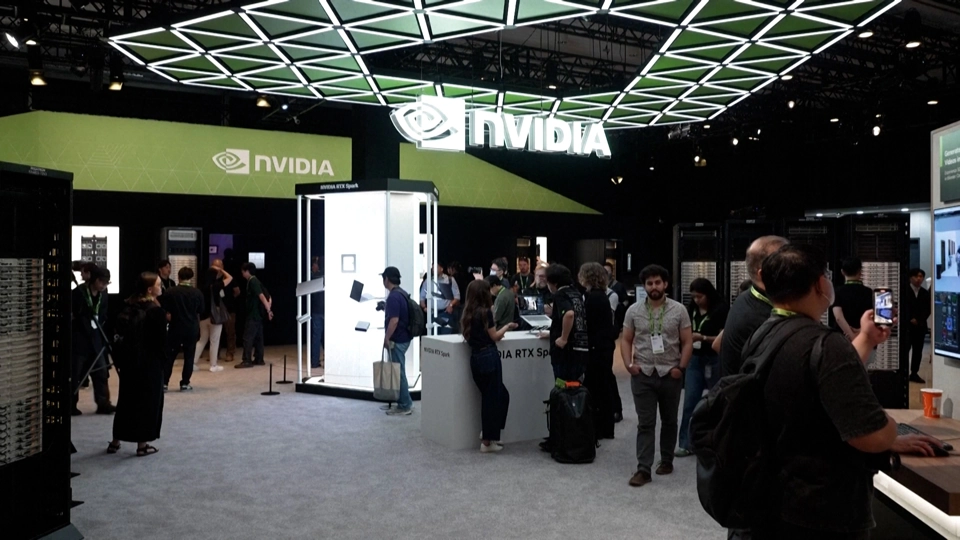
Nvidia is working on AI deals worth more than US$750 billion. But some investors are worried about circular financing, where Nvidia helps fund the very companies that buy its chips, artificially inflating the market. To assess the risks, TaiwanPlus speaks to Rolf Bulk, head of semiconductors and infrastructure at the Futurum Group.
REPORTER:
Nvidia is in the headlines for striking massive deals, including with SK Group involving memory chips and OpenAI for a data-center project. Can you talk to us about the significance of these deals?
Rolf Bulk (THE FUTURUM GROUP):
It has been a flurry of deals over the last few weeks, but I do think that we should separate the types of deals that are being made. You know, on one hand, you have deals such as between Broadcom and Samsung and such as between Nvidia and SK Hynix, which are really, um, supplier deals first and foremost. And on the other hand, you have deals such as announced or rumored um yesterday between Nvidia and OpenAI. Now these deals in which Nvidia is essentially backstopping um OpenAI i.e. guaranteeing some of the obligations of OpenAI. And, and that is a very different type of deal than what than the ones that we have seen between SK and Nvidia and Broadcom and Samsung. And it is those, those latter deals that, um, that, uh, that investors are more concerned about.
REPORTER:
Now, these deals are also raising concerns about what’s known as “circular financing.” Can you explain to our audience what that means, and why Nvidia’s deals are drawing scrutiny?
Rolf Bulk (THE FUTURUM GROUP):
So, in a nutshell, a circular financing here means that the supplier of the chips, Nvidia, is at the same time financing the purchase of those chips, i.e. a circular dynamic. And the concern here is that ultimately, if these chips, these GPUs do not generate the return that is required, that Nvidia will be left holding the bag since they are guaranteeing these investments. And if OpenAI cannot guarantee the investments, then it will be Nvidia that will have to put up the money. Now, um, of course the whole premise here, the only instance in which this becomes an issue is if demand for AI is not um, is not materializing.
REPORTER:
So, the concern is that some of this demand may be being manufactured through the deals themselves. How worried should investors be?
Rolf Bulk (THE FUTURUM GROUP):
I do think that compute demand continues to outweigh supply. You know, we've seen Google last week increasing their CapEx budget for 2026 by another 15 billion. They're now set to spend over 200 billion in 2026 alone. Google has very good visibility on whether those investments that they are making, whether that can be monetized or not. Um, we've also seen TSMC and ASML over the last few weeks increased their guidance, their long-term guidance. Um, so everything points to sustained demand for AI, and for the compute that is required for AI workloads. Um, so in that context, I'm not too concerned in the near term. Now in the long term, of course, who knows what the world is going to look like five years from now.