US-Iran Tensions Escalate Over Strait of Hormuz
REPORTER:
The US says the Strait of Hormuz is open to traffic, despite Iran saying the critical waterway is closed.
The US and Iran have been exchanging fresh strikes after Iranian forces fired at a commercial vessel transiting the strait. Iran also hit US facilities in nearby countries on Sunday. The latest exchange of attacks marks a breakdown of the June ceasefire between Iran and the US.
The US insists the Strait of Hormuz is open, despite Iran saying it has closed the waterway amid renewed strikes.
Hostilities, which flared up again this week, continued on Saturday after the US said it had struck more than 140 targets across Iran. The attacks were a response to Iranian forces hitting a ship passing through the strait, which it said was using an unapproved route.
Iran has been trying to assert control over the waterway, and early on Sunday said it was closed until further notice.
Iran's Islamic Revolutionary Guard Corps (IRGC) also launched wide-ranging attacks on US bases and allies across the region on Sunday, marking an escalation in the scale of hostilities.
It said it had hit a US base in Jordan, while the United Arab Emirates (UAE), Qatar, Kuwait, Oman and Bahrain all said they had responded to missiles and drones from Iran.
Qatar, a mediator in ceasefire talks, had not been attacked since April, while the UAE had not been attacked since May.
On Sunday evening, Centcom announced another round of strikes against Iran, which it said started at 17:00 ET (22:00 BST) and would "continue degrading their ability to attack civilian mariners and commercial ships freely transiting the Strait of Hormuz".
On Sunday afternoon, Iran's IRNA news agency said missiles were launched by the "enemy" towards Qeshm Island - a strategically important island in the Gulf, home to an important IRGC base.
The renewed fire has put in jeopardy an interim ceasefire agreement signed last month, which aimed to reopen the Strait and eventually bring a permanent end to the conflict.
Earlier this week, US President Donald Trump declared the Iranian attacks meant the ceasefire was over, while Iran's Foreign Minister Abbas Araghchi accused the US of violating the deal.
However, Trump said talks would still continue and mediators were trying to revive the process.
US media reported that Iran told American officials attacks on tankers earlier this week were a mistake and blamed a rogue internal group.
The latest hostilities were sparked after the IRGC said it had fired a naval cruise missile at a vessel that was attempting to sail along an unapproved route.
REPORTER:
The United States launched a fresh round of strikes against Iran on Sunday (July 12), saying the attacks were aimed at degrading Tehran's ability to target civilian mariners and commercial vessels transiting the Strait of Hormuz.
The new strikes came after U.S. and Iranian forces exchanged heavy missile and drone attacks over the weekend, with Tehran targeting U.S. facilities across the Gulf and saying it had again closed the Strait of Hormuz. The renewed violence casts further doubt on the future of an interim U.S.-Iranian agreement signed last month that aimed to reopen the strait and end the war after a further 60 days of negotiations.
REPORTER:
Iran's Islamic Revolutionary Guard Corps said on Sunday (July 12) it had launched attacks on the U.S. in response to the "aggression of the American army."
Footage showed what they said were missiles being launched.
U.S. and Iranian forces have exchanged heavy missile and drone assaults, with Tehran targeting U.S. facilities in states across the Gulf on Sunday and saying it had again closed the vital Strait of Hormuz.
The strikes were the latest in a cycle of attacks and counter-attacks as Iran seeks to assert control over shipping through the strait. However, the barrage marked an escalation in pace and range.
BITE
UNNAMED IRINN NEWS ANCHOR (READING ANNOUNCEMENT FROM THE PERSIAN GULF STRAIT AUTHORITY):
The Persian Gulf Strait Authority said in a statement that passage through the Strait of Hormuz was currently not possible because of recent illegal movements by U.S. forces in the region. According to the statement, once stability and calm are restored, all requests will be reviewed according to schedule and the necessary permits issued. The Persian Gulf Strait Authority stressed that the only way to obtain a transit permit was through the PGSA.ir website.
REPORTER:
Iranian state television said on Sunday (July 12) that the Strait of Hormuz had closed again, citing the Persian Gulf Strait Authority, as U.S. and Iranian forces exchanged heavy missile and drone strikes across the Gulf.
IRINN reported the authority's statement that passage was "not possible" because of "recent illegal movements by U.S. forces."
The renewed strikes were the latest in a cycle of attacks and counter-attacks as Iran seeks to assert control over shipping through the strait. However, the latest barrage marked a sharp escalation in pace and range.
The attacks extended to the United Arab Emirates, which had not been targeted since early May, and Qatar, a mediator in ceasefire talks that had not come under attack since April.
The renewed violence casts further doubt on the future of an interim U.S.-Iranian agreement signed last month that aimed to reopen the strait and end the war after a further 60 days of negotiations.
 02:15
02:15 03:07
03:07 03:23
03:23 03:25
03:25 03:23
03:23 02:42
02:42 02:54
02:54 02:56
02:56 03:24
03:24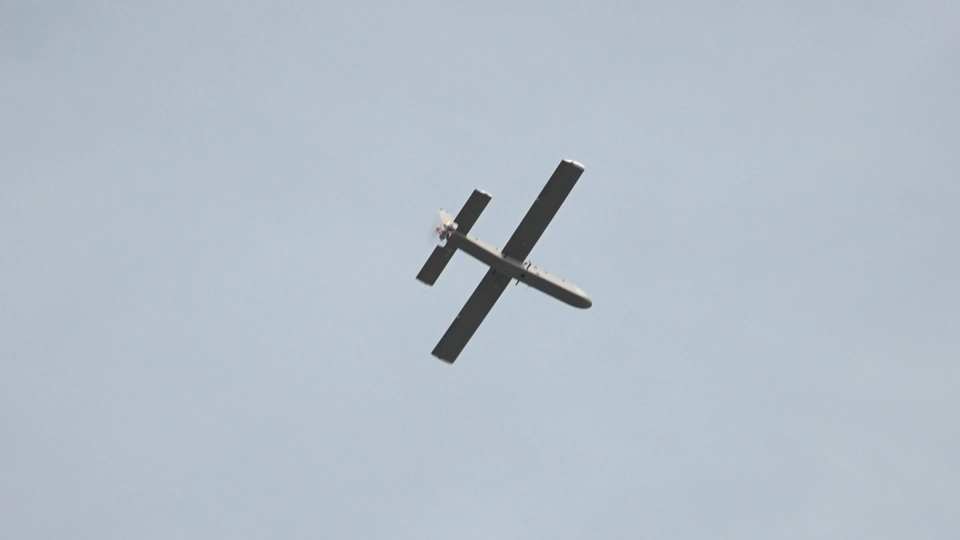 02:33
02:33 00:27
00:27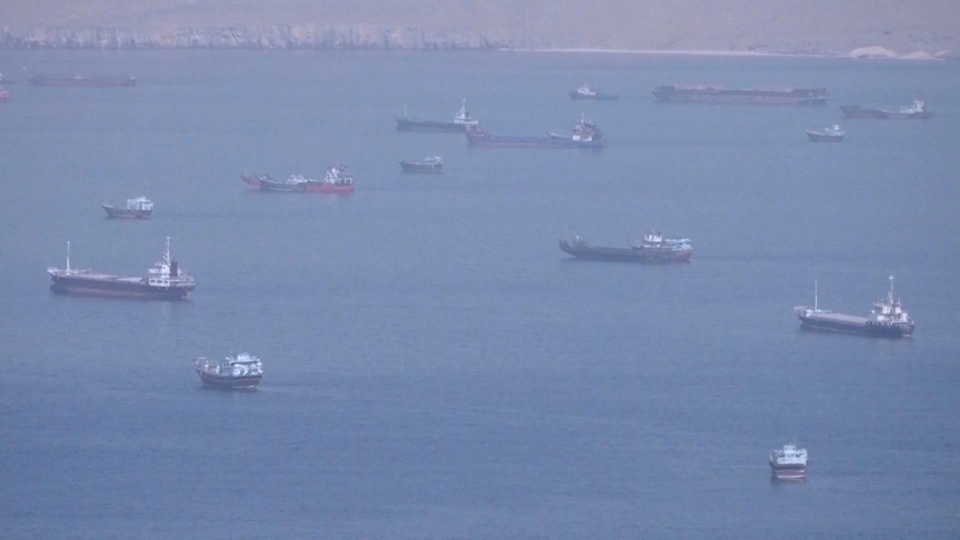 00:30
00:30 02:36
02:36 00:33
00:33 02:50
02:50 03:09
03:09