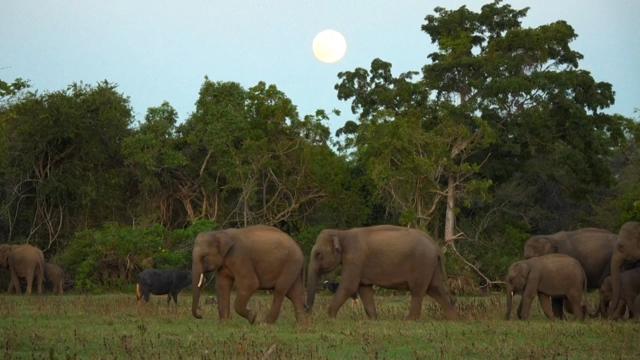
In northwestern Sri Lanka, an electric fence is being repaired in the small town of Galgamuwa. It’s the only thing standing between this village and about 100 wild elephants.
This is the frontline of one of the world’s worst human-elephant conflicts. Since 2019, more than a hundred people and three hundred elephants have been killed in Sri Lanka... every year.
Yet elephants are deeply woven into the local culture and the country’s 4 billion US dollar tourism industry.
A wildlife officer from the village, knows the toll of the conflict firsthand.
THILAKARATNE BANDARA, WILDLIFE OFFICER:
"An elephant came into my garden and broke my leg in three places and made my wife wheelchair bound. But I don't hate elephants. I see this situation more as karma that my wife and I must endure. What will I get by hating that animal? It is innocent."
After decades of clearing for farming, only about 16 percent of Sri Lanka’s forest cover remains. With their habitat shrinking, the elephants have no choice but to forage near where people live.
THILAKARATNE BANDARA, WILDLIFE OFFICER:
"Twenty years ago, we didn’t have this situation. When we were little, we had to go to a corner of the reservoir to see elephants. Now, in the night, the elephants come to see us."
Officer Bandara wants to see an end to forest clearing and better reforestation programs. At home, he helps his wife fit her prosthetic leg. Beyond the fence, a herd grazes.
Dolphine Chen, Ted Chen for TaiwanPlus.
 01:59
 00:54
 02:26
 02:43
 00:37
 00:48
 03:06
 04:09
 00:32
 03:29
 00:54
 03:28
 02:51
 02:34
 00:26
 01:54