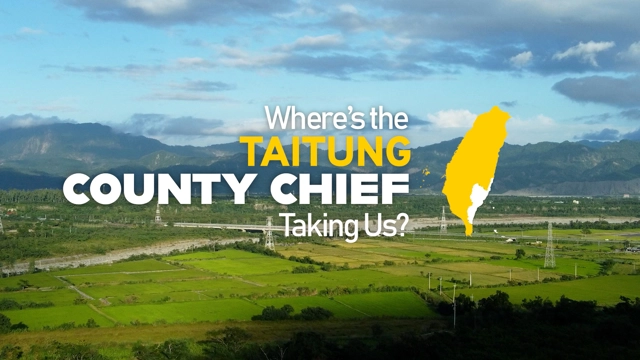
Taitung is often affectionately called Taiwan’s quiet backyard, and what a striking backyard it is!
Tall mountains cut the county in two: on one side, the mighty Pacific. On the other the East Rift Valley lined with rice fields.
You’ve gotta leave the big cities and venture into more remote parts of Taiwan if you want to catch views like this.
A lot of people think ‘remote’ implies a lack of resources.
But I think this is Taitung’s comparative advantage.
It’s this remoteness which enables people to find peace and surround themselves in nature.
April Yao (TAITUNG COUNTY MAGISTRATE):
When I came back to Taitung, I realized – wow. My hometown is the kind of place in the US where I’d spend a lot of money to vacation. What we have here is something many people travel far and pay good money just to see.
It’s the colors of Taitung, the fresh air, the quiet, which have attracted artists like Paul Chiang.
People often ask what kind of flowers I’ve painted. I tell them they’re not flowers. They come from my surroundings in Taitung. The air, the colors and nature itself.
The 83-year-old artist spent much of his creative life outside of Taiwan – more than 30 years in New York and Paris – before settling in the rural east coast of Taiwan in 2008.
For years, Chiang painted in somber colors – black, white and grey. But after he moved to Taitung, his creations sprang to life.
The Paul Chiang Art Center, which opened in 2025, contains his life’s work and the center itself is his biggest work to date.
When people look at my work I hope they slowly realize this couldn’t have been made by a European or an American and maybe even feel that it’s by an Asian artist. My pieces may be large in scale but the emotions within them are very delicate. And that’s something Western artists can’t really achieve.
While some artists, like Paul Chiang, find their inspiration in Taitung’s vast ocean, others prefer the inland valleys where they celebrate the autumn rice harvest.
The fields of Chihshang are known for producing some of the most delicious rice in Taiwan, and the scenery is so beautiful that it attracts tourists, cyclists, and even artists who use it as a stage.
The Chihshang Autumn Harvest Arts Festival began right here in these rice fields in 2009. Over the years, they’ve hosted prominent dancers, pianists and even some of Taiwan’s biggest pop artists.
This year’s program is led by U-Theatre.
It follows a young Indigenous boy on his path to adulthood – as he learns to connect with the world around him and ultimately finds strength within himself.
The narrative is guided by Sangpuy, a Golden Melody Award winning singer from Taiwan’s Indigenous Pinuyumayan people.
Sangpuy (PERFORMING ARTIST/MUSICIAN):
Where is the soul? It’s in your everyday life. It’s in your cultural traditions. Go find it, understand it. You’ll meet a different version of yourself.
The earth, wind, clouds, birds and rice fields are all part of the performance.
Sangpuy (PERFORMING ARTIST/MUSICIAN):
They are the lead actors and we are just supporting roles. It’s because of them that we’re able put on today’s performance. That’s right. That’s the true meaning behind the festival.
A sense of gratitude for the environment, the land and the season that makes it all possible.
Here in Chihshang, art doesn’t just happen on the land – it grows out of it. And nature becomes part of the show, revealing something new and different every year.
In our next episode, we meet the Indigenous farmers who are reviving an ancient grain and connecting with the traditions that have sustained Taitung for generations.
Eason Chen, Hank Hsu, Pichi Chuang and Andrew Ryan for TaiwanPlus
 23:04
23:04 04:08
04:08 04:47
04:47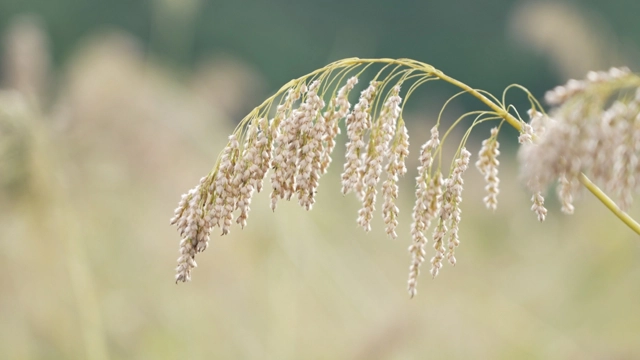 04:11
04:11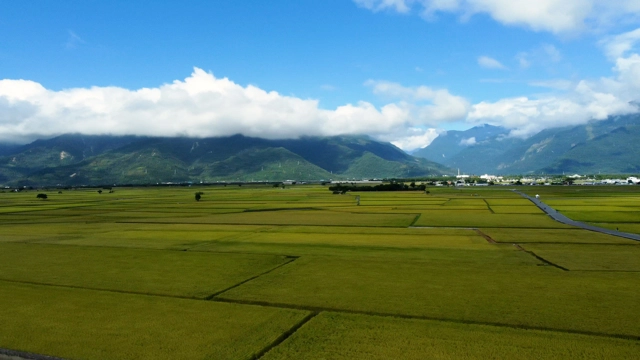 04:18
04:18 04:17
04:17 20:54
20:54 04:01
04:01 05:29
05:29 03:42
03:42 04:49
04:49 03:32
03:32 16:27
16:27 04:42
04:42 03:50
03:50 03:14
03:14