ANCHOR:
To understand the potential impact of these new export measures on Taiwanese chipmakers and US-China tech competition, our reporter Lily LaMattina spoke to Domingo Yang from the Institute for National Defense and Security Research.
REPORTER:
Taiwan is considering stricter export controls on the sale of AI chips to China. Why is the government considering this now?
Domingo Yang (ASSISTANT RESEARCH FELLOW, INDSR):
I think that the enforcement level, it will be a major breakthrough, uh, to to have a shift away from Taiwan's, uh, previous ambiguous posture on the export control vis a vis China toward a clear stance on countering the sanctions evasions by imposing actual criminal penalties on AI chip smugglers, smugglers. I think, second, it will send a clear signal that Taiwan is willing to share the deterrence burden with the United States and to help maintain the regional peace and status quo by ensuring that the most advanced AI chips covered by the US sanctions are not transferred to China.
REPORTER:
How would this impact Taiwanese companies, especially chip giant TSMC?
Domingo Yang (ASSISTANT RESEARCH FELLOW, INDSR):
TSMC's revenue, uh, from mainland China has been actually declining, from about 20% of the total sales in 2019 to around 7% in last year. So, I think the overall risk for TSMC is manageable. Uh, but for AI server companies like Foxconn, Wistron, and others, uh, the risks and the potential losses could be higher. But on the other hand, we also have to recognize that China is trying to strengthen its self-reliance and to reduce its dependency from the external, uh, supply chains.
This means that I think in the foreseeable future, the Taiwanese companies will face tougher export restrictions from Beijing on the sales to China, regardless of Taiwan's own policy choices.
REPORTER:
This news also comes a day after the US expanded its blacklist of Chinese tech firms, such as Bǎidù and Ālǐ bābā, it says are aiding China's military. How will this affect US-China relations?
Domingo Yang (ASSISTANT RESEARCH FELLOW, INDSR):
The US China AI competition is entering into a new phase of, uh, dual use ecosystem competitions. So it's not just a company by company, it's the entire dual use ecosystem competitions. And why is that is because China is using this, uh, whole of nation approach to really leverage its civilian and commercial capabilities for, for the pure, uh, military power. And then we know that Chinese private sector private companies are all subject to China's, uh, national security laws, uh, for instance, like the national intelligence law or the counter-espionage law, which will allow Beijing to really access and use those technologies and data in the name of national security.
There will be more opportunities for the non-supply chain, the kind of trusted AI infrastructure, the kind of clean supply chain, uh, free from the Chinese coercion, free from the control. Uh, I believe this will be, uh, the future trend so that Taiwanese tech companies, uh, I think they should seize these opportunities.
 00:52
00:52 00:35
00:35 01:50
01:50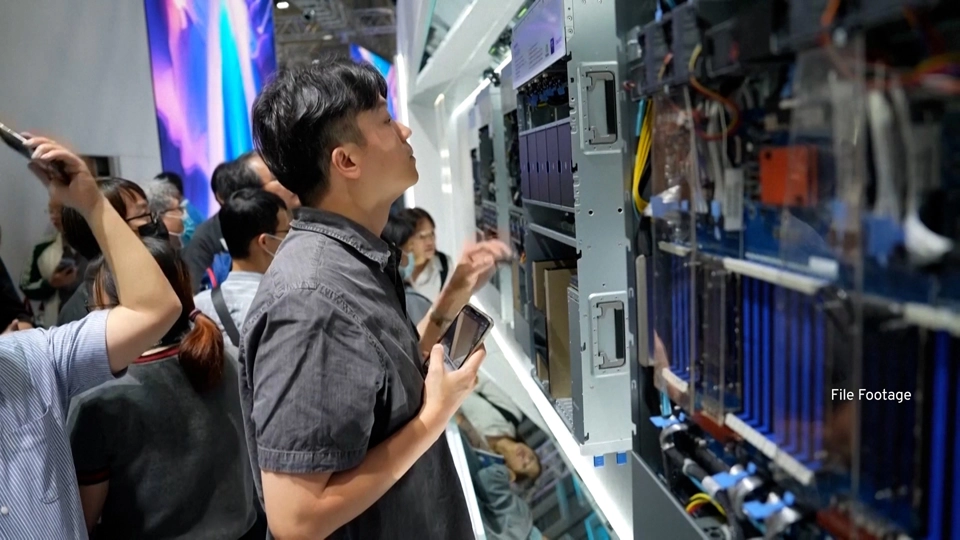 00:33
00:33 01:03
01:03 01:02
01:02 02:16
02:16 02:53
02:53 04:46
04:46 01:56
01:56 03:16
03:16 02:09
02:09 00:47
00:47 48:00
48:00 03:38
03:38 00:36
00:36