REPORTER:
Huang’s GTC speech was over 2 hours long. He made a lot of big announcements. But what would you say is the biggest takeaway in your view?
Rolf Bulk (HEAD OF SEMICONDUCTORS & INFRASTRUCTURE, THE FUTURUM GROUP):
So let's first talk about what he did not talk about. So no new product announcements in the data center. Nothing about Feynman architecture, which was something that investors did not anticipate. But still, you know, data center is the major driver for Nvidia. So to not see any new announcements on that front, that was something to take note of. What I mostly took away, though, is that Nvidia remains very focused on the most important metric for them, which is tokens per watt. Now that over the last year or so, that has really evolved into metric that investors and the broader industry pay attention to. And on that front, Nvidia is still leading by a mile compared to their competitors. So in our estimates, they're on that metric token per watt. There are 3 to 15 times as efficient as an AMD, for instance. And this really comes down to the level of integration that Nvidia can deliver. So those seven chips that they combine into the Vera Rubin rack that drives that level of performance delta.
REPORTER:
Another big theme was AI infrastructure, what Huang is calling AI factories – these massive data centers used to run and train AI models. But what do you see as the biggest obstacle to scaling these in the next few years?
Rolf Bulk (HEAD OF SEMICONDUCTORS & INFRASTRUCTURE, THE FUTURUM GROUP):
So for Nvidia, but also for all of their peers, what remains the real bottleneck is silicon. So whether it is N three, so three nanometer capacity coming out of TSMC or high bandwidth memory chips coming from SK Hynix, Samsung and Micron, all of those chips, all of that silicon is still in short supply. And this remains the main bottleneck now for Nvidia in particular. That is not necessarily a negative for the industry as a whole. It smoothens the cycle, ensuring that we don't end up in a situation in which the sector overbuilds and ends up with a situation where we see a big downturn. And for Nvidia, it ensures that that bias is really focused on that, on that performance per watt metric, right. If your silicon is constrained, if your power is constrained, you're going to want to put in the most efficient chip. And that is Nvidia.
REPORTER:
Another big announcement Nvidia had was its push deeper into the PC market. Why this move now, and do you see the PC market becoming a big area for growth for the company in the next few years?
Rolf Bulk (HEAD OF SEMICONDUCTORS & INFRASTRUCTURE, THE FUTURUM GROUP):
So computer access, as you know, has always been fairly PC-centric. So they saved that announcement for this particular conference rather than announcing it a few months ago at their own conference on the west coast. At the end of the day for Nvidia PCs is a smaller market compared to the data center, but the cooperation that they have with Microsoft, with MediaTek, with ARM, there is a lot of ecosystem backing to this initiative. And that is something that is probably necessary in the end. We've had several initiatives over the last decade of PC manufacturers trying to break into ARM-based windows PCs. What Nvidia is trying to do today and, and all of those have failed, right? The only ARM-based alternative that we have in the market is Apple, because Apple can so tightly control its ecosystem. Now Nvidia, with all of its peers, try to deliver a similar proposition today. But we'll have to see whether they succeed. And we don't really know yet because what we have not seen is benchmarks versus Intel and AMD. We haven't seen any type of price point, any type of performance difference. So the jury is still out on that front, I would say.
REPORTER:
As Nvidia expands, which Taiwanese companies, besides TSMC, stand to benefit the most?
Rolf Bulk (HEAD OF SEMICONDUCTORS & INFRASTRUCTURE, THE FUTURUM GROUP):
So obviously TSMC is the main beneficiary. Absolutely. But apart from that, the ecosystem in Taiwan is very rich. You know, there are dozens of companies that stand to benefit here. Jensen Huang mentioned 10% GDP growth potentially for Taiwan, which is an astounding figure.
I think companies such as ASC do packaging, Foxconn that does server assembly, and those companies stand to benefit.
There's companies for instance, such as Kingsley that do the reels for Nvidia Rex. And that is something that is amazing that a company that manufactures reels that go into racks, runs gross margins at a similar level of Nvidia. So in the 70%. That just really demonstrates that the solutions that companies supply here are very differentiated. And the market positions that they have in their respective segments can be very strong.
 03:48
03:48 02:11
02:11 00:24
00:24 00:30
00:30 00:40
00:40 04:50
04:50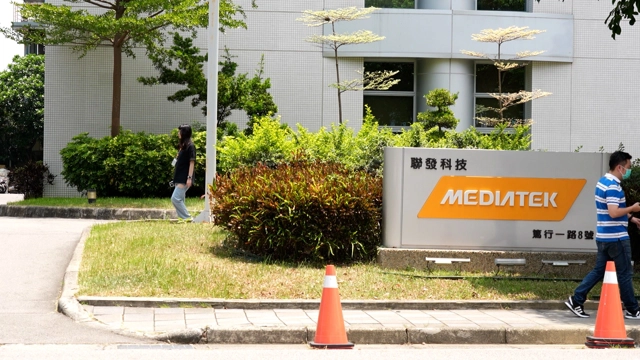 00:37
00:37 03:14
03:14 01:35
01:35 00:54
00:54 04:01
04:01 03:41
03:41 01:46
01:46 00:41
00:41 01:58
01:58 01:54
01:54