REPORTER:
Colleges today may not seem that different from a few years ago, with students hunched over their laptops. But if you look closer at their screens, they’re using new tools in their education: AI. Tools like ChatGPT can analyze texts, explain difficult concepts, and even draft entire essays in seconds. We visited National Taipei University to see how students and professors are using the technology.
Casper (STUDENT, NATIONAL TAIPEI UNIVERSITY):
Because it is really long, I will ask ChatGPT to summarize the article in detail for me.
Its organization features are powerful. They help a lot.
Sometimes I just can't think that fast.
I also discuss my ideas with it or use it like a memo.
After I finish writing, I'll paste what I've written back into ChatGPT.
I'll ask it to point out anything that's incorrect.
REPORTER:
One study found that 7 out of 10 ninth graders in Taiwan already use AI. In local universities, students say it's become a part of their daily learning. But they also know it doesn't always get things right.
Casper (STUDENT, NATIONAL TAIPEI UNIVERSITY):
I’m concerned that the information could be inaccurate.
I'm also worried that I might not realize this because it could leave out information.
I'm sure there are things I might overlook so I'm worried it could mislead me.
REPORTER:
Students like Casper remind themselves not to rely on AI, even though they’re using it almost every day.
REPORTER:
What used to be a solo assignment is now often shared with AI. But educators say the real question isn't whether students use AI— it's if they’re still building the critical thinking skills that education is meant to teach.
REPORTER:
Professors are still considering where to draw the line between when AI is a learning tool and when it becomes the real author.
Thijs Velema (DEAN OF INTERNATIONAL AFFAIRS, NATIONAL TAIPEI UNIVERSITY):
It's a really gray area in terms of when is it still fully student writing and when is it AI generated? And I sometimes think about if you write an essay, you also talk about the essay with your friends or family, right? So what if you talk to your mom and your mom gives you a really good idea and you put that in your essay, is it then your essay or your mom's essay?
REPORTER:
They say AI can also skip over the learning process. Instead of working through problems step-by-step, students can generate answers in seconds. Educators say this can create confidence without real understanding.
Kenneth Han Chen (ASSISTANT PROFESSOR OF SOCIOLOGY, NATIONAL TAIPEI UNIVERSITY):
I think there's a tendency to jump directly to synthesize conclusion because it's easy. And I think it's, it's relatively easier to repeat those packaged thoughts. They're still able to deliver some very structured, uh, result and very structured arguments that I don't think directly reflects how they understand the content.
REPORTER:
So how much can AI help or hurt? Professors say AI doesn't affect every student equally. Stronger students tend to challenge what AI tells them. They use it to expand their thinking while others are more likely to rely on AI to do the work for them.
Kenneth Han Chen (ASSISTANT PROFESSOR OF SOCIOLOGY, NATIONAL TAIPEI UNIVERSITY):
I learned a lot from some of my better students of how AI can can be used. For instance, I never realized that you can combine textual learning with words, with visual aids.
But with weaker students. On the other hand, I think AI is being used more passively.
They're summarizing, answering questions, producing assignments. But I don't think AI doesn't extend the way how they learn. There's just a substitute of it.
REPORTER:
Educators also warn that AI could deepen classroom inequalities. Without equal access and guidance, the technology could widen the gap between those who know how to use it effectively and those who don’t. But they say the answer isn't banning AI. It’s giving students a reason to work through problems on their own.
Thijs Velema (DEAN OF INTERNATIONAL AFFAIRS, NATIONAL TAIPEI UNIVERSITY):
That means that we need to give better motivations to students for why they should not use these shortcuts. So why they should, uh, think through issues themselves and why they should try to verify all the information that they get and why they should think about what kind of information do I have, how do I interpret it rather than leave that to an AI?
REPORTER:
The education ministry already provides AI guidelines for kindergarten through high school. But universities are largely setting their own rules as they adapt.
Wan-chi Chen (DEAN OF ACADEMIC AFFAIRS, NATIONAL TAIPEI UNIVERSITY):
I think the question for university is no longer just to teach knowledge, but to cultivate the human capabilities that remain valuable when knowledge is abundant. I think the most important question is not whether universities are integrating AI into education. Most universities are doing this in one way or another. The more important question is whether universities are ready to rethink their curriculum design, teaching methods, and assessment practice in response to AI.
REPORTER:
As AI becomes part of everyday learning, educators say universities will have to rethink more than just policy. They say the future of higher education depends on helping students develop skills that AI can't replace.
Yuan Duan, Klein Wang, and Lily LaMattina for TaiwanPlus.
 02:11
02:11 00:24
00:24 00:30
00:30 00:40
00:40 04:50
04:50 00:37
00:37 03:14
03:14 01:35
01:35 00:54
00:54 04:01
04:01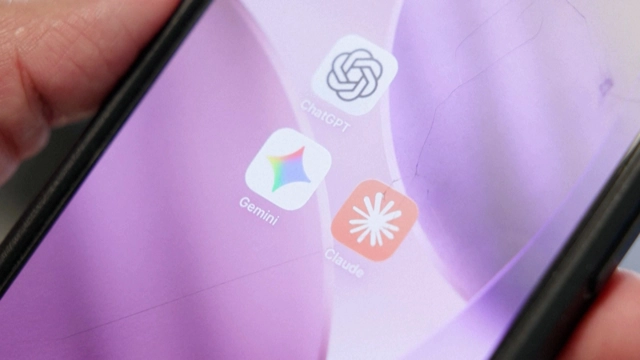 03:41
03:41 01:46
01:46 00:41
00:41 01:58
01:58 01:54
01:54 03:40
03:40