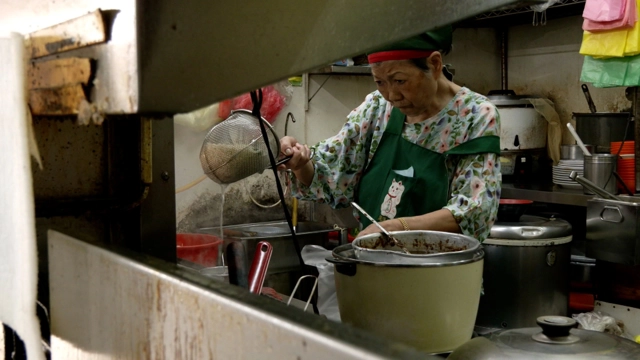
Across Taiwan 11% of people 65 and older are still working. It’s a number that’s grown within the past five years and could continue growing as the population’s steadily declines—with fewer newborns to rebalance the country’s demographics.
The labor ministry says about half of the older workforce stays in the job market because, financially, they have no other choice.
TAIPEI:
"Some people don’t have children they can rely on. They can’t support themselves, so still have to work."
But around 12% of this group stay working to stay active and stave off the boredom retirement would bring.
TAIPEI:
"If they’re fairly healthy, they need to keep moving. It’s a blessing to be active, right? For people like us, there’s not much to do at home anyway. If you’re in good health, you should keep moving. Just don’t push yourself too hard."
The demand for workers of any age in Taiwan is high, and as people live longer, both the labor ministry and employers are encouraging deferred retirement.
LIU YU-YI, WORKFORCE DEVELOPMENT AGENCY LABOR MINISTRY:
"Employers hope workers will delay retirement. We provide incentives for continued employment to encourage a greater proportion of people past retirement age to stay on."
And some analysts say older employees are an asset, even amid fears that AI will cut job opportunities.
PAN SHIH-WEI, NATIONAL CENTRAL UNIVERSITY:
"The question is what kinds of jobs are available for these people? Their experience and understanding of people and interpersonal relationships are valuable. In areas where AI can't replace human judgment they can still play an important role."
Still, analysts like these want the government to keep an eye on pension systems, labor insurance, old-age benefits and more to make sure they can withstand the impact AI and automation may have on the labor market—as more older people choose to stay in the workplace.
Patrick Chen and John Van Trieste for TaiwanPlus.
 01:51
01:51 00:52
00:52 04:44
04:44 00:53
00:53 00:28
00:28 05:35
05:35 00:47
00:47 02:37
02:37 02:57
02:57 03:57
03:57 00:34
00:34 02:46
02:46 00:30
00:30 03:37
03:37 03:27
03:27 02:37
02:37