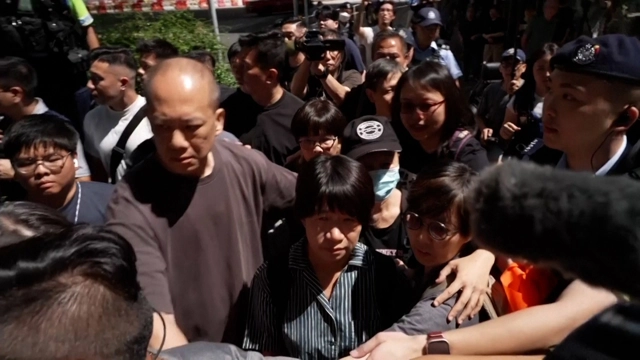
These relatives of lost family members stand in silence at a Hong Kong gallery.
A year ago, The Wang Fuk Court, a multi-tower apartment complex housing their loved ones, erupted into flames—killing 168 people.
For some, a search through the charred flats has yielded small comforts amid despair.
LEE KWOK HUNG, FORMER WANG FUK COURT RESIDENT:
"The second time we went back upstairs to pack up our belongings, my younger brother found something my mother had written. I don't know whether I should call it a farewell letter. I think of it more as a letter. But it means so much to me. If the government hadn't allowed us back into the building, we never would have found it. That's why I hope the government can give us more time to go back into our homes and retrieve our belongings."
The exhibit’s title is “Life Goes On: Facing Death and Embracing Life.” But for many who escaped death that day a year ago, life has very much not simply “gone on.”
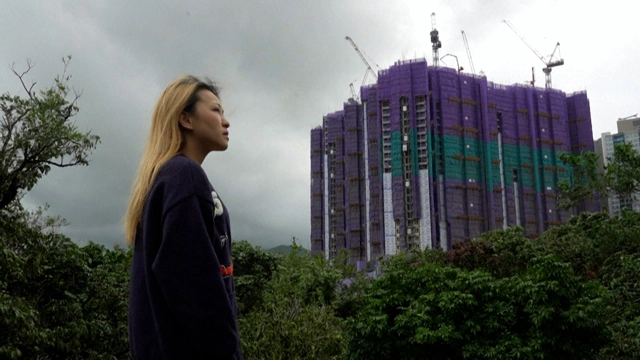
Yip Ka Kui points to the still-standing ruins of the tower block he and his late-wife called home.
YIP KA KUI, FORMER WANG FUK COURT RESIDENT:
"Personally, my biggest regret is that I still believe I called my wife too late. If I had called her a minute or two earlier, or even three or four minutes earlier, she might have had enough time to escape. She might not have lost her life because of just those few minutes. I would not have lost my wife forever."
Officials found it was likely a cigarette that started the fire. The buildings were clad in flammable scaffolding nets due to maintenance at the time—letting the fire spread fast. Fire alarms and fire hoses were shut off.
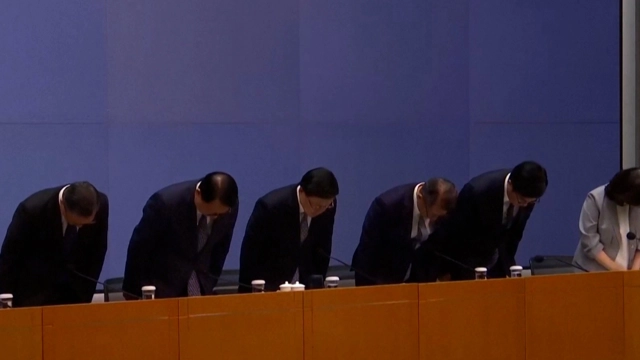
There have been consequences: a report put partial responsibility on four government agencies. The housing secretary has resigned. As of October, there were at least 40 arrests connected to the fire—and tightened building codes and rules on contractors could be coming. Still, some former residents are disappointed with the government's response.
PHYLLIS LO, FORMER WANG FUK COURT RESIDENT:
"I don't feel that the [government’s] apology was sincere. If we're being particular about it, the Chief Executive's apology did not mention the deceased or their families. He only apologized to Wang Fuk Court residents and the wider public. I don't know whether that included us, but our loved ones died because of this fire. We never received an apology that felt heartfelt."
These include the few holdouts who’ve refused a government buyout, hoping, from temporary housing that the government will change its mind and rebuild the destroyed towers.
BETTY HO, FORMER WANG FUK COURT RESIDENT:
"The government cannot be absolved of responsibility. If the government had actually done its job, the entire housing estate wouldn't have burned down."
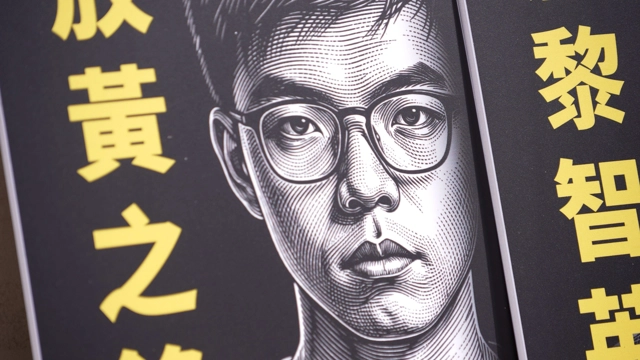
The Hong Kong government is not holding any memorial. It says citizens may do so—providing they are, quote, “legal.” A nod, perhaps, to the activists calling for accountability that authorities arrested on national security grounds. And so, it’s private commemorations like this Catholic memorial mass that have given Hong Kong’s people an outlet for their grief.
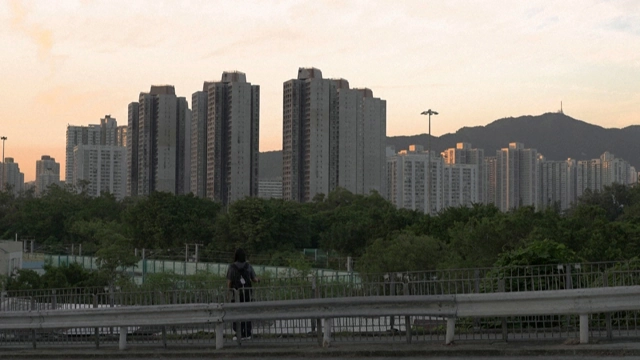
All the while, the shells of the ruined tower blocks still stand silent and vacant,
physical counterparts to the deep psychological wounds that a year later remain open.
Howard Chang and John Van Trieste for TaiwanPlus.
 03:10
 00:40
 02:25
 01:20
 02:02
 00:35
 00:29
 02:35
 01:47
 00:46
 03:10
 02:18
 00:53
 03:54
 02:50
 02:49