Hong Kong’s ‘Shoebox Homes’
Low-income residents in limbo amid housing reforms
REPORTER:
With some 6 to 7 thousand people to every square kilometer, Hong Kong is one of the densest cities on Earth. For most residents, life in the Skyscraper City means dealing with steep rents, but for some 220 thousand residents it means life in small shoebox apartments or even so-called coffin-homes.
Wan Hon-cheung (COFFIN HOME RESIDENT):
You can’t stand straight, you have to either sit or lie down. I’m on the upper bunk so I have to climb up and down slowly and be careful with my leg. There’s nothing I can do. For us lower classes, even if we have work the income is not good, we don't have skills or education, so this is inevitable, there's nothing to complain about. But that’s how it is, you have to adjust to your environment and face reality.
REPORTER:
Coffin homes and the slightly bigger subdivided apartments known as shoebox homes are the product of pervasive wealth inequality and housing shortages in Hong Kong.
For years, sky-high rents have seen owners divide their apartments then divide them again, creating living conditions that have long garnered negative media attention.
Liu Xiaoli (SHOEBOX HOME RESIDENT):
I am renting such a cheap flat in Hong Kong, you just can't find anything similar anymore. But I don't have the capability to rent anything more expensive. If the rent is any higher, I just can't afford it.
REPORTER:
Now, authorities have ordered Hong Kong to tackle its housing problems, and the region’s government has introduced ordinances targeting subdivided apartments, adding to existing regulations on coffin homes.
Sze Lai-shan (DEPUTY DIRECTOR, SOCIETY FOR COMMUNITY ORGANIZATION):
We think that the Basic Housing Units Ordinance will be good for Hong Kong’s overall housing development, because it will force some of the poor housing to be renovated or shut down. There’s also a resettlement policy that can provide accommodation for residents. The current issue is whether the landlords and subletters will cooperate.
REPORTER:
Hong Kong is now building more affordable and public housing and setting minimum living standards for subdivided apartments.
Units smaller than eight square meters will be banned and landlords will be required to renovate to meet more stringent safety and hygiene requirements – like having at least one openable window – by 2030.
The issue is, many tenants – like Liu Xiaoli — are being forced out of their current residence before new housing is built.
Liu Xiaoli (SHOEBOX HOME RESIDENT):
What will I do? Right now I'm living month by month. I will keep delaying as long as I can and will see what happens when it comes. If I have time, I'll go look for suitable places to move to, as moving is inevitable, as this place will need to undergo renovations.
REPORTER:
Liu is divorced and works two jobs to support her daughter and granddaughter across the border in mainland China. She pays her rent with what little is left over, as she sits on a government waiting list, hoping a new home comes before she gets evicted.
 00:35
00:35 00:29
00:29 02:35
02:35 01:47
01:47 00:46
00:46 03:10
03:10 02:18
02:18 00:53
00:53 03:54
03:54 02:50
02:50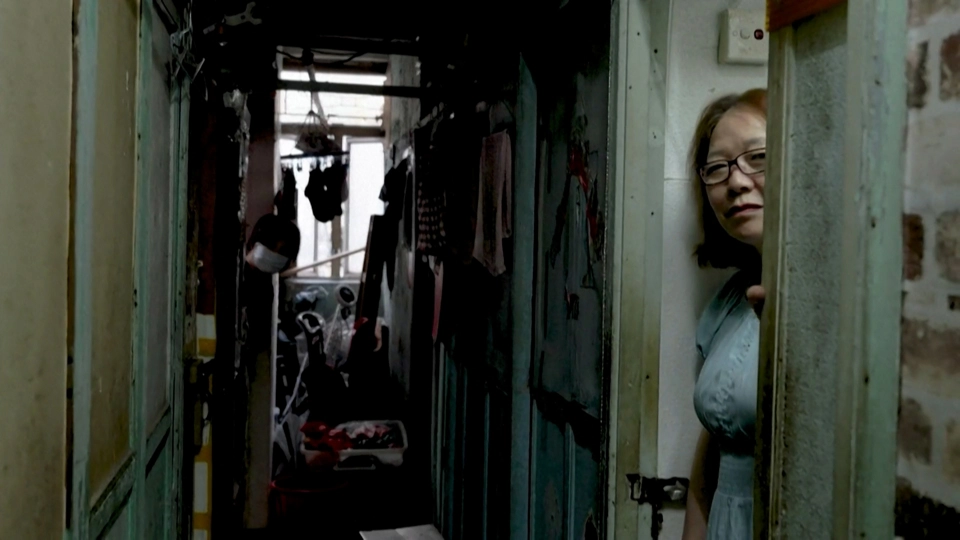 02:49
02:49 00:51
00:51 03:58
03:58 02:05
02:05 02:25
02:25 01:08
01:08