Political Impact of the Chinese Communist Party's Upcoming Plenum
Taipei
Chris Gorin (REPORTER):
For people who don't closely follow Chinese politics, what exactly is this plenum meeting and what do we expect to see out of it? You know, when you were at the Biden administration or in the CIA, is this the kind of meeting that you would watch really closely?
Washington, DC
Jonathan Czin
BROOKINGS INSTITUTION
Yeah, absolutely. And a big part of the reason that we would watch it so closely is that it's really the most important political meeting of the year. And what the plenum is, is it's the entire Central Committee of the Chinese Communist Party. And so what that means is it's the top 200 or so officials from across China, right? Provincial officials, heads of various provinces, key military, leaders.
For this particular plenum, I think it's going to be especially consequential for two reasons. Number one, on the policy side, the party will kind of endorse the next five year plan and won't be fully finalized until next spring, but we'll get an outline of the next five year plan, which will lay the groundwork for China's development in the coming five years from 2026 to 2030, which, of course, would bleed over into XI Jinping's fourth term. The other big piece of the equation here is the personnel side of the equation,
We just saw this last week where a number of members of the military high command were purged, including the Central Military, Central Military Commission vice chairman, the number three officer in the military was was purged. And that's the first time that's happened since the start of the Cultural Revolution under Mao. So what's going on on the personnel side with the purges and especially within the military, is really quite dramatic. And it's something that we've seldom seen in the Post-mao era.
Taipei
Chris Gorin (REPORTER):
You mentioned that the five year plan isn't finalized until next spring. There will be a communique that comes out at the end of the plenum on Thursday. So what do we expect to find out in that communique? I mean, how much are we going to know about what actually took place in these closed door meetings?
Washington, DC
Jonathan Czin
BROOKINGS INSTITUTION
Yeah, I mean, it's interesting because as important as this meeting is, this is not a debating society, right? They've already to to a fair extent already pre pre-cooked the outcomes of this. Right. So I think that the documents are important because it is the most authoritative document that you're going to get from the party in a given year.
I fully expect, since XI Jinping is is this far along in his tenure, I think he feels very confident in the trajectory of his economic policy and his industrial policy, that this focus on advancing China's techno industrial prowess, advancing its manufacturing prowess. I think he sees it as being on the right path, even with the problems that it's causing,
Taipei
Chris Gorin (REPORTER):
The timing of the meeting comes just before Xi is set to meet with US President Donald Trump at the APEC summit in South Korea. Do you see any significance there?
Washington, DC
Jonathan Czin
BROOKINGS INSTITUTION
I think it's no accident that XI Jinping scheduled the plenum to occur just before he's supposed to meet with Trump, right. There's no fixed date for the plenum.
So that he can have this big meeting at home that would enhance his aura of authority going into this summit with President Trump. And what's striking to me as an American and disconcerting is, is the juxtaposition, right? Xi is going to walk in this meeting, having just put his imprimatur on the next five year plan for China. And meanwhile, the US government here in Washington may or may not still be shut down.
Taipei
Chris Gorin (REPORTER):
What about cross-strait relations? How might this plenum meeting or the next five year plan affect China's cross-strait policy and the relationship between Beijing and Taipei?
Washington, DC
Jonathan Czin
BROOKINGS INSTITUTION
So I don't see I, you know, I don't see the plenum itself having, having a big impact. You know, one of the things that I, I am still on the lookout for as we get to the end of the year, though, is that, you know, they did, uh, big cross-strait exercise, straight Thunder back in April of this year,
but it was a straight thunder a which means that they will probably do like they did last year, a straight Thunder B at some point.
You know, I think the the other point of discussion on cross-strait issues that that's more been more consequential here in Washington at least, is this discussion about is Taiwan going to come up in the conversation or in subsequent conversations between President Trump and President XI?
Switching from not, um, not supporting Taiwan independence to actually opposing it. You know, the kind of distinction that might be lost on, on, on a leader like Trump, um, who's not necessarily immersed in these issues. But what I've been hearing more recently is actually, the Chinese don't want to set the precedent that this is up for negotiation, right? They don't want to introduce this into the equation, because they want to be able to say, we have a principled approach to Taiwan. And so we're not going to talk about it, talk about this at all with the Americans right now, especially since they don't have that kind of trust in Trump, that whatever they agree to, he'll actually stick to it.
 03:07
03:07 03:23
03:23 00:42
00:42 02:42
02:42 02:54
02:54 00:25
00:25 00:46
00:46 02:36
02:36 00:33
00:33 02:50
02:50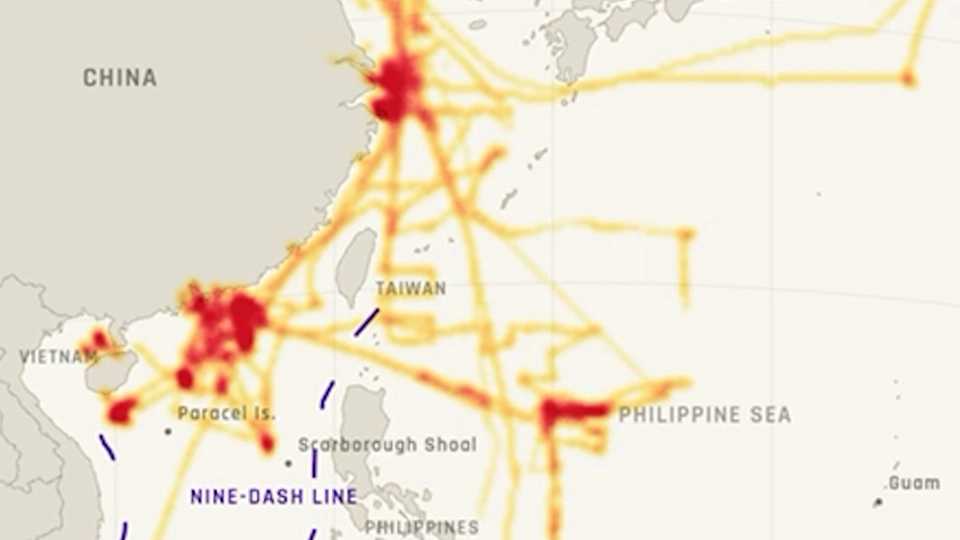 00:27
00:27 02:36
02:36 00:25
00:25 00:25
00:25 00:34
00:34 02:56
02:56