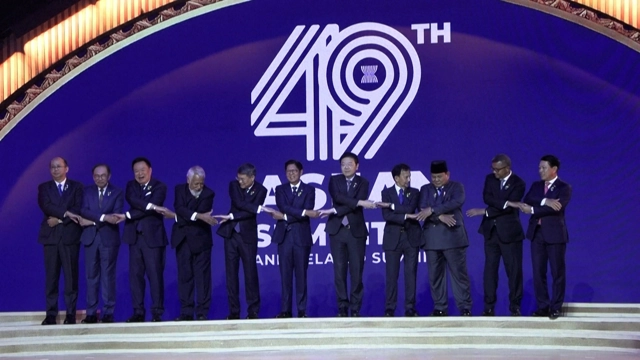
A moment of regional solidarity in Manila.
This is the opening of the 49th ASEAN summit, a gathering of the Southeast Asian bloc’s heads of state.
But introductory remarks by Philippine President Ferdinand Marcos Junior point to the tensions and challenges the region is facing.
FERDINAND MARCOS JR., PHILIPPINE PRESIDENT:
"We come from different shores, yet we have chosen to travel forward together. That commitment matters even more as the waters around us turn on shifting tides, geopolitical tensions, economic uncertainty, new technologies, climate change, and transnational threats are reshaping our region faster than any one country can respond to alone."
One issue on the agenda—the South China Sea. China maintains sweeping territorial claims here despite a 2016 court ruling denying them. And these claims overlap with those of ASEAN member states. For more than two decades, ASEAN and China have tried to work out a code of conduct, or “COC”, for these disputed waters. These are meant to be rules that would stop a clash from escalating. With the Philippines as ASEAN’s current chair, there’s been progress.
THERESA LAZARO, PHILIPPINE FOREIGN SECRETARY:
"The parties to the Declaration on the Code of Parties in the South China Sea have reached a provisional agreement on about 80% of the paragraphs of the draft COC. Second, the negotiators now enter their final phase."
But that final phase—that final 20%--is fraught with disagreements.
Even with foreign representatives including China’s Premier Li Qiang joining the summit, it’s likely to fall to ASEAN’s next chair, Singapore, to try and work out a final deal.
Another visitor attending the event—US President Donald Trump—is also a source of controversy.
And outside, on the streets, there have been anti-Trump protests over a US project north of Manila—a sprawling AI manufacturing hub. It's meant to help counter China in semiconductors and rare earths as part of the US “Pax Silica” program...but the project may force Indigenous families off their land. More protests could erupt when Trump arrives Tuesday.
JEROME ADONIS, CHAIRPERSON KILUSANG MAYU UNO:
"The message of working people is very clear. Donald Trump, you are not welcome in the Philippines, out of the Philippines. And secondly, we also oppose the upcoming signing of the Pax Silica project. This Pax Silica is clearly in the interest of the United States and their allies, against the interest of Filipino peoples, against our sovereignty, against our territory."
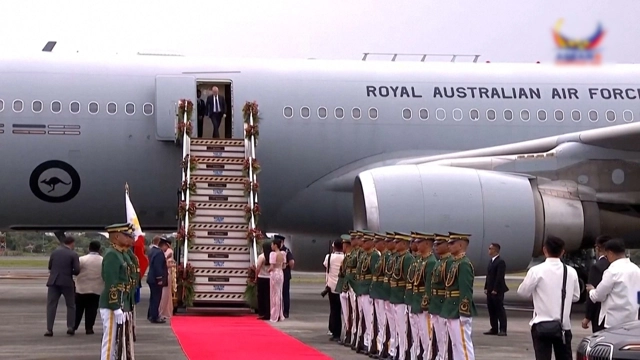
Alongside the controversies comes a busy period of diplomatic exchanges. One early result from the sidelines of the summit: a new defense framework between the Philippines and Australia as China presses on with its claims over the South China Sea.
This summit, while a Southeast Asian affair, looks set to have global consequences... as powers from around the world get down to business.
Joseph Wu and John Van Trieste for TaiwanPlus.
 02:57
 03:40
 01:39
 03:11
 03:14
 01:08
 02:41
 02:11
 02:07
 02:31
 04:31
 03:06
 00:25
 02:36
 02:00
 02:13