*This AI-generated summary is based on reporting by TaiwanPlus and verified by newsroom fact checkers. Learn more about our policy here.
With China’s People’s Liberation Army (PLA) increasing its activities near Taiwan, one young Taiwanese analyst has turned to open-source intelligence, or OSINT, to keep watch. Once a music student, Joseph Wen has now mapped more than 7,000 PLA sites, making his work one of the most detailed public resources on China’s military.
“It all started in 2021, when we became aware of more frequent incursions by PLA aircraft around Taiwan,” Wen said. The incursions, he noted, had begun in 2019 but were mostly confined to Taiwan’s southwest airspace. When the COVID-19 pandemic forced the cancellation of his graduation recital at Soochow University, Wen suddenly found himself with time to pursue a new passion.
“I originally started to mark PLA aircraft for my own convenience and for other military enthusiasts,” he said. The Taiwanese defense ministry released flight path maps, and Wen began cross-referencing them by marking airbases. What started as a side project gradually expanded into a massive interactive map of PLA facilities.
Although trained in music, Wen said that discipline helped him as an imagery analyst. “If you can play it slow, you can play it fast,” a piano teacher once told him. “Music requires a lot of training, especially when it comes to patience. Similarly, open-source imagery analysis also takes a lot of time. So, being patient is very important.”
The biggest challenge, Wen explained, is decoding the PLA’s system of unit designations and code numbers. “I think the most difficult part is that every PLA unit has a designation and a code number. These never appear together, so connecting them is the most difficult part.” He often verifies information through documents and reports, linking a unit’s code to its actual name.
Much of his work begins with Chinese state media. “This report was published yesterday on Aug. 27. This is the latest example,” he said while reviewing a CCTV clip of a rocket artillery unit. Using Google Earth, Wen matches landscapes, mountains, and even small houses to pinpoint locations. “From this spot, we have to compare the hills and mountains,” he explained.
Through this process, Wen has identified a shift in PLA training practices. “The PLA’s artillery units have begun live-fire drills in eastern Zhejiang in recent years. This could’ve started as early as October 2023, indicating a change in their practices,” he said. The location, he noted, offers terrain similar to the Taiwan Strait but avoids disrupting busy shipping routes.
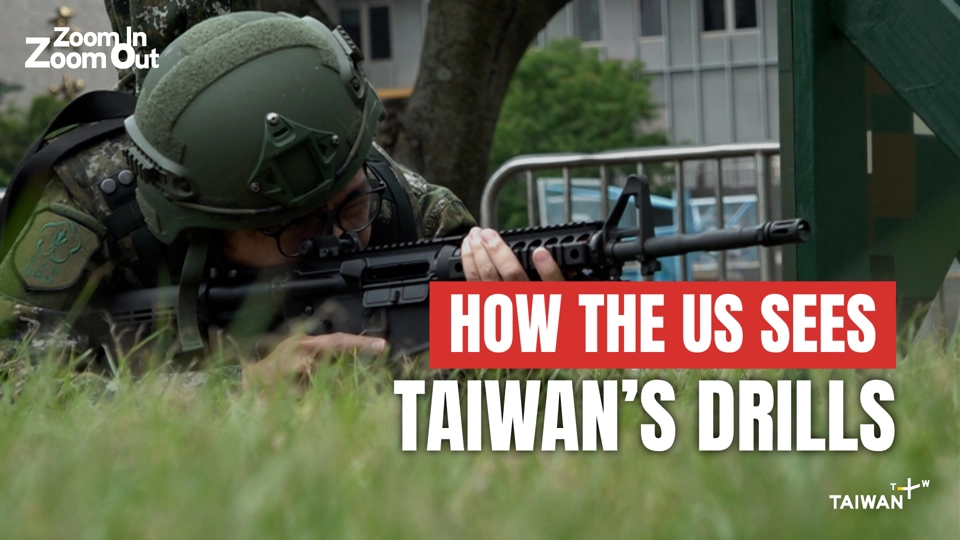
Despite the risks of attention from across the strait, Wen remains committed. His book, OSINT on the PLA, sets out to help others learn how to study Chinese military activities through publicly available information. “The US is still the best at using open-source intelligence on the PLA, but I think that’s why Taiwanese need to play a role as well,” he said. “Taiwanese are the closest to finding the answers.”
Looking ahead, Wen hopes to build a community of researchers. “My biggest hope is to form an [OSINT] community,” he said, pointing to Ukraine and the Middle East, where collaborative networks analyze battlefield footage. “I think Taiwan needs a community like this, but it doesn’t exist yet. This is something I also look forward to.”
 14:48
14:48 14:47
14:47 14:48
14:48 14:48
14:48 14:48
14:48 13:39
13:39 14:49
14:49 14:48
14:48 13:43
13:43 14:07
14:07 14:18
14:18 14:47
14:47 14:48
14:48 14:17
14:17 14:51
14:51 14:53
14:53