*This AI-generated summary is based on reporting by TaiwanPlus and verified by newsroom fact checkers. Learn more about our policy here.
Taiwan and Singapore have not maintained official diplomatic ties since 1990, but the two economies remain closely connected, driven by deep trade and investment partnerships that continue to expand amid global uncertainties.
Representative Tung Chen-yuan, Taiwan’s envoy to Singapore, said Taiwan played a significant role in the city-state’s early years. “We have very close connection in the partnership with each other, actually in the very beginning of Singapore's founding, Taiwan is a very good friend of Singapore,” he said. “We provide a lot of assistance to Singapore in terms of security, in terms of military training. So afterwards, we continue to strengthen and enhance economic, cultural ties between each other.”
Today, Taiwan and Singapore are among each other’s top trading partners, with semiconductors forming the backbone of their exchanges. “Last year, Taiwan is Singapore's fourth largest trading partner, and Singapore was Taiwan's sixth largest trading partner,” Tung said. “Our trade, particularly our exports to Singapore, has been increased by 13.5%.” He added that 80% of Taiwan’s exports to Singapore and 60% of Singapore’s exports to Taiwan were semiconductor-related.
Cultural connections also play a role, especially with Singapore’s majority ethnic Chinese population. “Our pop culture in Singapore has been very popular, very welcomed by Singaporean people,” Tung said.
The partnership has deepened through major technology investments. “UMC and VIS set up very big fabs in Singapore last year… and NXP set up a joint venture in Singapore of 7.8 billion USD, which probably is the biggest investment single project in the manufacturing sector in the history of Singapore,” Tung said. “MediaTek also invested here a lot. They are currently, around 300 engineers in their company working in Singapore.”
Looking ahead, Tung said cooperation will continue in semiconductors, artificial intelligence, renewable energy, and biotechnology. “Singapore's government advocate three major industry advancement. In the first one, AI, artificial intelligence. So we also continue to work with Singapore on AI industries,” he said. “Both sides would like to develop green energy, renewable energy… and also collaborate in biotechnology and medical industries.”
But the partnership faces challenges from shifting global trends. “Globalization is a key factors to for Singapore's success. But then by now, you know, some countries are actually trying to implement so-called decolonization, even anti-globalization. So this will cause a lot of concern for Singapore,” Tung said. He pointed to demographic changes, such as aging populations and low fertility rates, as additional strains on social and healthcare systems.
Tung also reflected on his tenure as envoy. “Over the last two years and three months, some aspects of our partnership cannot be unfilled. So we try to work very closely with Singapore's government, but we keep a low profile and not to the public,” he said. “In addition, we try to promote more economic, cultural and even other aspects of exchanges and cooperation between Taiwan and Singapore.”
Economist Heron Lim of ESSEC Business School noted Singapore’s success with its sovereign wealth funds, GIC and Temasek, offering lessons for Taiwan as it considers a similar fund. “The government of Singapore has given them a clear mandate, but also adopts a much hands off approach for the actual deployment of the funds,” Lim said. For Taiwan, he said, “the main challenge is where the source of funds will come from.”
As Taiwan and Singapore navigate global uncertainties, both sides appear set to expand their cooperation, balancing economic resilience with long-standing cultural ties.
 14:48
14:48 14:47
14:47 14:48
14:48 14:48
14:48 14:48
14:48 13:39
13:39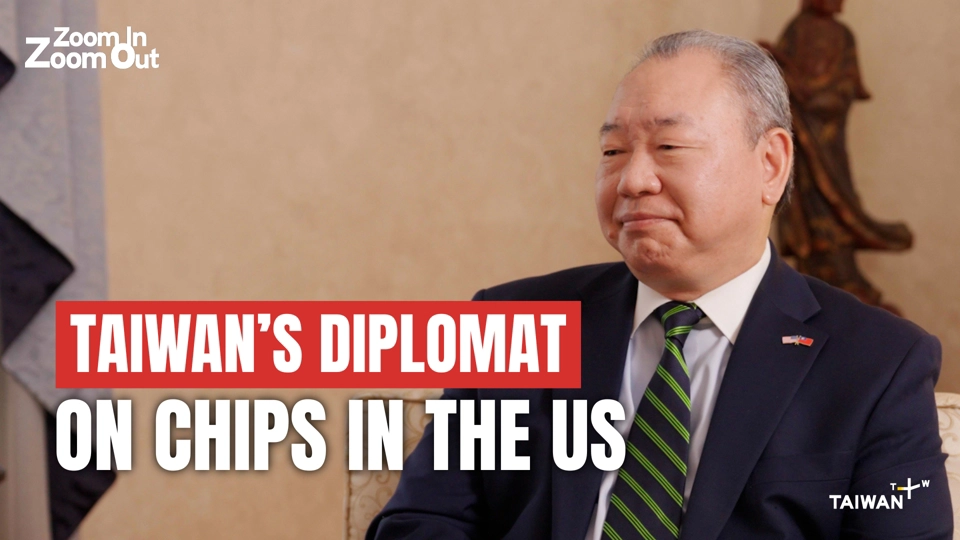 14:49
14:49 14:48
14:48 13:43
13:43 14:07
14:07 14:18
14:18 14:47
14:47 14:48
14:48 14:17
14:17 14:51
14:51 14:53
14:53