*This AI-generated summary is based on reporting by TaiwanPlus and verified by newsroom fact checkers. Learn more about our policy here.
Former White House National Security Council chief of staff Alex Gray called Taiwan the United States’ “most important national security interest” in the coming decades and defended President Donald Trump’s strategic approach toChina and the Indo-Pacific during an interview at the 2025 Indo-Pacific Security Dialog in Taipei.
“I think Taiwan is the most important national security interest of the United States, that Taiwan continues to be an autonomous, self-governing entity,” Gray said. “That is the critical thing for U.S. national security for now. In the next, I would say, two or three decades.”
Gray, who served during Trump’s first term and is now a senior fellow at the American Foreign Policy Council, said the military balance is shifting “rapidly in China's favor.” He emphasized the need to work with U.S. partners to “help correct that balance” to deter conflict and uphold Taiwan’s democracy.
Gray said Trump’s current term has allowed him to approach policy differently than before. “He is able to compartmentalize strategic issues and trade issues,” Gray said. “He’s … perfectly capable and willing to acknowledge that Taiwan … is an incredibly important strategic partner, while at the same time, having a trade policy where he's not afraid to call out areas of disagreement.”
Gray also dismissed suggestions that Trump has shifted focus away from Asia, saying actions in the Middle East and Europe are strategically connected. “You may want to leave the Middle East, but the Middle East doesn't want to leave you,” he said. “What the president has done with Iran and with arming Ukraine…is correcting the failures of the last four years in terms of deterrence.”
Gray said Trump continues to see China as the top U.S. threat. “President Trump is the first president in American history to declare unambiguously that our foremost national security threat is the PRC,” he said. “I have no reason to think…that the president is changing his understanding and his approach to China at the strategic level.”
While acknowledging the U.S. economic dependence on China, especially for rare earth minerals, Gray said the issue “is a risk we should have…known since 2010 when China did this to Japan.” He added, “The president does not surrender core American interests. Full stop.”
On U.S.-Taiwan relations, Gray said the Trump administration sees Taiwan as “a core fundamental interest of the United States,” and that defense officials such as Marco Rubio and Elbridge Colby have built careers on that principle.
Gray defended Trump’s strategic ambiguity as a tool of deterrence. “The president likes the fact that he's unpredictable,” he said. “I think that level of ambiguity…serves the interests of Taiwan.”
He also encouraged Taiwan to adapt to new trade realities, saying, “The average…tariff rate…is probably going to be…15% or more.” He added, “Taiwan and other partners need to become reconciled to the fact” that U.S. trade policy “is just not going to look like it did in 2005.”
 14:48
14:48 14:47
14:47 14:48
14:48 14:48
14:48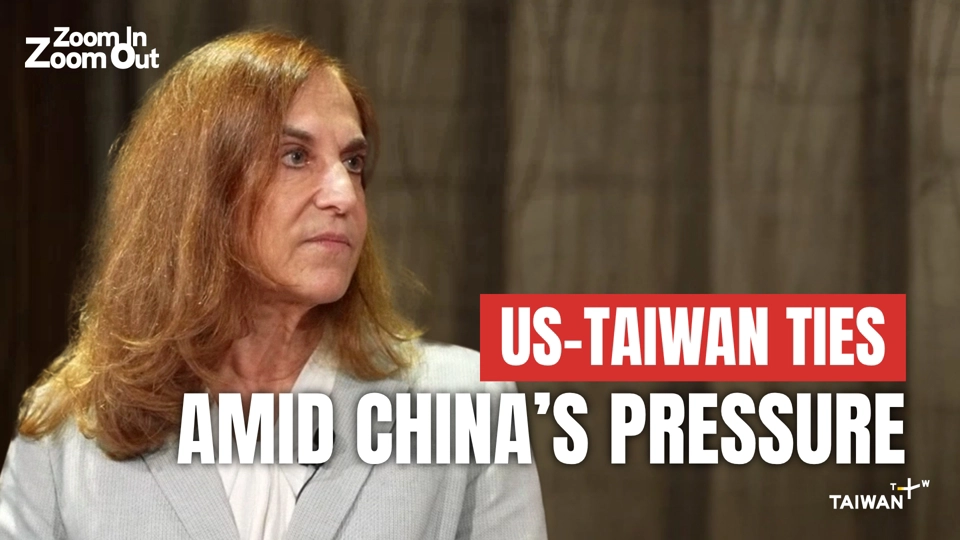 14:48
14:48 13:39
13:39 14:49
14:49 14:48
14:48 13:43
13:43 14:07
14:07 14:18
14:18 14:47
14:47 14:48
14:48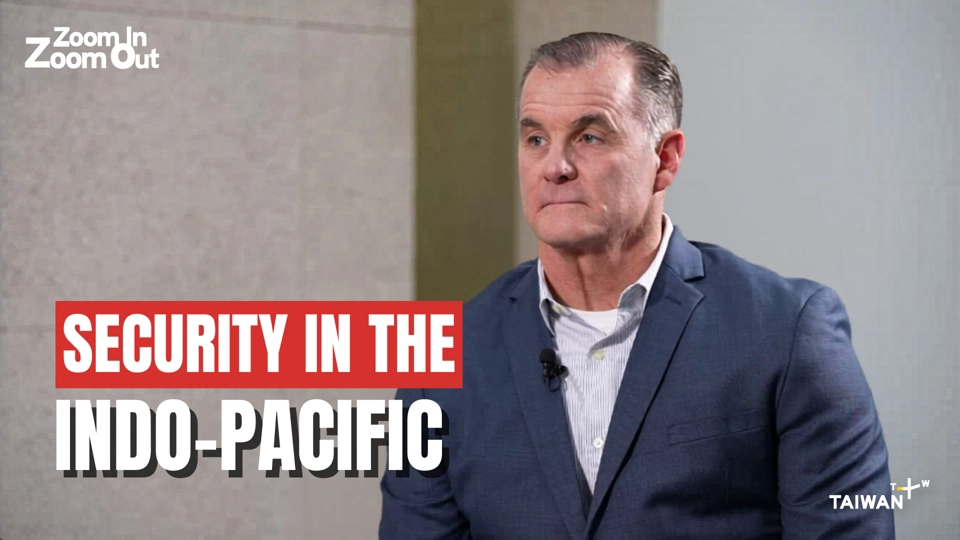 14:17
14:17 14:51
14:51 14:53
14:53