*This AI-generated summary is based on reporting by TaiwanPlus and verified by newsroom fact checkers. Learn more about our policy here.
A new miniseries dramatizing a Chinese invasion of Taiwan is forcing the island to reckon with the grim realities of modern warfare — not only through the eyes of the military, but civilians as well.
“Zero Day Attack,” the first major cultural production to tackle a potential cross-strait conflict head-on, imagines a scenario where China imposes a blockade on Taiwan, causing nationwide panic and societal breakdown. In the series, banks shutter, families flee, and military personnel prepare for urban warfare — all of which have sparked real-world conversation about Taiwan’s preparedness.
“It’s the first-ever series that really talks about a Chinese invasion scenario on the Taiwan island,” said Wen Liu, associate research professor at Academia Sinica and a member of the Presidential Office’s Whole-of-Society Defense Resilience Committee. “Many events happen — cybersecurity issues, civilian lives are changed, and there are issues with fifth columns in the games.”
Taiwanese dramas typically focus on themes of romance and family. Liu said that “Zero Day Attack” marks a rare shift into contemporary geopolitical storytelling. “This is the first time, really, that there is a cultural producer that talks about the actual scenario with Chinese invasion,” she said.
Beyond its entertainment value, the series is catalyzing political discussion. “Taiwan's military strategy really focused on stopping the war by the sea,” Liu said. “But this series takes on a more radical vision where the PLA troops are landing on or surrounding a quarantined Taiwan.”
Liu called for a broader understanding of “urban resilience,” in which civilians, not just soldiers, must be ready.
Liu’s committee focuses on six critical areas for national resilience: cybersecurity, information security, food and energy stockpiles, medical systems, and civilian readiness.
“The society needs to build up a good, well-functioning communication system,” she explained. “When war hits, we can still function as a regular society.”
Modern warfare, she said, will likely target infrastructure such as power plants, airports, and water systems — not civilian housing. “Protecting our critical infrastructure … becomes critical for resilient functioning.”
Yet the debate around war preparedness remains polarized. “Preparedness has become such a polarized issue right by the two major parties, the KMT and DPP,” Liu said. “More recently we’ve been educating the public … it’s really an imperialist ambition that’s been in the doctrines of the CCP for a long time.”
Taiwan’s unique political culture — where China policy dominates electoral politics — has also shifted societal behavior. “Every election there’s a feeling of win-or-lose, like the doom of the nation,” Liu said. She noted that civil society’s long-held distrust of the military is changing, with more activists now participating in national security education.
Liu, a longtime scholar of feminist and queer theory, said her involvement with the government’s defense initiatives reflects a broader challenge.
“Criticism should be built on making it better, making it more democratic,” she said. “Inclusion does not mean you don’t have criticism.”
As geopolitical tensions rise, “Zero Day” is helping Taiwan grapple with its identity and future.
“We do respect values of human rights and democracy… that is a key part of Taiwanese identity in our generation,” she said.
 14:48
14:48 14:47
14:47 14:48
14:48 14:48
14:48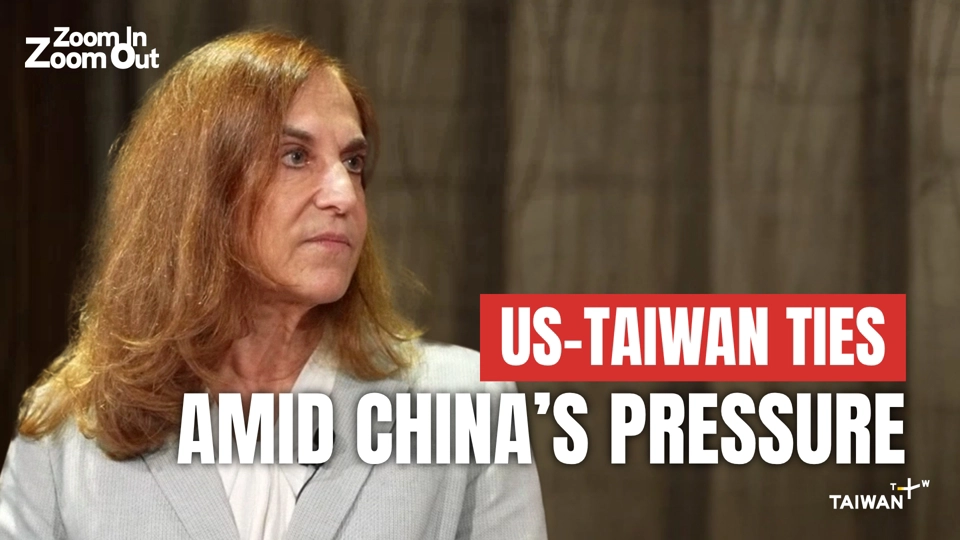 14:48
14:48 13:39
13:39 14:49
14:49 14:48
14:48 13:43
13:43 14:07
14:07 14:18
14:18 14:47
14:47 14:48
14:48 14:17
14:17 14:51
14:51 14:53
14:53