*This AI-generated summary is based on reporting by TaiwanPlus and verified by newsroom fact checkers. Learn more about our policy here.
In the face of extreme heat, toxic gases and unstable structures, Taiwan's firefighters are turning to a new ally — robots.
Disaster response robots are now a critical part of Taiwan’s emergency services toolkit, deployed to assist in hazardous operations and protect human lives. According to Weng Shih-yang, Division Chief of Disaster Relief and Emergency Medical Services at the Taipei Fire Department, these robots provide essential reconnaissance in dangerous environments.
“These robots can be remotely controlled to go in first to investigate and transmit images back as the first step,” Weng said.
Equipped with Wi-Fi and 5G technology, robots are dispatched to scenes with dense smoke, high temperatures or potential structural collapse. They are used in narrow alleyways, chemical plants, and factories — places too perilous for humans to enter first.
Two such robots, the diesel-powered LOF 60 and a battery-driven Luxembourg model, each serve different functions. The LOF 60 is capable of water and foam spraying, can traverse obstacles and helps clear debris. The Luxembourg robot specializes in gas detection and navigating tight urban spaces.
Firefighter Chiu Chien-kai explained the operational difference: “The LOF 60 can refuel continuously, while the Luxembourg robot must return to base to recharge. Its smaller size, however, makes it ideal for narrow alleyways.”
Taiwan has been steadily increasing the use of these machines. “Since November 2023, we’ve required all fire departments to actively deploy disaster relief robots to accumulate more experience,” Weng said.
Training operators takes about six months and involves mastering remote control skills, troubleshooting, interpreting video data, and maintenance. “We also focus on training multiple personnel because disasters can strike at any time,” he added.
The value of these robots has been demonstrated in real incidents. In April, a robot was deployed into a petrochemical factory in Chiayi before human crews entered. When the building collapsed, the robot was destroyed — but no firefighters were injured. “It protected all the firefighters, allowing them to retreat safely,” Weng said. “Its sacrifice was worthwhile.”
The push for robotic assistance grew after the devastating 2023 Ming Yang factory fire in Pingtung, which killed several firefighters. “We began to seriously consider whether we should incorporate more disaster relief robots to help eliminate firefighter injuries and deaths,” Weng said.
Despite early reliance on imported models, Taiwan is shifting to domestic production. “In recent years, Taiwan has developed mature technology,” said Chiu.
Local manufacturing offers advantages in cost, maintenance, and design tailored to Taiwan’s unique terrain.
“We can provide feedback and request adjustments,” he added. “This makes navigating Taiwan’s narrow alleys much easier.”
With continued investment and innovation, robots are proving indispensable in making one of the world’s most dangerous jobs just a little safer.
 14:48
14:48 14:47
14:47 14:48
14:48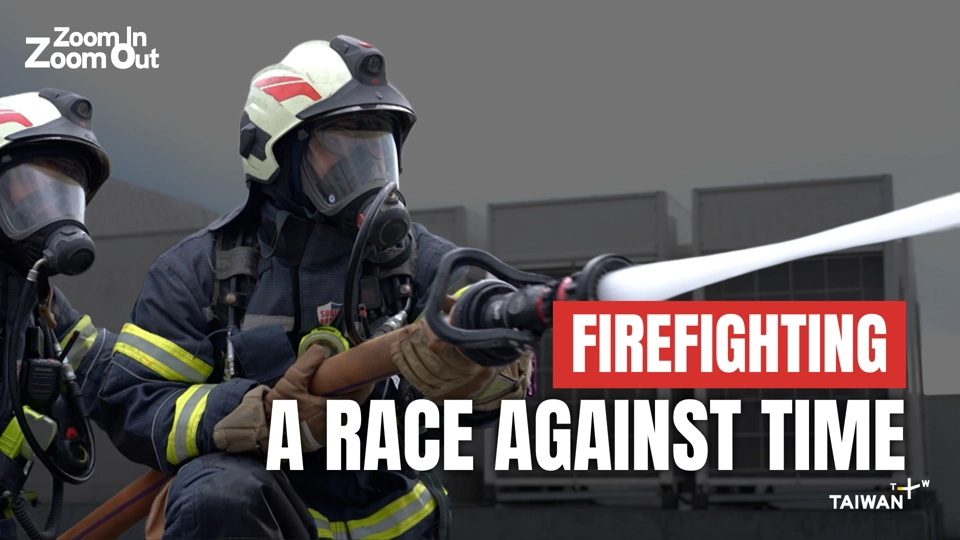 14:48
14:48 14:48
14:48 13:39
13:39 14:49
14:49 14:48
14:48 13:43
13:43 14:07
14:07 14:18
14:18 14:47
14:47 14:48
14:48 14:17
14:17 14:51
14:51 14:53
14:53