This AI-generated summary is based on reporting by TaiwanPlus and verified by newsroom fact checkers. Learn more about our policy here.
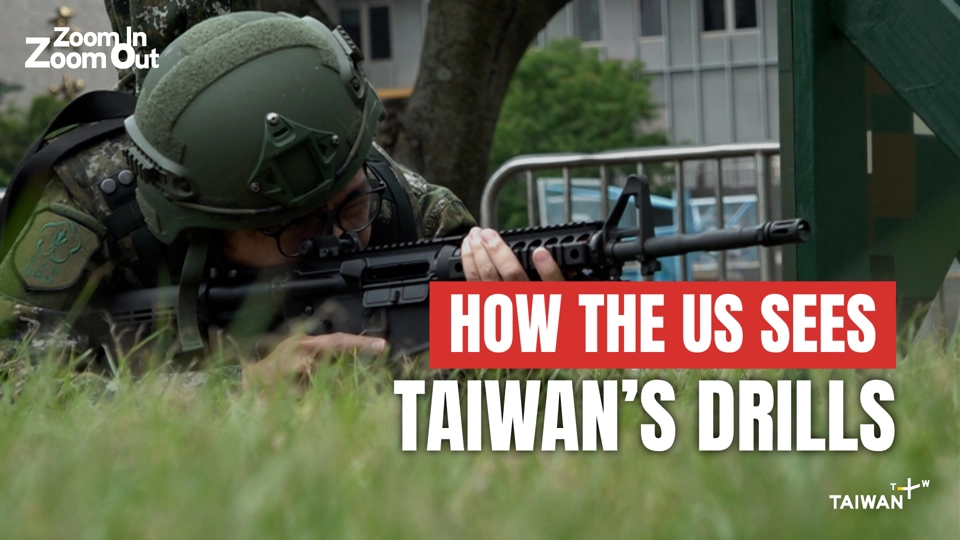
As Taiwan braces for an increasingly complex security environment, this year’s Han Kuang military exercises have expanded both in length and scope to respond to what defense officials describe as an escalation in “gray-zone” tactics by China’s People’s Liberation Army (PLA).
Gray-zone activity refers to hostile actions that stop short of full-scale war: “Things such as the recent Chinese intrusion into Taiwan's air defense identification zone, crossing the central line, and the use of maritime militia to disrupt Taiwan's fishing activities,” said Tony Hu, former senior director for China, Taiwan and Mongolia at the U.S. Department of Defense. “Even economic coercion is part of the gray-zone activity, such as China stopping imports of Taiwanese agricultural products to pressure the government.”
The 41st Han Kuang exercise marks a significant evolution in Taiwan’s defense planning. In response to gray-zone pressures, the drill will last ten days instead of five and call up 22,000 reservists to drill in unscripted scenarios to test Taiwan’s military readiness.
Although efforts by China’s armed forces using gray-zone tactics alone are unlikely to bring about Taiwan’s surrender, Hu warns that their true danger lies in internal division. “Gray-zone activity includes disinformation and cognitive warfare,” Hu said. “It tears Taiwan into two camps — those who advocate appeasement and those who want to protect Taiwan’s freedom. I think that might be China's overall grand strategy: tear Taiwan apart from the inside and let the PLA come in to finish the job.”
However, a full-scale invasion remains a daunting challenge for Beijing. The Taiwan Strait, a 130-kilometer-wide body of water separating Taiwan from mainland China, plays a crucial role. “In military terms, it’s a clean kill zone,” said Hu. “Everything that comes over is an enemy. You just shoot into it.”
Hu outlined a layered defense system including long-range Hsiung Feng missiles, medium-range Harpoons and close-range weapons like Javelins and Hellfire missiles. “If [Chinese forces] can survive to the beach, I’d be surprised,” he said. “The Taiwan Strait will basically become the grave site for the PLA.”
He further emphasized the political cost of failure. “If after the death of hundreds of thousands of young men from one-child families they didn’t achieve their objective, then the Communist Party will be in trouble. The political implication will be greater than the military one.”
International support, particularly from the U.S., Japan and the Philippines, also reinforces Taiwan’s deterrence posture. “Their national security is tied to Taiwan’s,” Hu said. “We’ve already forward deployed forces, including long-range anti-ship systems in the Philippines and additional assets in Japan.”
Still, Hu argued that the international community must move beyond symbolism and adopt concrete policies. “There ought to be a rule: if you take down my system with cyber, I’m coming after you with all means available,” he said.
As the first part of this discussion concludes, Hu underscores the importance of resilience — not just militarily, but across civilian sectors. “Taiwan needs to increase its reserve stock, protect its transport links and ensure energy and medical supply resilience,” he said. “It’s about sustaining the fight and continuing to function.”
More from this conversation will be featured in part two of the “Zoom In Zoom Out” series on TaiwanPlus.
 14:48
14:48 14:47
14:47 14:48
14:48 14:48
14:48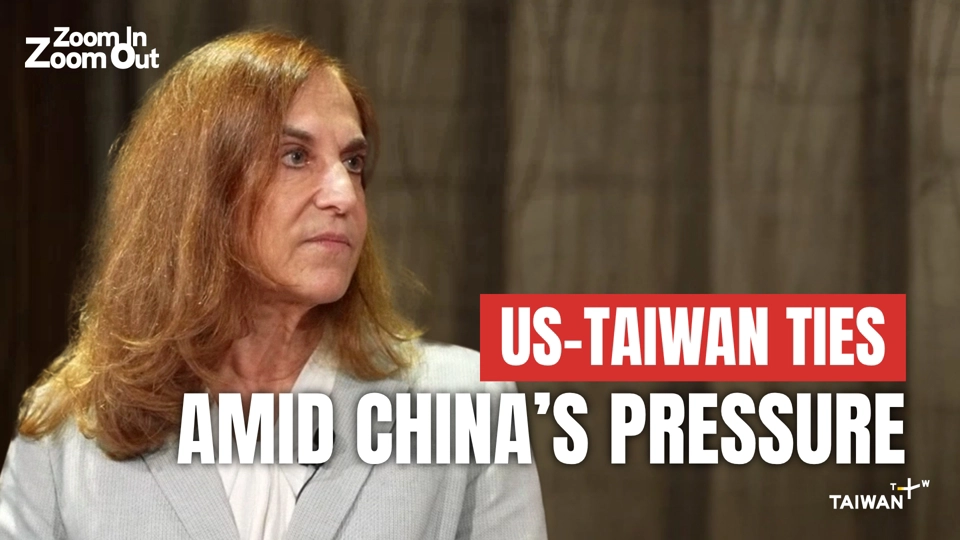 14:48
14:48 13:39
13:39 14:49
14:49 14:48
14:48 13:43
13:43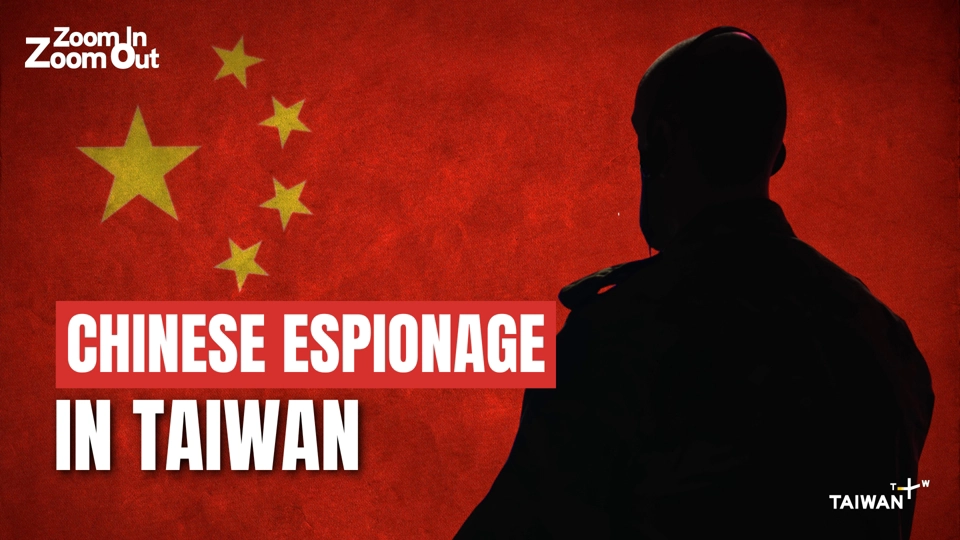 14:07
14:07 14:18
14:18 14:47
14:47 14:48
14:48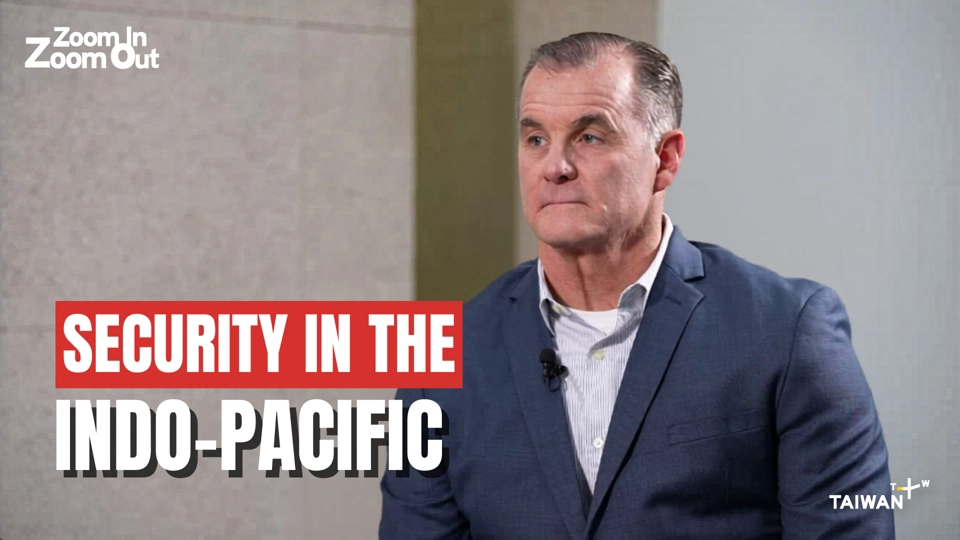 14:17
14:17 14:51
14:51 14:53
14:53